



















It’s the most wonderful time of the year. From Christmas to Hanukkah to Kwanzaa, and everything in between, festive cheer has invaded every home, doorway, and greeting. Winter break is just around the corner for students here at AFS, and school spirit is high with Winterfest and pep rallies around the corner.
Everyone is excited to enjoy the holiday season. It’s the perfect excuse to indulge in delicious foods, celebrations, and the most important aspect: giving and receiving the perfect gift.
Holiday gift-giving, particularly Christmas presents, originates from the pagan practice of celebrating the winter solstice with small tokens to symbolize good fortune. In fact, it was the Roman Saturnalia, celebration of deity Saturn, that cemented the idea of giving gifts in times of joy, as Romans would exchange small figurines and candles.
When Christianity began to increase in popularity, it was only natural that they assume a similar time frame–the middle of winter–in order to absorb the pagan and Roman traditions already in place.
Hanukkah, on the other hand, has a more recent history with the practice of gift-giving.
While much of the large gifts we now associate with Hanukkah most likely came from consumerism and the holiday’s proximity to Christmas, there is one Jewish tradition that has to do with exchanging goods. Gelt, gold-wrapped chocolate disks, is given every night for children to eat, barter, or play with, and it is used to remind everyone of the value of charity, as gelt used to be something that children would gift to their teachers.
Over the years, the gifting aspect of these holidays have exploded in popularity. Americans estimate that they will spend, on average, over $1,000 on the holidays, the majority of that on gift cards or clothing. According to the National Retail Federation (NRF), 55% of customers said they will be purchasing their holiday goods online, while only 12% said they would be going to a thrift store.
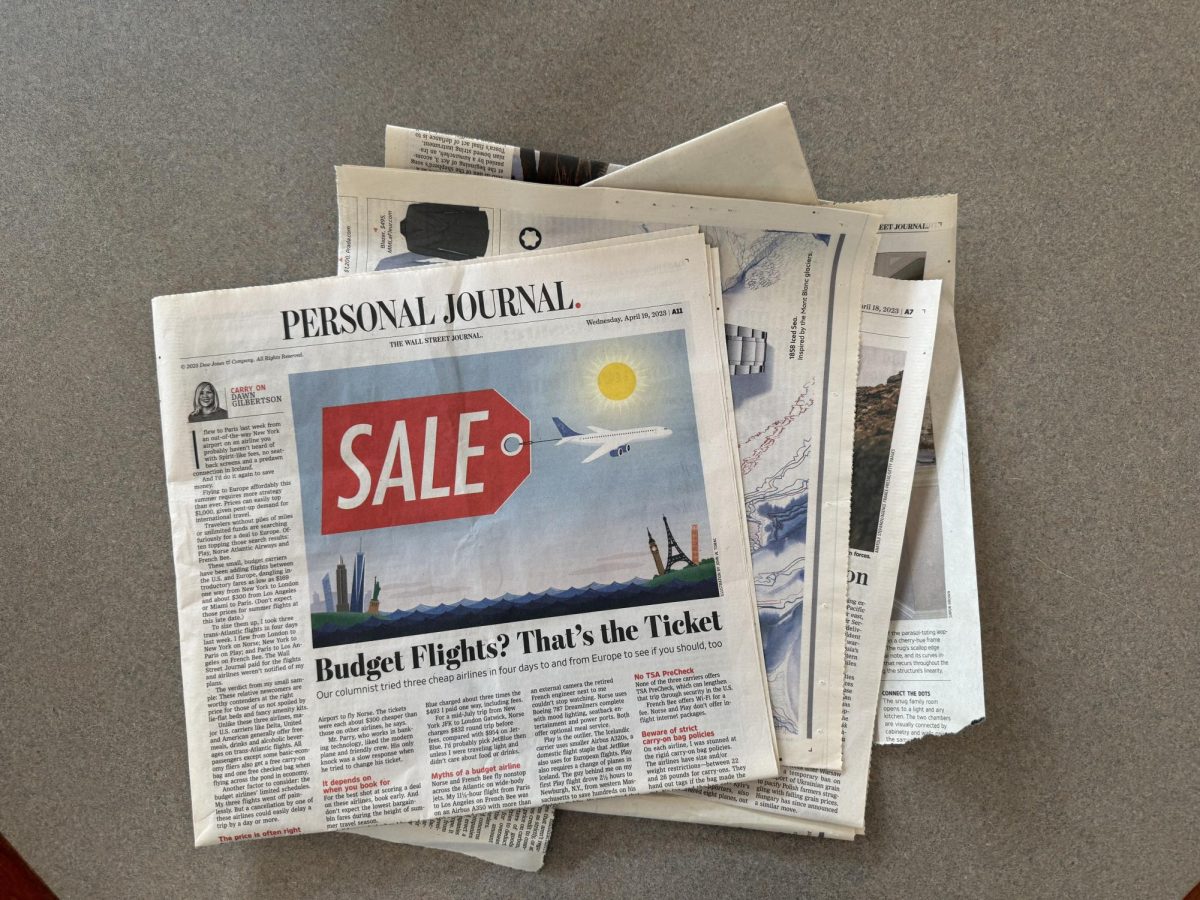
In fact, the NRF found that the total retail spending in November and December is expected to surpass one trillion dollars.
What pushes people to feel the need to spend so much money on materialistic items around the holidays? King’s College London offers a hypothesis that has more to do with psychology than tradition or social expectations.
With the massive number of sales around the holidays, desire to purchase might just be attributed to avoiding feelings of regret for not buying something. Regret of omission is a real, studied phenomenon, and it has to do with when we feel bad for not doing something, rather than actively doing something.
When we pass up on a deal, we feel regret for not taking advantage of the sale, even if we didn’t need the item in the first place. That only heightens our need to consume and buy more, in order to eradicate regret. And while those feelings might be temporary, there is another psychological phenomenon that might constantly surround us.
Leon Festinger introduced the Social Comparison Theory all the way back in 1954 to discuss the human need to compare ourselves to each other, for both better and worse. This phenomenon might be at play, particularly with the rise of social media.
On platforms like TikTok and Instagram, it’s hard to avoid videos about overconsumption. Whether it’s “Christmas haul” videos, videos about getting gifts for others, or even aesthetic videos about decorating the house for the holidays, it’s common to see influencers buying, receiving, and giving items that seem impractically expensive or luxurious.
Social media tends to give an overly glamorized view of people’s lives, and audiences often compare themselves to these idealized snippets of other’s lives. After seeing all of these clips about elaborate gifts, feelings of inadequacy are common, leading people to overconsume just to make up for their own discontentment.
But what could the harm be? As it turns out, overconsumption has a massive impact on the environment.
In many ways, overconsumption leads to an exacerbation of climate change. The entire manufacturing process, from the acquisition of raw materials to the processing to the shipping, releases greenhouse gasses into the atmosphere. A singular product releases about 6.3 times its weight in carbon emissions. A 2021 study found that 45% of greenhouse gas emissions came from the production of the things that we buy and consume.
Greenhouse gas emissions are directly linked to climate change, and warming temperatures can spell disaster for ecosystems. Adding the deforestation that occurs when raw materials have to be pulled from the earth, and it’s no surprise biodiversity is decreasing.
While climate change is an issue that will continue to plague us for many years to come, its effects on humanity aren’t as tangible yet. Still, overconsumption leads to many immediate impacts on humans around the world.
To make a phone or tablet, which are common gifts around the holidays, rare minerals need to be mined, and many of these minerals are not mined in sustainably or humane ways. Child labor, hazardous and toxic materials, and horrible working conditions are just some of the problems that Congolese miners face when trying to extract cobalt for phone batteries.
Another example is the oil that must be extracted in order to ship products from their factories to consumers. The Niger Delta used to be the world’s largest, thriving wetland, but the harmful chemicals that are produced during the oil mining process cause acid rain in the Niger Delta.
People living in the Niger Delta are experiencing a great decrease in quality of life. Acid rain destroys crops, buildings, and pollutes water. According to a 2021 study, individuals who live in areas that are mined for oil have higher cancer rates than those who don’t. In addition to the breathing problems and bronchitis that plagues these areas, the life expectancy of those in the Niger Delta now sits at 41 years old.
It is clear that overconsumption is impacting the world in more ways than one. So, what can you do about it?
One easy step you can take is shopping locally. Shopping locally decreases carbon footprint due to shorter journeys and usually requires less packaging. Additionally, shopping in small, independent stores makes it much easier to buy less, without the distractions and gimmicks of big retailers like Amazon.
Here at AFS, there are even some options to buy homemade items and give back to the community. Brian Cassady’s Small Farms class can sometimes be found selling honey from our school’s bees. This winter, on December 17, the Art Fair will be taking place again. There, AFS students will be selling artwork and other holiday gifts, which is a wonderful opportunity to support young artists and celebrate the holiday without exacerbating the issue.
In the end, awareness in and of itself can help lessen your contribution to overconsumption. Refrain from buying much more than what you don’t absolutely need, and remember to reuse and repair as much as possible.
According to the National Retail Federation, Generation Z’s buying power is expected to reach $12 trillion by 2030. That means that as a generation, we have the power to change the course of consumption. The question is, will we?









Natalia • Dec 17, 2025 at 1:47 pm
I’ve definitely fallen victim to being the recipient of over-gift-giving in the past few years. Though I pride myself in picking out the perfect gift for the people I love, I like to think of it as more of a representation of how well I know the person, and I take time in going to stores, thoughtfully crafting, or searching for the perfect gift for them, even if it ends up being one or two things. I’d personally rather have fewer gifts than a number of them that don’t mean anything to me whatsoever. Though I’ve cut back on shopping from large wasteful stores, I’d like to make an effort to try and thrift things more, or make things of my own. Overall though, to me, keeping things small and productive for the world will always take the lead over wasteful, meaningless gifts.
Olivia G. • Dec 13, 2025 at 9:07 pm
Wow, I really agree with this article! Over the years, it’s come to my attention more and more that there’s a lot of waste that comes from what we buy. And especially after getting a phone and having access to social media, it’s made me see how other people were living with major overconsumption, and I\’ve seen so many posts that criticise its adverse effects on the environment. Now, I’m always trying to have that in mind when I buy items for my friends or family, like whether or not it comes in plastic packaging, or just trying to give more handmade presents instead of purchased ones to reduce waste. I think I’ve witnessed overconsumption during the holiday season, like seeing people with 10 of the same item in their carts for all of their relatives or something. I think more young people should try to explore their local resources more, rather than instantly relying on outside/ online sources for shopping. Supporting small businesses or thrifts to find something unique for your loved ones can be really cool & more sustainable. Or if you know you like to bake or are creative, you can make a special card or make cookies for someone.
Aarohi • Dec 12, 2025 at 3:04 pm
I think the overconsumption of holidays is a hard topic to draw an opinion on. I’ve watched the Hindu holiday Diwali pick up popularity, and it seems bittersweet. It feels refreshing because people are becoming more accepting and aware of different holidays around the world. It also feels like part of my religion is being capitalized on. From cheap decorations to unauthentic traditions being passed. I think other people celebrating new and exciting holidays together is wonderful, but a certain respect needs to be held for holidays all around the world.
Ruhi • Dec 10, 2025 at 9:49 pm
I have witnessed and even taken part in overconsumption during the holiday season, especially Black Friday. I feel bad and even a sense of fear if I don’t buy things during these sales, because what if I need this later, and then I pay extra money for it later. But this doesn’t excuse the fact that I buy things even if I don’t need them, and I think it’s really important we normalize not buying things during sales just for the sake of it. Like, if you’re really in need of it, then buying during sales or waiting until sales to purchase it is totally understandable. However, we (as a society) have normalized purchasing unnecessary things just because we get them a few dollars off. By trying to save money, we’re just spending more, and honestly, this is how major companies get you. I feel like we can turn the tables by working together to normalize not buying things during sales around the holidays and throughout the year.
chloe • Dec 14, 2025 at 1:20 pm
I agree with your argument about the unproductiveness of overconsumption and how it is an issue we can solve through teamwork, based on my personal experiences. When events like Black Friday come around, especially this year, I felt a strong urge to spend a ton of money on things I don’t actually need. In hindsight, I think that what you wrote about denormalizing unnecessary purchases is a community effort that we can all come together to accomplish. It doesn’t have to be a considerable effort. Still, as the article says, I think doing a little bit of research and using this knowledge to spread the word among our friend groups will eventually make a considerable difference in the realm of overconsumption.
Solomon • Dec 10, 2025 at 9:12 pm
I think overconsumption and consumerism are things that often come to mind when thinking about the holiday season and the way capitalism has kind of made its way into holidays and gift giving in a really concerning way. The impacts of conservatism are really terrible in how it is really terrible for working conditions and the environment. I think it is important weI think about buying things to do so in a conscious way, one that considers the harms of engineering in a culture of consumerism. I think overconsumption is really bad and I understand people feeling like they want to engage in it because as you highlight when there are sales on things there is a sense of urgency and pressure to buy something you want before the price goes up.
Joseph Lee • Dec 10, 2025 at 4:30 pm
Very nice article. You have tons of great points, and it was really interesting how you connected the origins of holiday gift giving to psychology and climate change. I doubt that many people consider consumerism’s international and environmental effects beyond, you know, our own brains… and maybe our immediate community. I think your article highlights the self-centeredness and ignorance inherent in gift-giving even if they aren’t obvious in the practice. Anyway, I found an interesting survey result from GetYourGuide – the desire in Americans to give and receive experiences, rather than material gifts, increased from 62% to 93% over 2021-2023. I don’t think this refutes the data you presented (and I’m not sure how reliable mine is), but maybe we can say that it reflects a broader, slow-acting change in people’s attitudes toward gift-giving. A next step would be to study this turnover’s source.
Jonas Couzin-Frankel • Dec 10, 2025 at 4:14 pm
I agree with this article. I have witnessed a lot of overconsumption, mainly on social media. I think to combat this rising problem, we need to emphasize giving meaningful gifts over expensive ones as well as shopping local. Giving meaningful gifts also emphasizes the person they are giving the gift to over the price which is another way to make the gifts feel more special. Additionally, overconsumption makes people focus too much on the price of a gift and they try to buy the most expensive gift over something they think someone would actually enjoy. However, I think to eliminate overconsumption everyone is needed to make a contribution.
Makayla Littles • Dec 10, 2025 at 3:46 pm
In this article, I completely agree that regret of omission is a real thing. Additionally, missing out on deals often inspires over consumption because due to inflation increasing by the day, people do not want to miss out on good deals. Especially during Black Friday, everyone filled the King of Prussia Mall because prices were dirt cheap. For example, the PS5 is originally priced at five hundred dollars, but BJ’s is currently selling a combo package (the combo package includes games that comes with the PS5) with the PS5 for only two hundred and fifty dollars from BJ’s. Hypothetically, one might want to buy this PS5 during the Black Friday because it would be a more desirable deal. A personal example in my life, my older brother just bought the PS5 while it was on sale because it was better for his finances. Additionally, taking in account that inflation on items is consistently increasing (3 percent inflation increase as of this year) due to demand and supply imbalance, supply chain issues, etc, people are definitely going to wait to buy things at a cheaper rate. It is simply more desirable. Since the holiday season, many stores tend to put things on sale during Cyber Monday or Black Friday, that plays into over consumption as well.
Molly M Taylor • Dec 10, 2025 at 1:46 pm
I found this article both interesting and informative, but definitly agree with the reality that overconsumption is extremely normalized during the holiday season. I think that the point brought up about the normalization of overconsumption on social media is extremely important to highlight and think about. I have seen and watched videos of Christmas hauls, all of which sharing large expensive items, and an unnecessary amount of “un needed” things. I feel that this idea of overconsumption is also prevalent in the new “trend” of making wishlist presentations to your family. This trend, which I have personally viewed on multiple social media platforms shows a teenager “presenting” their Christmas wishlist, decked out with graphics and links to their family. Although I do not have an issue with providing ideas of gifts you like to your family, as it allows them to gift you the items you really want and need, I find that this counteracts the idea of giving back the holiday season is all about. The large wishlists conveys a message that teens and tweens only care about the tactile gifts, rather than the acts of kindness, time spent with family and celebration the holiday season is all about.
[email protected] • Dec 10, 2025 at 11:17 am
I agree, and a lot of overconsumption and consumerism starts with pop culture because social media romanticizes unnecessary items. This stems from the social issue of people wanting to live up to an idea. For example, designer brands like Balenciaga, some of their clothes have the same design as mainstream stores. Their hoodies, for example, are plain with just their logo on them; no aspect of the hoodie should be worth what it is, however, people are just paying for the logo. Materialistic behavior is brainwashing young people into buying useless things to fit their ideal image. If we can break social expectaions, I believe we can slow down overconsumption.
Robert Spruill • Dec 9, 2025 at 1:49 pm
I do agree that overconsumption is a problem, but I also think that inflation plays a part too, yes we are buying too much, but I also think that over the past few years things have just gotten too expensive. My friends have told me over the years the things that they get from Christmas and i’m always wowed, once I started to see the value on money, I stopped asking for so much for Christmas. Personally, the last few years I haven’t gotten a ton of Christmas gifts, I also have a small and spread out family, but my point is I’m happy to say that I don’t think my family overconsumes.
Lauren Washington • Dec 9, 2025 at 1:46 pm
Hi Serafina and Anjali, this article is great and very well written. I definitely agree with all the perspectives included. Plus, I have witnessed myself and others overconsuming holiday themed foods and buying unnecessary things at the mall. As previously stated in the article this is the result of social media platforms including tik tok and Instagram. Users are encouraged to spend more money for themselves and others when they see reels on their explore page. Young people can challenge this by trying to use social media less and purchasing gifts from local businesses or thrift stores perhaps.
Radha Airan-Javia • Dec 9, 2025 at 9:32 am
I agree that the overconsumerism caused by the holiday season is harmful and excessive. The rise of influencers and social media increasingly glamorizes overconsumerism, with hauls and unnecessary restock videos going viral. There are thousands of videos on social media promoting flashy holiday shopping and hauls, making people think that they need to recreate what they see to be normal and happy. Most of the items glamorized by overconsumerism in large shops like Target are cheap and single-purpose. If we can prioritize quality, long-lasting gifts that don’t have to be huge and cheap, then we can actually give meaningful gifts that won’t end up in the landfill.
Liam H • Dec 9, 2025 at 9:16 am
I’m a pretty impulsive buyer; I know this to be true. As such, I have both observed and definitely partaken in overconsumption, whether or not I meant to. At this point, I barely think about it, even if I should. Something’s on sale, and I’ve been eyeing that thing for a while, so I order it without really thinking about it. This, of course, bleeds over into the holiday season, where there are sales left and right and I actively need to be buying things. And for as aware as I try to be about the way my actions affect the world, I seem to routinely forget how much doing this will hurt the world around me.
paige • Dec 9, 2025 at 9:01 am
I do agree with this article fully. The holiday season in any form, but especially christmas time sparks an influx in how much people spend and of course, over consume. And because social media is the root of a majority of overconsumption, being influenced to buy unnecessary things or gifts during this time adds to it. Social media has pushed Americans to overconsume greatly because of its romanticizing and glamorized nature. As someone who spends a lot of time on TikTok, Instagram, and many other social media platforms, I can see how many people become susceptible to overconsumption. For me, I follow a lot of influencers and people that have what I would want to have. Certain clothes, shoes, mainly materialistic things. So, what if you were scrolling through TikTok, and kept on saving and watching videos of “christmas hauls” from your favorite influencer, or someone going on a shopping spree, or someone telling you, “what to buy for your mom for christmas.” With constant videos like these filling your feed, one may feel pressured or instantly influenced to buy and buy. When watching videos like those, it makes many feel like they have to or they should purchase those things because they’re popular or “selling fast.”
Una • Dec 9, 2025 at 8:56 am
Gift giving is difficult because you want to make everyone you give to feel special and valued. However, its hard to do that. One of the reasons gifting from the thrift store or even just giving more consciously isn’t as popular is that it is much harder and more time-consuming. When you walk into a store like Target, you are shown exactly what to buy- from holiday gift sets to rows of fuzzy socks in bright reds and greens. Big box stores and Amazon make it so easy to shop that the idea of venturing to the local thrift store to search for hours to find something to piece into a meaningful gift is simply off the table for most people who are already swamped this time of year. Additionally, one thing I was thinking about when reading your article was wrapping paper. The shiny, often glitter-coated stuff we hide our gifts in is simply another culprit in the astronomical amount of waste this time of year produces. But, as I mentioned earlier, its the most popular because its the easiest. Its much easier to run into CVS and grab a few rolls than it is to try and “festive up” a roll of plain Kraft paper.
Nia H. • Dec 9, 2025 at 8:44 am
While the idea of getting your loved ones something special in celebration of the holidays is a good idea, I agree that people often overconsume how much they buy. For example, online there are tons of videos of influencers doing shopping hauls where they buy six different water bottles that they don’t need. There are videos of people buying loads of cheaply made clothing items from Shein and Temu. The reality is, you only need very few clothes and only one water bottle. Because consumerism is at an all time high around this time of year, their spending habits become even more harmful to the environment. The cheaply made clothes that they receive as gifts in December end up on beaches in Ghana 6 months later, further polluting our environment.
Bobbi Stein • Dec 9, 2025 at 6:01 am
Enjoyed the article. People do buy to buy this time of year. Also it is important to buy from local stores, small businesses.