










the music and entertainment industry, stars come and go, and celebrities fade away. Especially in modern times, with unlimited access to music through streaming services and the fast pace of trends on social media, it is hard for artists to stay relevant. In an era where virality lasts weeks, not years, longevity in hip-hop is rare.
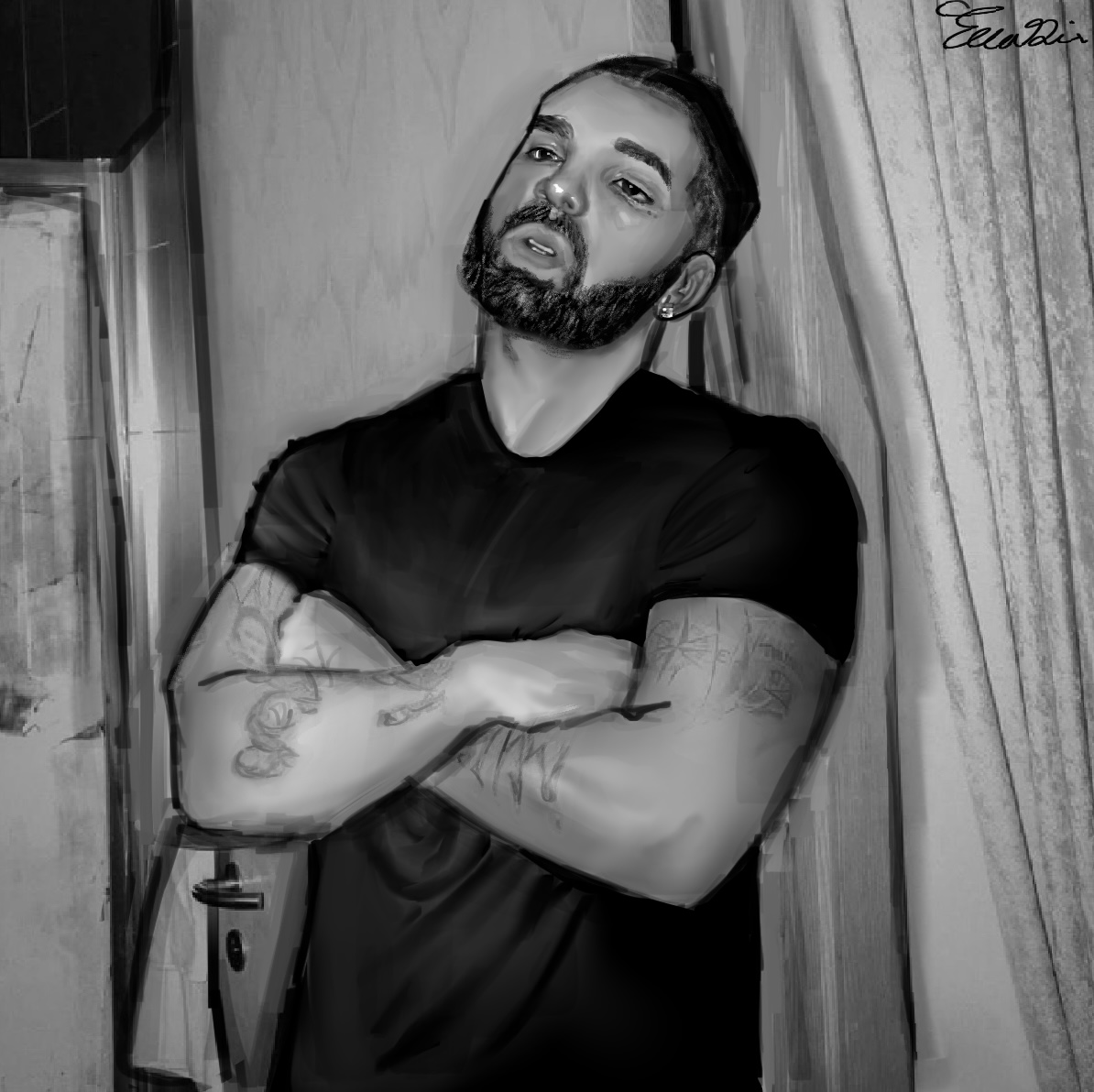
But Drake, who has been in the industry since the late 2000s, has somehow remained one of the genre’s most dominant voices. So how has Drake managed to stay on top for over 16 years?
Drake, born as Aubrey Drake Graham, was raised by his mother in Toronto, Ontario, Canada. At 15, he was offered a role in Degrassi: The Next Generation. From 2001 to 2008, he starred as Jimmy Brooks, a disabled teen basketball star.
But Drake’s fame didn’t truly begin until he moved from acting to music. After self-releasing early mixtapes under his October’s Very Own label, he gained the attention of Lil Wayne in 2008, who brought Drake on tour. That moment launched his career that would soon impact mainstream rap.
Ever since Drake’s breakthrough album, Thank Me Later, was released in 2009, he has stayed steadily in the media and music industry as one of rap’s biggest names. In my view, Drake’s true talent isn’t just rapping; his longevity as an artist is thanks to his ability to constantly reinvent himself for the streaming era.
Album after album, Drake is constantly adapting his music and creating new sounds. One reason Drake remains relevant is his willingness to experiment with different genres and moods. He is known for having a wide range of songs that fit almost any mood.
He has dabbled in slow R&B, party/house music, pop music, and the biggest of all, trap. Drake’s 2011 album, Take Care, is heavily made up of slower R&B sounds with songs like “Over My Dead Body” and “Hate Sleeping Alone.” Meanwhile, his 2016 album, Views, is known for pop hits such as “Hotline Bling” and “One Dance.”
Drake’s 2022 album, Honestly, Nevermind, even surprised fans by leaning heavily into house music, with songs like “Massive” and “Falling Back.” As well as many trap songs like “Money In The Grave” (2019), “Laugh Now Cry Later” (2020), and “Spin Bout U” (2022). By shifting styles instead of sticking to one formula, Drake evolves alongside the sound of the time.
Drake also recognizes the power of collaboration. Another key to his power is his ability to work with artists from different generations and scenes. He continuously collaborates with big stars and rising artists to create hits that people will love.
He has released collaborative albums with 21 Savage, including Her Loss (2022), and with PARTYNEXTDOOR, whose joint project $ome $exy $ongs 4 U was released in 2025. Over the years, Drake has also featured artists in songs like “The Motto” in 2011 with Lil Wayne, “Too Good” in 2016 with Rihanna, and “Pain 1993” in 2020 with Playboi Carti. He has also been featured on songs with other artists, such as “Life Is Good” in 2020 by Future, “On the Radar Freestyle” in 2023 with Central Cee, and “MELTDOWN” in 2023 by Travis Scott.
He has also taken new up-and-coming artists under his wing to stay connected to what’s new, for example, his OVO Sound label co-signing UK rapper Fakemink. By working with artists from different generations and scenes, Drake stays tied to whatever wave is currently shaping hip-hop.
Drake understands that modern music consumption is fast-paced and heavily shaped by playlists and viral moments. Unlike many artists from earlier eras, Drake has mastered the logic of streaming platforms. This is why he puts out constant releases of albums almost every year since 2009.
And when he is not releasing an album, he is getting featured on other people’s albums to ensure he is rarely absent from the charts. In the streaming era, relevance often comes from constant visibility rather than perfectly curated albums. This is why his albums often include one or two hits that can be added to a playlist.
He also releases songs with catchy choruses or bridges that can easily go viral on social media, such as 2018’s “In My Feelings” or 2025’s “NOKIA.” Moments like this keep Drake in internet culture as well as music charts.
In a culture where attention spans are short and trends change overnight, Drake has stayed on top by evolving faster than the industry around him. His career suggests that modern fame is no longer about just talent; it’s about strategic adaptability.
Drake’s continuous success begs the question: In today’s music industry, is staying famous about being the best, or about being the most adaptable?

Anu Holloman • May 20, 2026 at 4:01 pm
Anjali, this was so informative, well-researched, and thoughtful. I learned so much about Drake’s seminal body of work and its impact on his career longevity. Great work!
Micah Millis • May 18, 2026 at 10:08 am
Very insightful on Drake’s career, you really did your research. Great job Anjali!