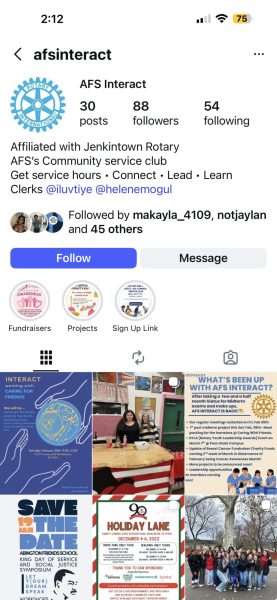














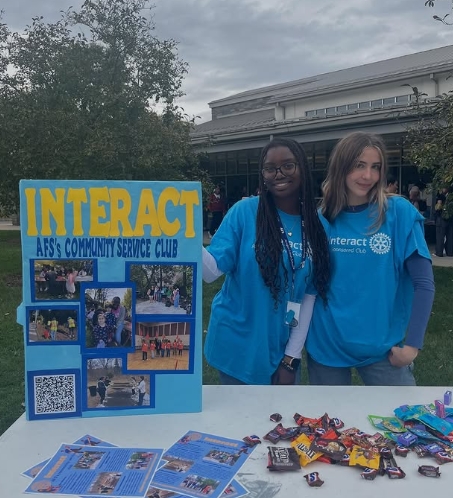
What is Interact Rotary Club? According to Rotary, “Interact clubs are a place to bring together young people ages 12-18 to develop leadership skills while discovering the power of Service Above Self.”
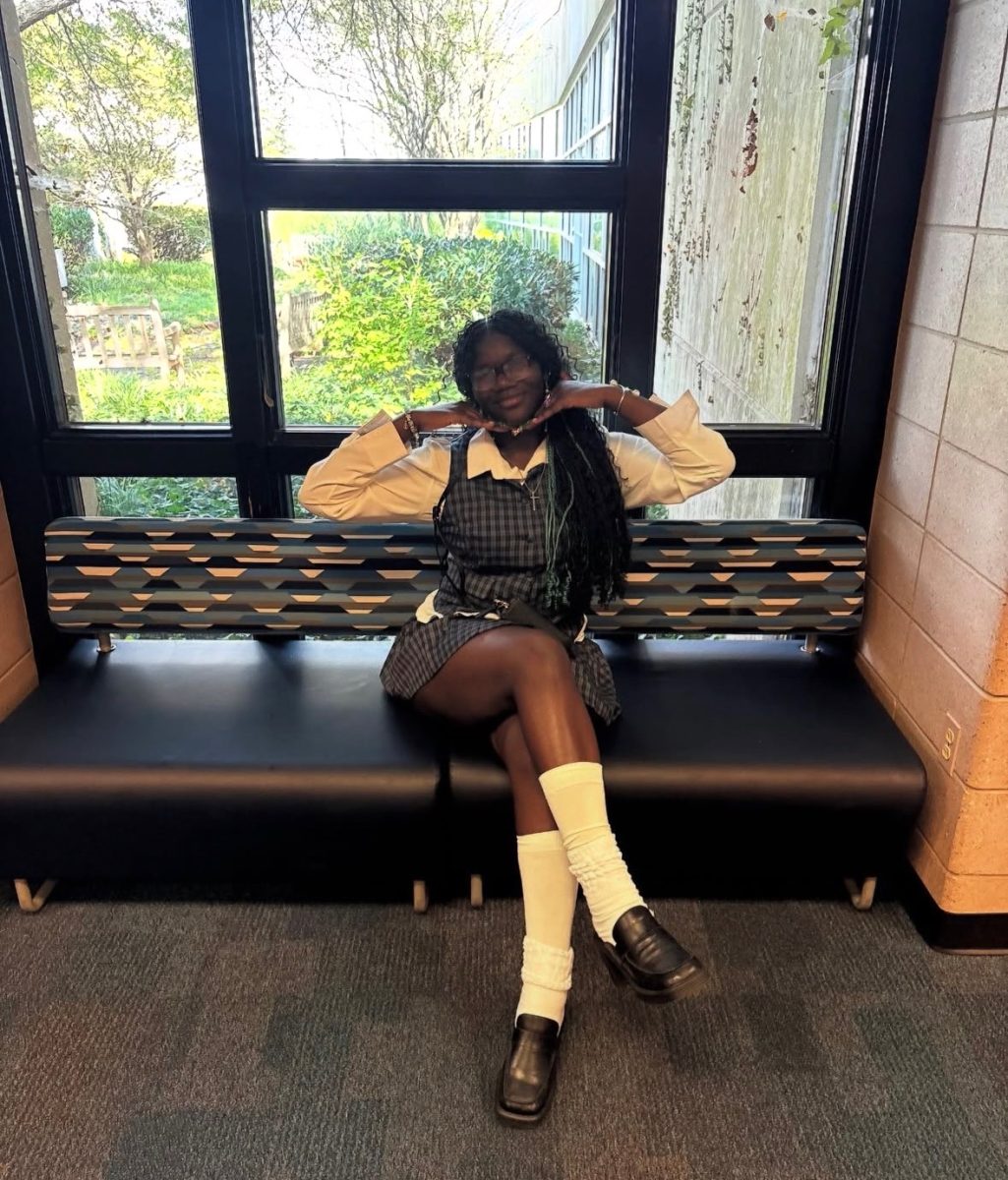
At Abington Friends School, Tiye Abange ‘27 and Helene Mogul ‘27 launched their own Interact Club in 2025.
Historically, Interact is “one of the most significant and fastest-growing programs of Rotary service. With more than 10,700 clubs in 109 countries and geographical areas, Interact has become a worldwide phenomenon. Almost 200,000 young people are involved in Interact.”
Abange reminisced on what inspired her to create this club saying, “Before I came to AFS I was a part of an Interact club at my high school in Barbados, and although we were operating during covid we couldn’t really do projects. I still really loved the experience of helping out in my community. We started a garden at my school and we were growing tomatoes, then donated them.”
Abange said, “The funds that were raised came back to the school and I realized that I didn’t have any opportunities for service.”
At AFS learning does not stop in classroom settings, it continues to student-led clubs, service projects, and environments where students are encouraged to explore, create and grow. As a result, by the time said student leaves they are not only ready to succeed but to contribute to the world around them.
AFS instills values of stewardship, peace, integrity, community, equality and equity. However, a value that flies under the radar is patience.
Abange said “A lot of the time people will start a club and set expectations for how people should be coming out and how much engagement they will get. The most important thing I had to do was be patient because I just started a club, I wanted to see how things would go and we blossomed to now having 40 members.”
Interact teaches leaders to take action, discover new cultures, and make new friends. Mogul said “I’d hoped to start a space for general community service and social justice club, a place where people could come to meet and pitch ideas to go out in the community.”
Both Abange and Mogul emphasized the importance of staying organized while leading a club, especially considering the fact they are both juniors starting to think about their next steps after high school their workload increases significantly. Abange shed light on multitasking by saying “Managing Interact with my school work has been challenging because I really wanted to pour a lot into this club because I really care about service.”
Weekly Abange and Mogul correspond via email with Rotary, manage their social media accounts, take pictures of their service projects, and run meetings during lunchtime on Fridays.
However, organization is just the tip of the iceberg. For a club such as Interact you need to promote an international understanding by having good communication and morals. Mogul goes on to explain, “It is crucial to be able to distribute work, be open, and not be the center of attention too, being collaborative and open to other people’s insights, perspectives, and projects.”
In conclusion, community service builds stronger, safer, and more supportive communities. Volunteering not only helps with personal development but problem solving skills overall.It encourages ethical behavior and accountability for participants.