







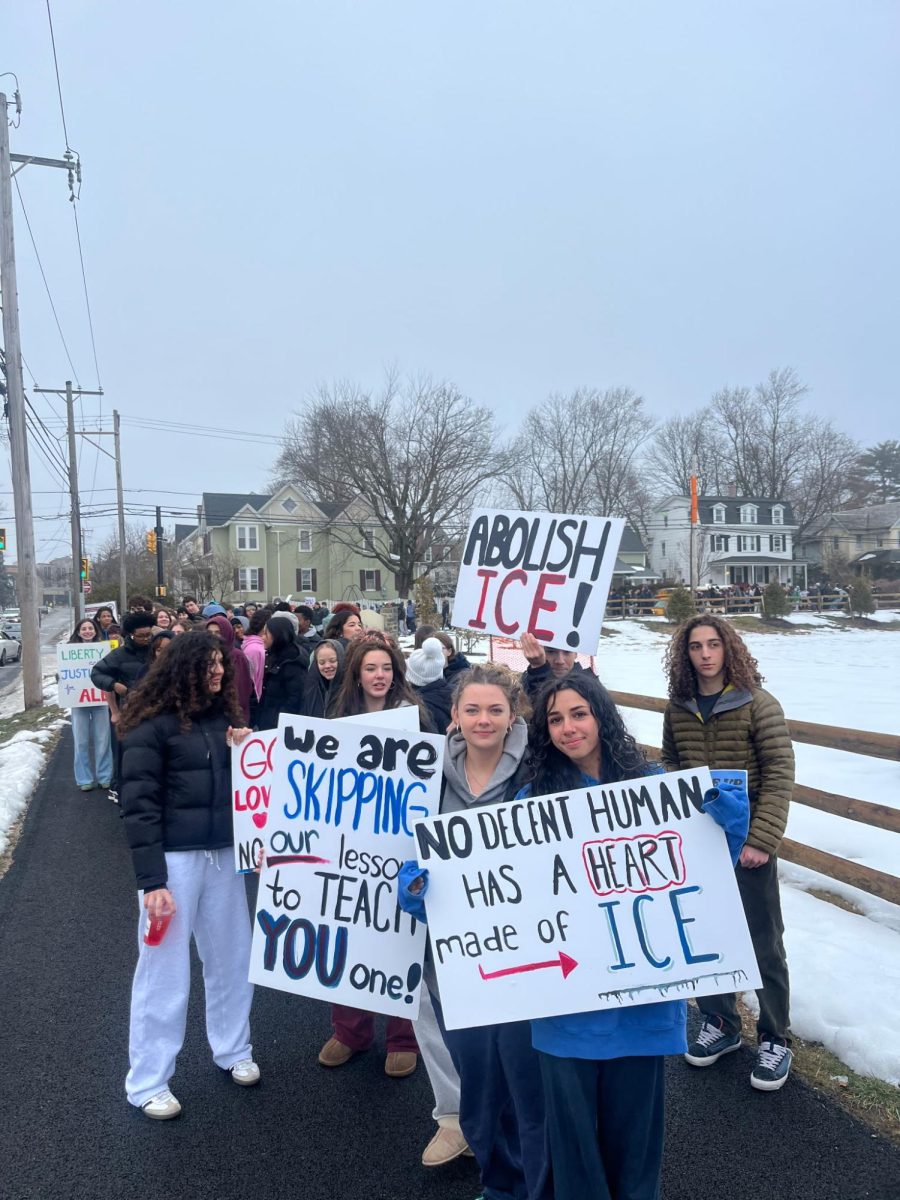
Being first-generation American is especially daunting in this political climate. From accelerated racism to blatant discrimination, focusing on school during this time of uncertainty is becoming increasingly difficult.
A first-generation American is an individual whose parents immigrated to the United States and had their children in the United States. Typically, parents of first-generation Americans are immigrants who became naturalized citizens.
U.S. Immigration and Customs Enforcement (ICE) is a federal agency under the Department of Homeland Security. In recent months, its actions have raised concerns as ICE has been targeting both undocumented immigrants and United States citizens during enforcement operations.
For those of us who grew up in immigrant households, this reality feels especially personal.
As children of immigrants who came to this country in search of a better life for us, we write from a place of fear and gratitude. Fear of the systems put in place to oppress us, and gratitude for the sacrifices our parents made.
The omnipresent anxiety that accompanies first-generation Americans becomes more prevalent in students’ education day by day.
Having to worry about an upcoming test or a final project while contemplating the possibility that you or someone you love might wrongfully lose your lives is a reality that many students at Abington Friends School and all across the United States face right now.
When fatal ICE interactions became more frequent in Minnesota and news channels brought light to these tense situations, it felt hard to comprehend the sheer magnitude of what was going on.
About 1,300 miles away felt too far to affect anyone close to our community, right? Wrong. After the deaths of Renee Nicole Good, Alex Pretti, and many others, it became slightly clearer to us that this issue affects us all.
When students throughout the Greater Philadelphia area caught word of ICE being deployed to our area, it felt surreal. We watched them gallivant through SEPTA stations, grocery stores, and neighborhoods.
Word picked up: citizens are being abducted from Norristown, Philadelphia, Allentown, and Reading, and a new detention center was recently bought in Berks County, according to WHYY and Spotlight PA. It feels like every day they inch closer to our community.
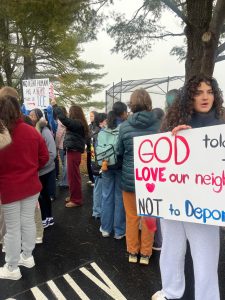
The fear really kicked in when an AFS student’s family spotted an ICE officer at the ACME by our school. At this point, AFS had yet to put out a statement ensuring student safety at school. Suddenly, the fear wasn’t hypothetical anymore; it demanded answers none of us had.
The questions most first-generation Americans at AFS are asking sound like,
“Should we be carrying identification with us at school?”
“What happens if we come home and our parents aren’t there?”
“If something happens, who are we supposed to contact or turn to for help?”
All these questions have resounded off the walls, built up in the halls, and finally, action is starting to take place.
Most AFS students have the privilege of not being worried about these things, and the minority that does have to worry are often ignored and left to feel unsafe. Fear, uncertainty, and anger have synthesized to create substantial unrest.
Students are demanding safety— privileged or not, we have begun to come together to advocate our needs to the school, asking questions that point to a safer school environment for everyone.
For first-generation American students in the Greater Philadelphia area, immigration enforcement is no longer a distant issue; it is a reality that follows us into classrooms, hallways, and homes.