

























Sigmund Freud described dreams as the “royal road to the unconscious,” a touching metaphor for many. But how much importance do dreams truly hold in the AFS community?
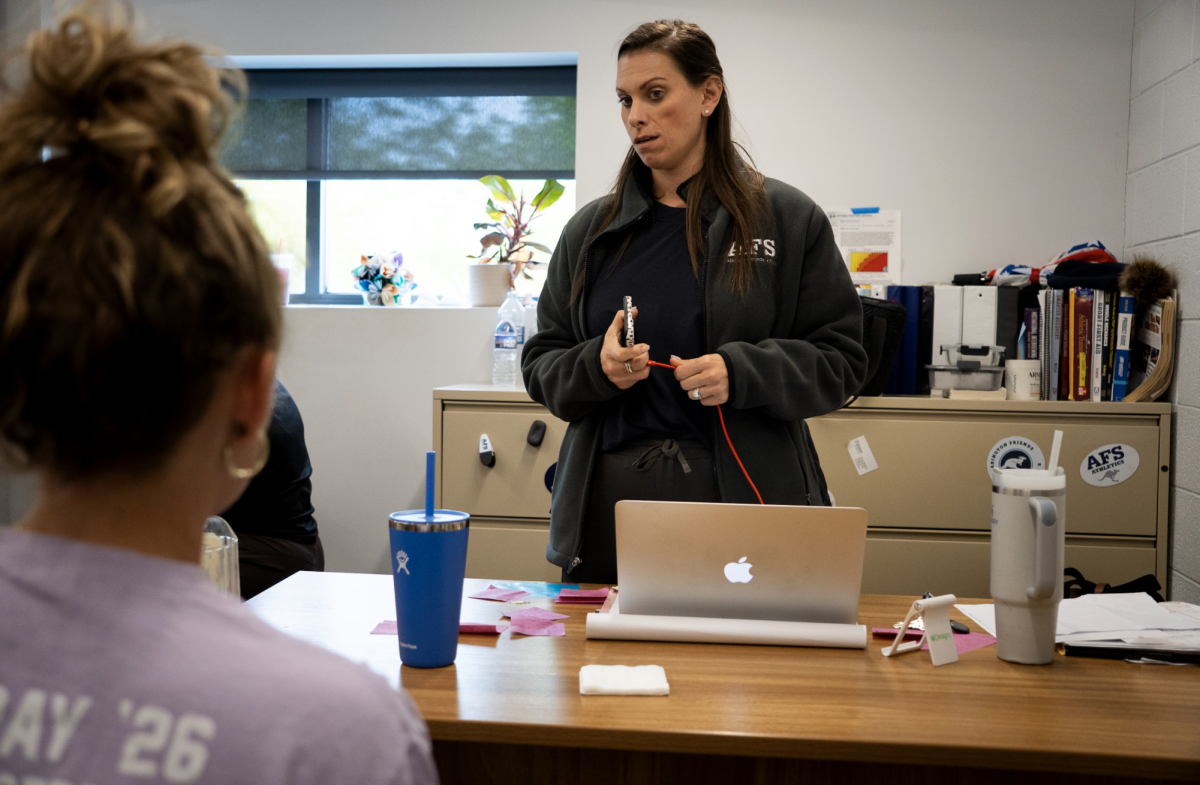
French teacher Dina Cohen, for one, said that she “[questions] anything Freud says,” but does it go deeper than that?
Is there more nuance to dreams than Freud claimed? Or are they really not even that important to the vast majority?
Over the course of a couple of weeks, I gathered data from 45 members of the AFS community–students and teachers alike–to see how prevalent dreams are in their lives. My survey contained questions that ranged from asking if the individual remembers their dreams often, to having them consider if their dreams aid them in navigating their lives, and the data was riveting.
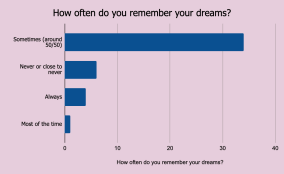
According to the survey, 34 out of 45 individuals remember their dreams only half the time, while the remaining portion always or never remember their dreams.
This data made me wonder if there were any contributing factors to people’s dreams. I know for me, if I take medication at night, my dreams are usually really vivid and wild, whereas if I go on my phone right before bed, I’ll stay awake for longer, disrupting my circadian rhythm and sleep hygiene, which definitely doesn’t help me with remembering dreams.
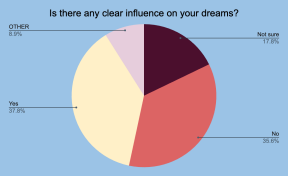
The results, shown on the above graph, made complete sense to me- if the majority of AFS students and faculty surveyed have some sort of outside influence on their dreams, it’s only natural that not all dreams are remembered.
When asked if outside influences interfere with her dreams, Alana Son ‘26 said, “Yes, definitely, a lot of the dreams I have are a reflection of what I watched prior to going to bed, because it is what I think about when sleeping.”
Son’s claim clearly resonates with most of the AFS population, as her words align nicely with the data provided.
However, even though medication or sleep supplements can affect one’s dreams greatly, the biggest factor for me is a dramatic change in my life or routine. If I start the school year, begin taking the train each day, or just make a new friend, my dreams will be sprinkled with these little pockets of life I experienced. The best part is that these dreams are recurring! So naturally, I asked the public: Are your dreams inspired by your life events? These were their responses:
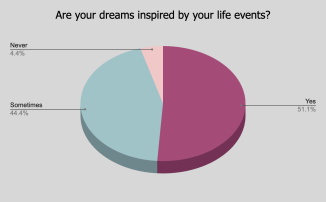
As the graph clearly conveys, my experiences with life events being extremely prevalent in my dreams is an experience that the majority live through, too.
When asked, French teacher Dina Cohen said that to her, “some dreams [help individuals] process reality. If a person, place, or event shows up in my dream, I think about the role it plays in my life, and if there is anything unresolved about it that I need to think about.”
I often find myself processing my past experiences and interactions with others through the conduit of dreams.
This experiment was extremely eye-opening for me and others.
In a conversation with Maddox Rems ‘29, he stated that ever since filling out my survey, he’s been “dreaming and remembering his dreams a lot more.”
This simple statement meant that my experiment had helped at least one person be more in touch with themself, even if just a little bit.
All in all, I believe that dreams are an extremely important and interesting part of human biology; they can truly help someone figure themselves, as well as life, out.




Rael Santana • Feb 20, 2026 at 10:20 pm
I think that the thing I found most interesting in this article were the statistics after the survey sent out to the school. I honestly had never expected that so many people would remember their dreams, whether it be sometimes or not, as I often can’t differentiate dream from reality, nor if I made something up as a conscious thought or dreamt it. Most of the few that I do remember aren’t based on reality either, often nonsensical compilations of whatever my mind decides to feed me as I rest. I have always wondered how much others have in common with me, and if what we do before bed truly matters, so this served to satisfy my curiosity to some degree.
Jason Holloway • Feb 19, 2026 at 2:57 pm
In the dreams, I found it interesting that only 34 out of 45 individuals remember their dreams only half the time, which is really weird. I normaly dont remember my dreams unless it was something that was really crazy. This rusults aline with my experiences because I sometimes don’t remember my dreams also. I once had this dream where I was on Mars, and I was playing football with a bunch of monkeys anbd that was really weird, and I remember that one. That’s like the only dream I really remember all the details for. So that’s it.
Elsa • Feb 19, 2026 at 2:37 pm
I think it’s interesting how most people find that if something new is introduced in their life, then they will automatically dream about it, and I would say this is true for me, too. I rarely remember my dreams; however, when I do, they are similar to events I experienced that day, or they are related to something I’ve been recently thinking about. I’ve noticed, though, that my dreams have become less interesting and creative as I get older. As a child, I remembered my dreams almost always; I believe it was because of how unusual and surreal they were. But now I occasionally forget for a minute or two if something really happened or if it was just a dream.
Gia • Feb 19, 2026 at 11:49 am
I find it very interesting that dreams are able to be more easily remembered if you take medication. I remember a lot of my dreams especially when I get scared by them such as a dream I had where I got chased by a wasp that kept getting bigger or when I had a dream where my parents had switched personalities. Sometimes my dreams correlate with my real life but the ones I remember usually don’t have that much relation with the events that happen in real life but more my own thoughts and fears. I think that is accurate because I am often more in my head than in reality and I tend to put things that happen to me to the side. I believe dreams are an important thing to document and would definitely read more on it in the future!
Mila • Feb 18, 2026 at 6:09 pm
I really liked the idea behind this article. The idea to write about dreams seems really interesting, and I like how it was made relevant to the community by interviewing people. The thing that stood out to me the most from this article is the small percentage of people who remember their dreams every night. I never spend too much time thinking about my dreams, and I really only remember them half (or less than half) of the time, which was the most common answer on the graph from the survey as well. I wonder what the difference is between me and someone who remembers their dreams all of the time. Is it something scientific, or is there something people are able to do to be able to consistently remember their dreams?
Maddox Rems • Feb 18, 2026 at 12:46 pm
I found the most interesting part of this article to be the role that dreams play in one’s life. I agree with Dinah Cohen of how dreams help to process situations and relationships with others. The memorization of dreams for me typically varies, but I would say overall I do remember the majority of my dreams when I first awake. However, unless a dream is prevalent enough for it to disturb me, I will forget about it after a few days. I would say all of the majority results perfectly align with my dream patterns. I sometimes remember my dreams, there is always a clear influence in my dreams, and my dreams are always inspired by my life events.
Skyler Tremblay • Feb 18, 2026 at 9:16 am
I found it very interesting that people think that dreams play a important role in the AFS community. I also find it interesting that so many people remember their dreams, because as for me I remember SOME dreams right after I wake up but then I eventually forget them. I have realized sometimes that dreams are influenced by the most random things that I do not remember until they resurface in my dreams. I find it interesting how your subconscious is almost like a different person that chooses to remember stuff that you might actually not remember. Really interesting article.
Laiyah S • Feb 2, 2026 at 11:30 pm
I found the part about how you go to sleep and what you’re doing beforehand affecting the way you dream and if you remember them. I don’t remember my dreams that often but I do use it as a way to know when I’m about to wake up. Sometimes when I’m able to remember my dream or I am conscious enough to really know what’s going on in the dream I know I am about to wake up. Then after I wake up I have about 2 minutes before I forget what happened in the dream, when that happens I either write it down or text my friends depending on how interesting the dream was. I kinda feel like my dreams tell the future, like there will be an event or something someone says or does in my dream and then the next day or like two days later it happens in real life and I get a déjà vu feeling in the moment. There are also times where I have the same dream twice or three times, when that happens I really try to focus on what happens in the dream and look for any clues incase it’s like the universe telling me something that I missed the first time.
Kate Timmer • Feb 2, 2026 at 8:10 pm
While I was reading this article, I really liked the use of rhetorical questions at the beginning. I think those set a scene for the rest of the article to answer the questions, and to follow up and expand on the authors opinions. As aligning with the data Samara has collected, I remember my dreams around half the time. I think there is a clear correlation with what I think about at night, specifically while trying to go to sleep, and what/who shows up in my dreams. In relation to the last graph pictured, many of my dreams are inspired by people I know, things that happen, or things that I wish or will happen.
Will • Feb 2, 2026 at 5:15 pm
When reading this article what I found the most interesting was the statistic and research around if dreams inspired by events in your life. I found this interesting because when reading this I connected the dots and remembered a few dreams that I had that were inspired by real events. When I wake up I almost always remember the dream that I was having before I woke up or at least some dream from the slumber before. I think what was interesting to me was that a lot of the statistics presented aligned themselves with my own life and experiences. For example recently I’ve been playing a lot of this video game Deadlock which is a MOBA and one night after I played it I have a slight memory of in my dreams imaging that I was playing it.
Henry Goldstein • Feb 1, 2026 at 9:51 pm
I find it interesting that, for our community, more than half of the dreams experienced are based on life events, whereas that is not the case for me. For a good portion of my dreams, people from my life appear, but what happens in my dreams usually has little to do with what I do in real life. I don’t remember my dreams too well, but when I do, it is usually because I experienced intense emotions and feelings in that dream that stick with me even after I wake up. One time, I had a dream that I was in space. During that dream, I had an intense feeling of awe, which is why I think I still remember it. I would like to improve my dream recall because I think it could tell me how much events in my life influence my mind even when I am sleeping.
Helene • Feb 1, 2026 at 9:11 pm
All of these stats were really interesting and for some of the answers I really wonder what their experience looks like. Like the 4.4% who said their dreams are never inspired by life events, what does that mean? I feel like for me, usually my dreams at least have something vaguely to do with a thought, event from the day, a memory, or at least have people I know in them. And for those who never or pretty much never remember their dreams, I wonder what the factors that contribute to that are. I kind of go in an out of periods of remembering my dreams, I feel like it must have something to do with outside factors like, quality of sleep, amount of sleep, etc, etc.
Anjali Tremblay • Feb 1, 2026 at 8:17 pm
I thought the proportions of people who actually remember their dreams versus the people who didn’t was so fascinating. I wonder how that would compare to the rest of the world/ if AFS is representative of the rest of the world in that way. I know in many parts of the world, people really value and pay attention to the meaning of dreams. Personally, I tend to have really odd dreams where people and places in my life are completely mixed up. For example, I might have a dream with people from my elementary school at a high school event or vice-versa. I have had dreams about time travel, dreams that take place in different time periods, and dreams about my life in the future. Honestly, it’s really interesting and I wonder if other people have similar dreams.
Radha • Jan 30, 2026 at 2:48 pm
I think the idea that dreams offer insight into a person and their habits is an interesting one. I know that there are many people who work to understand the meaning of dreams and what they can tell us about ourselves, but the study of how we can influence our dreams during our waking life through things like routines fascinates me as well. I wonder if different people are more likely to remember different dreams because of what they may value or fear the most. There are so many unanswered questions and possibilities to be explored on the topic of dreams. It is my opinion that they are an underrated and under-researched topic of science, and I hope to learn more about them.
Elise C • Jan 27, 2026 at 2:47 pm
I really appreciate the research that went along with this article! I always had a deeper question: What does it mean when you have a dream that is actually an event that takes place in the future? It started more frequently when I turned 10 years old, but I noticed I had these dreams that played out in reality approximately 2-6 months to even a year later. Sometimes I remember a movie or book before actually having seen it; the unconscious realm of dreams is a mystery that fascinates me!