








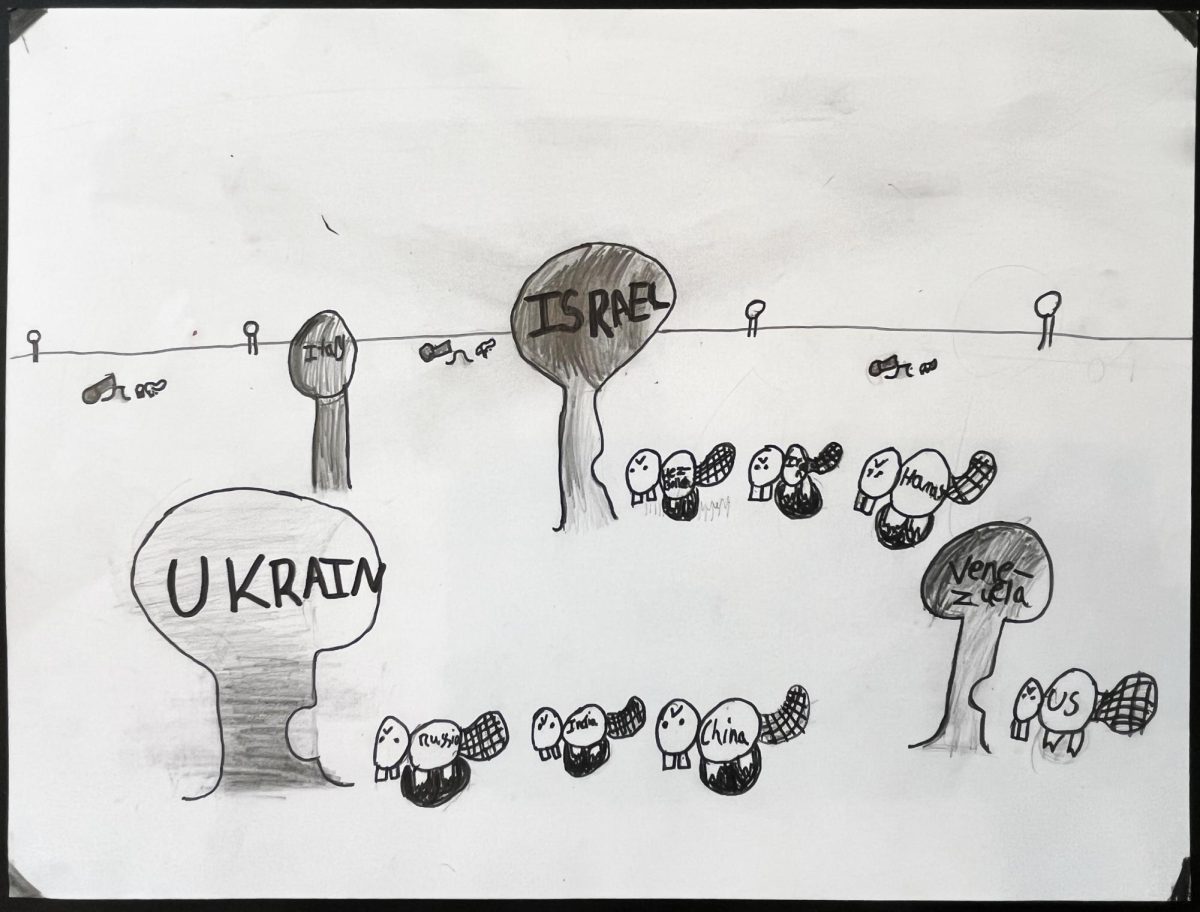


![History department chair Ashley Cleary said, “I think one of the [goals] that we think about in history specifically is creating an environment where people feel that they can share their opinions… I think a lot of it starts with just the way that we build relationships at this school.”](https://afsblueandwhite.net/wp-content/uploads/2025/11/Palestine-Article-illustration.png)
October 7, 2023 marked the devastating start of the war between Israel and Palestine. Today, more than two years later, there are still protests worldwide to support both sides of this war. There have been close to 2,000 protests in the U.S alone, involving “hundreds of thousands of people.”
Abington Friends School’s approach to this conflict has been to prioritize students’ well-being and opinions, maintaining a balance between truth and discretion, and staying true to its Quaker values. I interviewed members of our community from student to administrator to see if this approach has been successful.
“I think the school is in support of the students through remaining neutral, which I think is a great way for everyone to feel like they have a place without feeling ostracized,” said Leila Cohen ‘26.
“I think affinity groups are a place where students are able to kind of allude to these feelings…I’m the clerk of MENA Muslim, and I’m also in Jewish affinity… We’re comfortable to share our beliefs without undermining other communities,” Cohen said.
In a setting where there are many diverse ideas all existing at once, keeping such discussions for smaller groups allows school environments to remain safe.
“I think, in an educational environment, I don’t think transparency is the best idea… I think that’s something that should be reserved for close communities rather than the full school,” said Cohen ‘26.
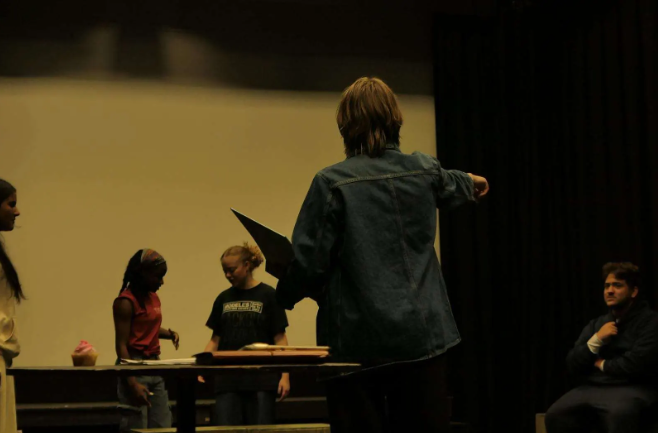
AFS faculty work to ensure that their learning spaces are suitable for those who may not know about this conflict, and those who are eager to express their opinion on it.
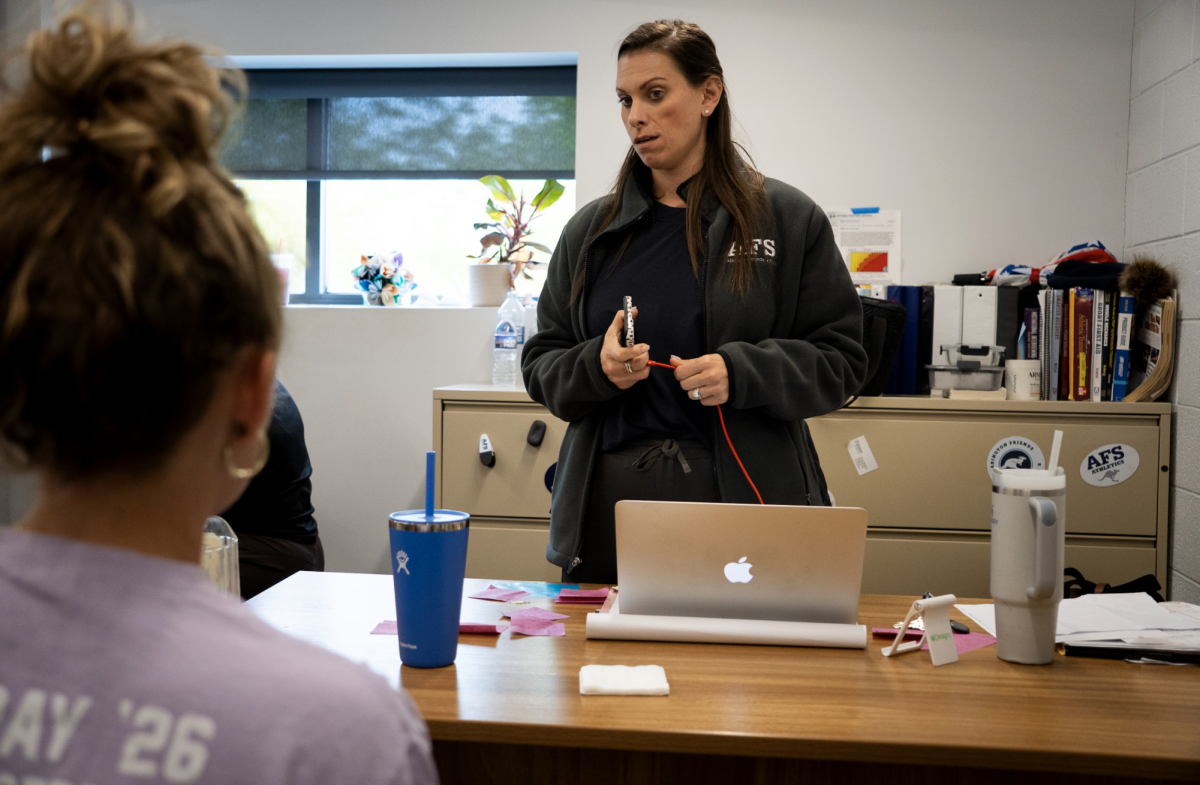
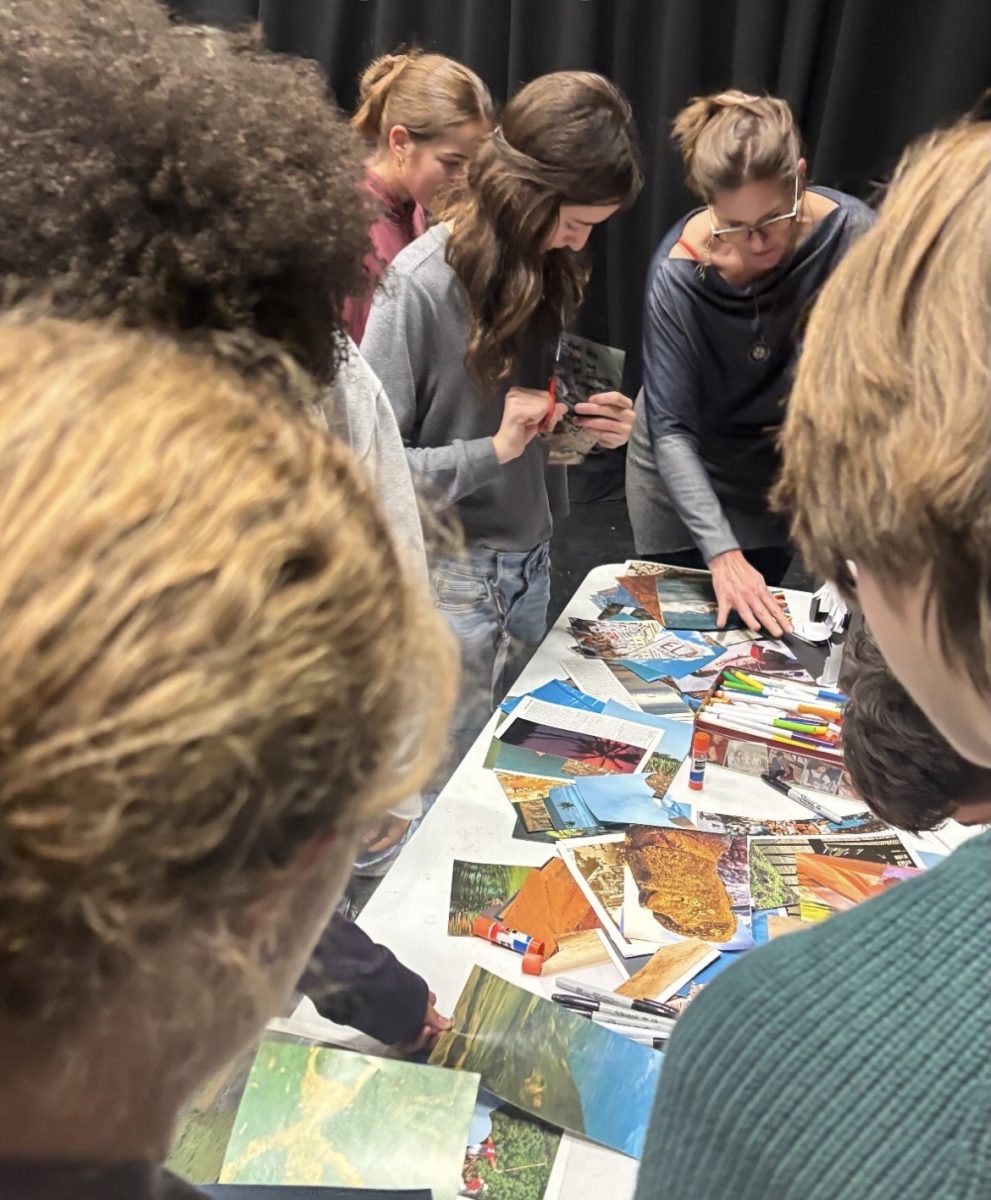
History department chair Ashley Cleary said, “I think one of the [goals] that we think about in history specifically is creating an environment where people feel that they can share their opinions… I think a lot of it starts with just the way that we build relationships at this school.”
Cleary noted that some students have direct connections like family ties, religion or culture, while others do not. Having different perspectives discussing this topic can create tension and make these political topics personal.
“I think having the ability to talk about things in the classroom is super important. I think the reality is, though, that this is not something that applies equally to every topic. There’s topics and circumstances that feel a lot more close to home to certain students in our community,” said Cleary.
While Cleary offered a classroom perspective on how teachers can create a safe space for difficult conversations, the broader question of how the school as a whole navigates such sensitive issues called for a different lens.
On an institutional level, according to Head of School Nicole Hood, proceeding with neutrality is the best option.
“This is a question that faces heads of school across the country, and we have had vigorous conversations [about it], even before I came here,” said Hood. “I’ve been really careful, actually, and not inclined to make public statements around a range of issues, unless I could see a real direct impact on our school community.”
Hood said that it is pertinent that schools, specifically ours, prioritize the students and community. And not so much what happens outside of school.
“But there are times, certainly, where something rises to the occasion of needing to be addressed broadly,” said Hood.
Hood talked about the power outage last year as an example of an instance that required a statement from her.
Hood said, “Those are things that have a demonstrable impact on us.”
According to a shared statement by eight Quaker organizations, “Quakers believe in the inherent worth of every individual and have a history of supporting both Palestinian and Israeli communities.”
AFS’s approach, rooted in Quaker values, prioritizes balanced views in the community.
Hood said, “My personal opinion on the conflict in Israel and Palestine isn’t really pertinent to your day-to-day educational experience, beyond my saying and leaning into the Quaker testimony of peace, which says we are opposed to armed conflict everywhere.”

Oonagh • Dec 2, 2025 at 2:11 pm
I think that the different perspectives shared in this article are equally important and valid, and that is pretty much what I think AFS is trying to foster. I agree with the approach teachers are taking in their classrooms by not sharing their personal perspectives, but opening their spaces up for students to use as rooms to possibly share or debate, respectfully. I do agree though, that when students have differing opinions it can create a tense environment and possibly cause discomfort, which is another reason I agree that affinity spaces are all the more important. A random group of students in a history class may not have as much of a connecting conversation about a controversial topic as a group of students in an affinity space. On the other hand, having difficult conversations with diverging opinions is an important part of life and a great skill to be able to navigate, but it is not always the best option, especially during class time. I’ve had a few conversations about politics or controversial topics in school, but mostly with my peers that share similar ideas to me. While I recognize the importance of having conversations with those that do not share your opinion, in my experience I have been able to find opportunities outside of school and am fine with leaving that there. I don’t feel the need to cause any unnecessary tension or stress during my school day.