





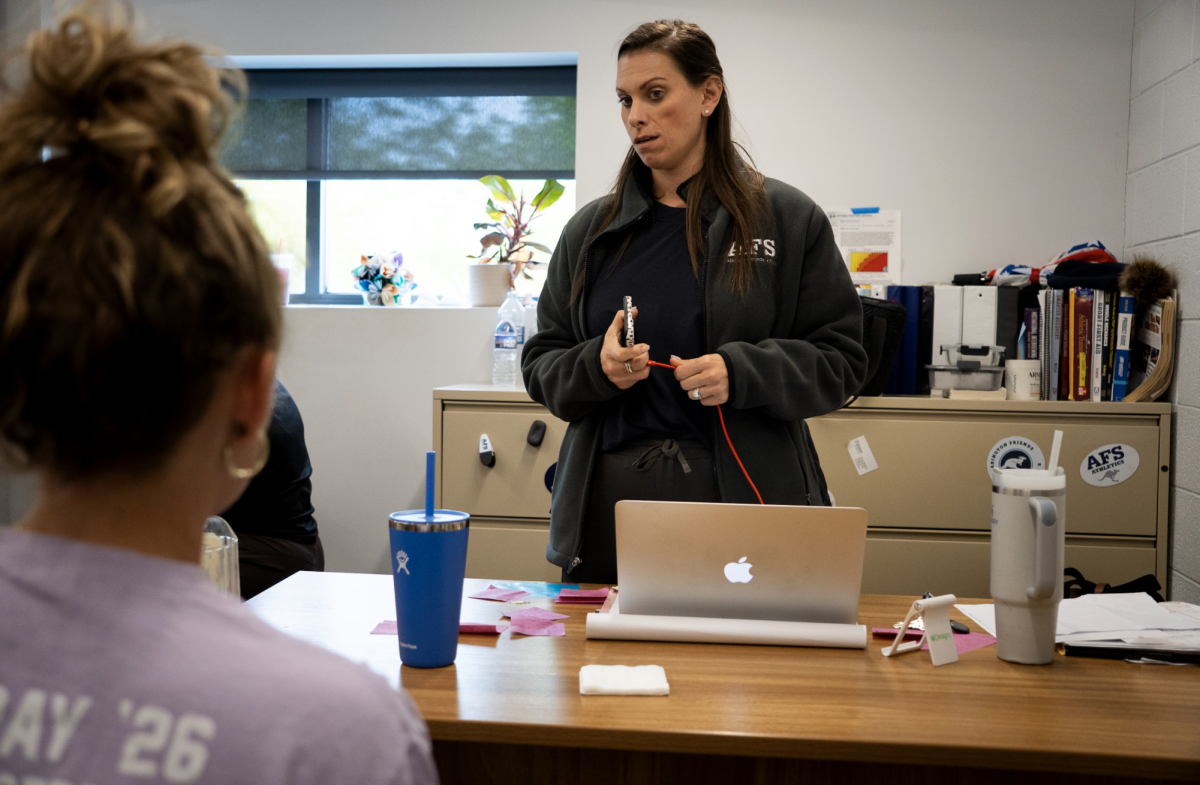





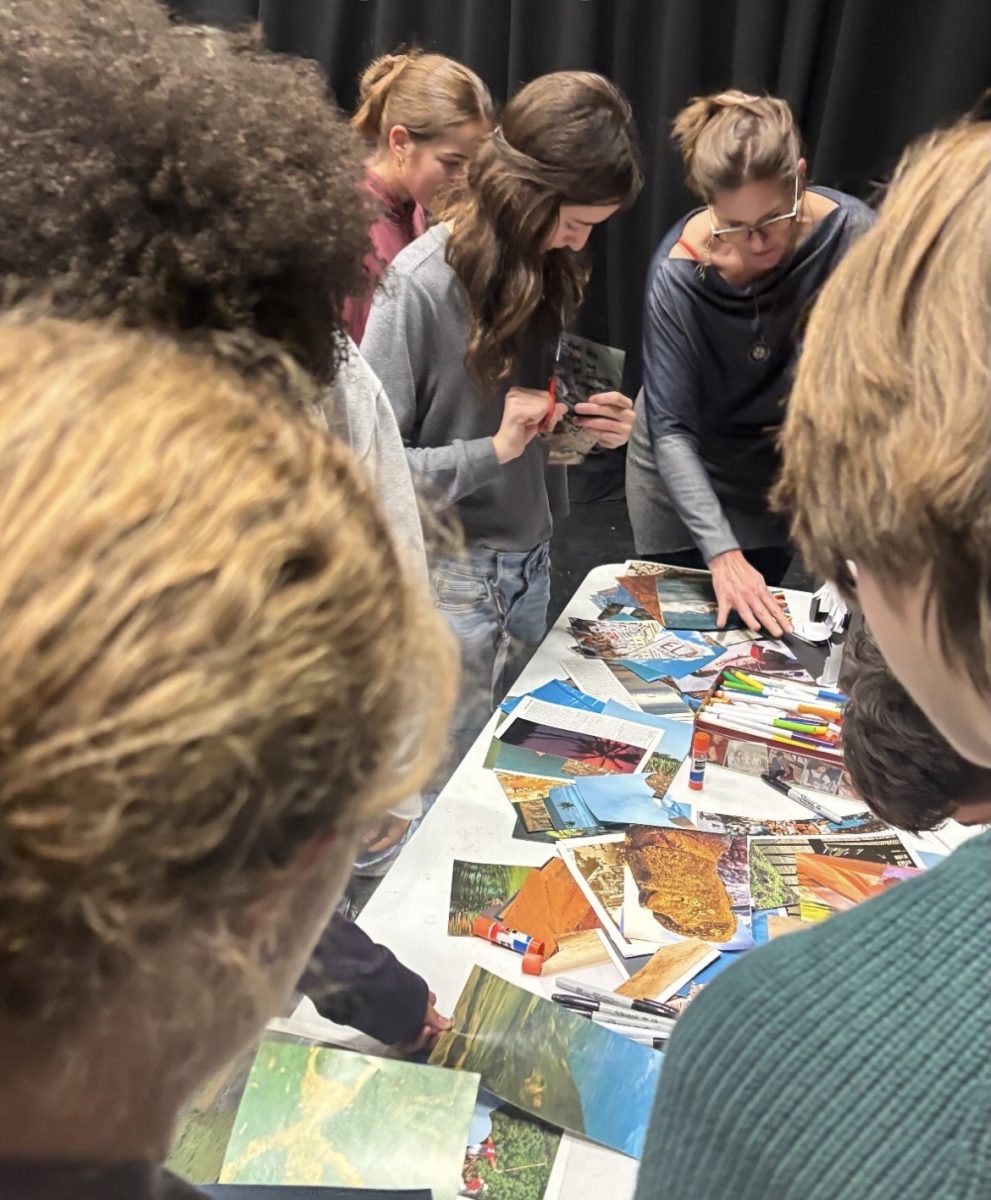







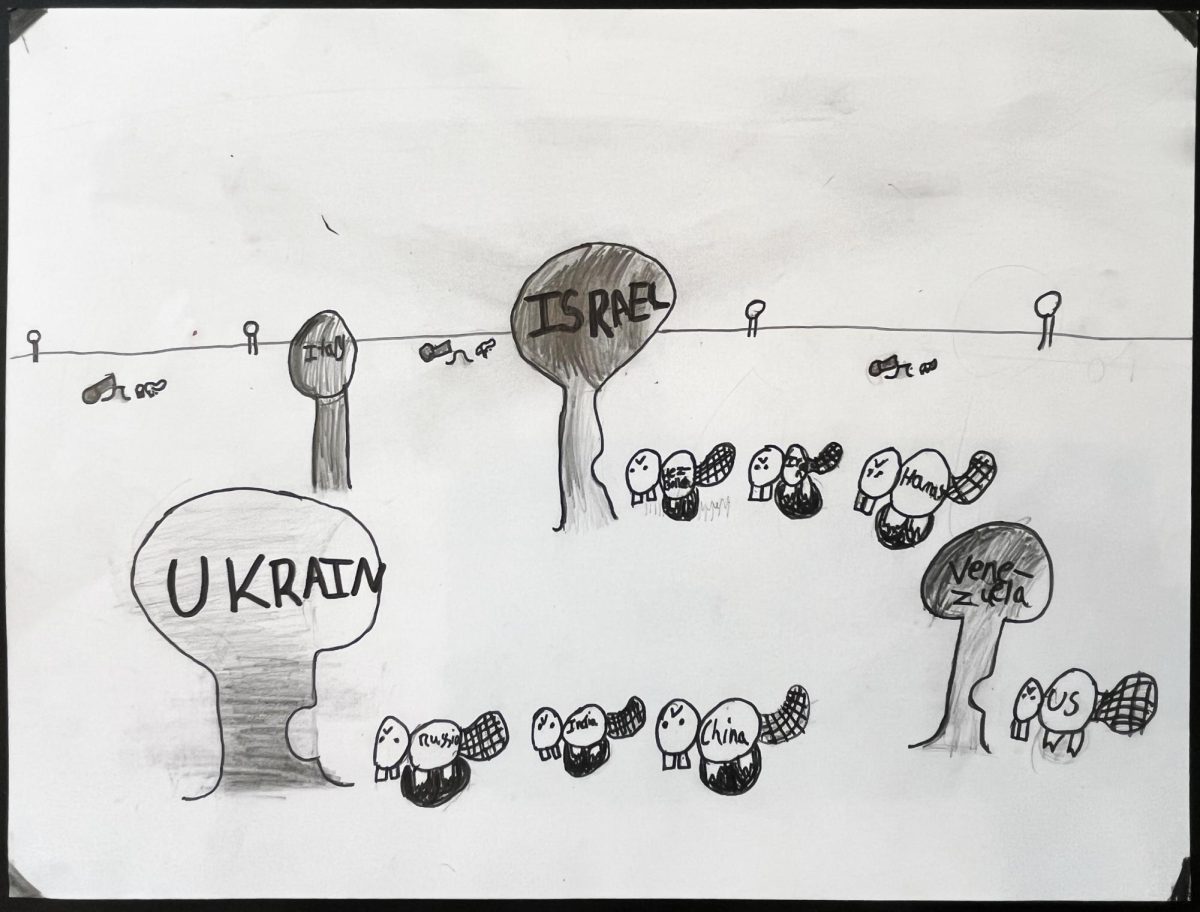



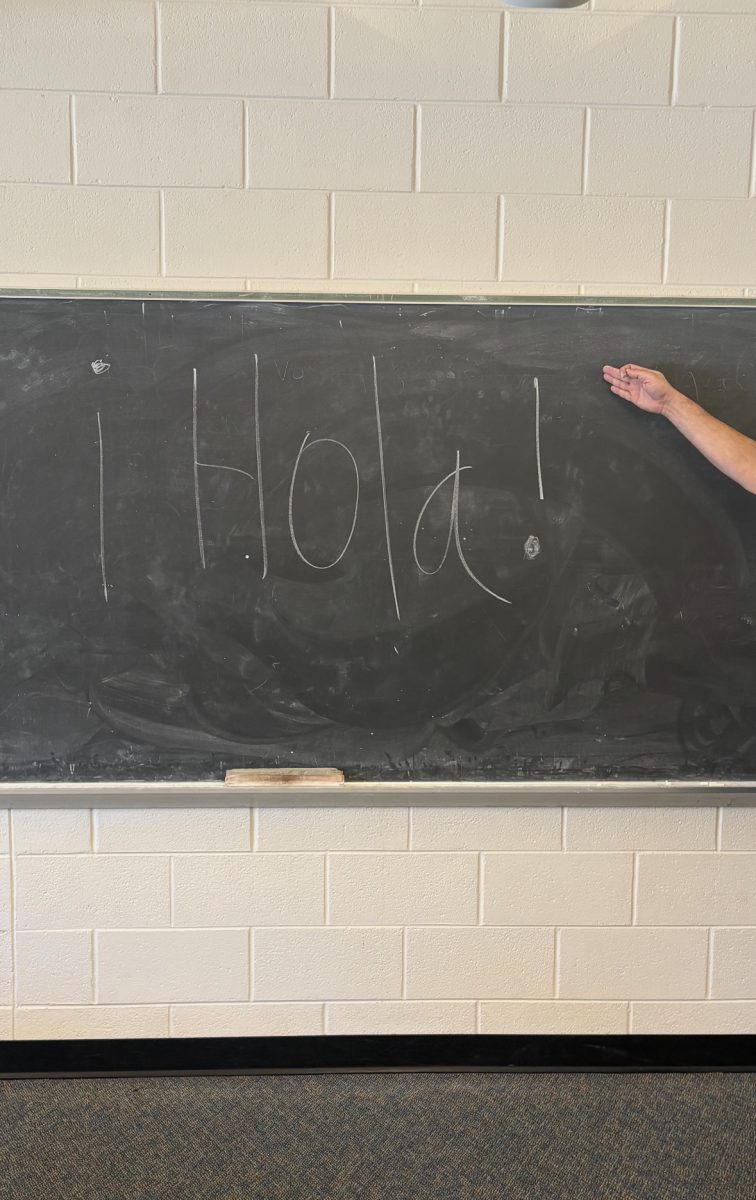
Drew Benfer has been teaching at Abington Friends School for almost 20 years. In that time, he has had an outsized impact on the school, from coaching boys’ soccer to lending his room to the GSA. But he hasn’t just had a social impact, he has had a political one too. Benfer offers some of the few politics classes, from “Politics and Protest” to “Campaigns and Consequences.”
“I taught in Washington D.C., [and] in Alexandria, Virginia at a boarding school, so after being inside the beltway for seven years, [politics] continued to capture my imagination, and when I had the opportunity to create a course on political history at AFS, I jumped at the chance,” said Benfer.
“I… felt I would try to create a course that was around elections, or things that were happening at the time,” said Benfer, speaking on his goals for a political history course at AFS.
“The first time I taught a political history course [at AFS], a Supreme Court justice had just retired, so we focused on the process of selecting Supreme Court justices, and we were able to watch committees take place, and we looked at the history of it,” said Benfer.
Benfer said, “I think students are interested in politics…[and] to have a dedicated chance to talk about it and try to understand it more is wonderful.”

(Sam Calandra-Jayne ‘26)
Liam Hilliard ‘26, who is currently taking “Politics and Protest” with Benfer, said, “I think the discussion of nonviolent action is very important.”
Hilliard said, “Tensions in the [United States] are getting increasingly high, and as this happens, I think that understanding the relevance of nonviolent action is a very important thing.”
Benfer said that he likes to make his classes relevant to modern times and not the same class over and over again. “It’s not an AP (Advanced Placement) course… the College Board doesn’t dictate what we do,” said Benfer.
Sam Lopata ‘26 said, “There are lots of protests going on right now. Talking about nonviolent protest when there’s definitely some violence [right now]… It’s relevant.”
At the same time, Benfer said, “It is a history department class…I’m heavily influenced by finding historical examples that could be seen as parallels, or places where there might be some differences. Politics has been part of our country’s history from the beginning.”
Benfer referenced earlier that the classes he offers are not APs, but the College Board does offer a politics class – AP United States Government and Politics, more commonly known as AP Gov.
The College Board website says that “In AP United States Government and Politics, you’ll examine the relationships between the president, Congress, and the Supreme Court, and explore how different political ideologies and opinions shape American politics.”
Benfer said, “Sure,” when asked about AP Gov, “But I also think there are opportunities to do an honors elective…I don’t think we’re missing out on anything too much.”
With teaching a class that revolves around politics, past and present, possible political bias becomes top of mind.
Benfer said, “There is not a single political viewpoint that the school espouses; therefore, my class should be a reflection of that.”
Hillard said, “It’s almost impossible to teach fully apolitically, but I think, as these things go, [Benfer] really does try to highlight the events rather than stake a claim about them.”
This sentiment was echoed by Lopata, who said, “I think [Benfer] wants people to disagree [with each other] and have talks…I think he tries to present things in a way where you can make your own decisions.”
“[My] task is to give a chance for [students] to voice their opinions, and it’s not my place to tell you you’re right or wrong,” said Benfer. “You are entitled to your own opinion.”


Honor • Nov 13, 2025 at 12:55 pm
I was really interested in his perspective on the differences between his class and AP classes, which are controlled and can be very repetitive. I thought it was intriguing how some students believe he wants them to disagree or debate their political opinions so that people can find what they agree with. I think it should be shared in certain circumstances. In classes like this, I think it’s important to be clear about how you feel about certain issues so that students can understand that you may have a different opinion from them. I don’t think teachers should share this in classes where it isn’t the main topic or when they are sharing to influence their students. I haven’t really engaged in a political conversation about the current state of things, but I have had those conversations with friends in general, and I think it’s very helpful to open you up to new perspectives. I think the best way is to avoid forcing their views onto students and instead introduce them to different perspectives that others have, so they can see if they agree or disagree.
Henry Goldstein • Nov 7, 2025 at 2:11 pm
I believe that Drew Benfer’s courses fill an often-overlooked but very important gap in the way our academics are structured at AFS. When students are not taught about government and politics, they are less likely to be engaged and informed about our elections and governmental affairs, a problem that persists in schools today. In 2024, less than half of voters aged 18-24 voted in the presidential election. This is significantly below the nearly three-quarters of those aged 65 and over who voted in the same election. I believe that this difference in turnout is due to a lack of civic and political education. If teachers do educate students on politics, I believe they have a right to express their opinions without forcing them on students, because it can create a more impactful experience for the students. Instead of arguing, students and teachers can discuss and learn at the same time. I haven’t been exposed to too much discussion about today’s politics in my classes, but I am excited to take the “Campaigns and Consequences” class in the spring. The best way for students to become more educated about politics is simply by being exposed to politics inside classrooms more often.
chloe • Nov 7, 2025 at 9:48 am
I believe that teachers can best support students in developing their own political perspectives by sharing their varied life experiences with students, allowing them to learn from these experiences. Teachers are able to provide students with a more multifaceted and informed perspective on what they are learning, simply because they have more life experience than we do. They have more specific events and experiences to share about the various kinds of political situations they have witnessed throughout their lives. I believe that sharing this knowledge with students will enable us to approach our political learning through different lenses and experiment with various perspectives. It will also provide us with more informed perspectives on topics and make it easier for us to comprehend modern-day political events that may be explained to us in different terms by our teachers.
chloe • Nov 7, 2025 at 9:47 am
I believe it is better for teachers to remain generally neutral about their own political perspectives. There are some exceptions to this approach, notably when the discussion concerns the humanity and morality aspects of politics. However, to foster an environment shaped by a multitude of perspectives, I believe it is best to adopt an unbiased approach to hearing all points of view on political topics. When students are not completely informed on topics, I believe it is better for their teachers to support them in figuring it out for themselves, rather than influencing them and the classroom as a whole with their personal bias and opinions.
Serafina • Nov 7, 2025 at 9:29 am
I think that it is incredibly important for students to learn about politics and the way our government is structured. Our society is incredibly polarized, and it’s important to allow students time and space to determine their own opinions and beliefs before they are met with pressures from the outside world. I think that there is a tendency for students to blindly follow along with whatever their teacher says, and take all statements, fact or opinion, at face value. This is where we lose critical thinking and reinforce bias. Just as it is the teacher’s responsibility to present all sides of an argument to their students, it is the student’s responsibility to consider all perspectives and form opinions (especially political ones) based not only on the facts reported, but also on personal values.
Paige • Nov 7, 2025 at 2:01 pm
Serafina, I agree with how you approached this article and your response. I also believe that allowing students to develop their own opinions amidst an extremely politically intense time, and embracing that political views won’t always coincide with what you believe. Learning more about opposing ideology I think is a more positive outlet than ignoring it entirely. I do not think teachers should explicitly and openly share their political opinions because of their place of authority. Students may take in those ideas shared in the classroom and disregard their own because simply, that is what a teacher thinks. There are ways to navigate diverse political views in the classroom, but creating a set stance on one is not the most beneficial.
Natalia • Nov 5, 2025 at 2:12 pm
This is such an interesting topic! With the elections yesterday, this feels extremely relevant and relatable. History is one of my favorite subjects, and I’m also incredibly interested in the law! It’s not often that we get to talk about these things, and ask honest questions without feeling a bit of pressure. I admire that Drew’s class allows space for every and all opinions, almost forcing you into a world where not everyone has the same views. This is an incredibly important thing to experience, especially considering that many students often don’t think about what they believe in until it comes time to vote. Students are genuinely interested in these things, and it’s even better that it’s presented in such an engaging way! This should be the standard for history classes: open, and inclusive!
chloe • Nov 7, 2025 at 9:49 am
I agree with your opinion on Drew’s teaching style, as I also believe that giving space for all opinions fosters the most productive learning environments, both in and out of the classroom. I appreciate your perspective on this environment, which forces students into a world where not everyone shares the same views. I think that in preparation for college and beyond, it is so important to be able to learn in environments where people hold different views, and even if you disagree, there is so much to be gleaned from listening to different perspectives. I also agree with what you said about this causing students to think about their beliefs before voting, as choosing leaders is obviously such an important choice, but being informed about everything they stand for through having an open mind is a skill that not only you, but everyone who will be affected by this leader.