













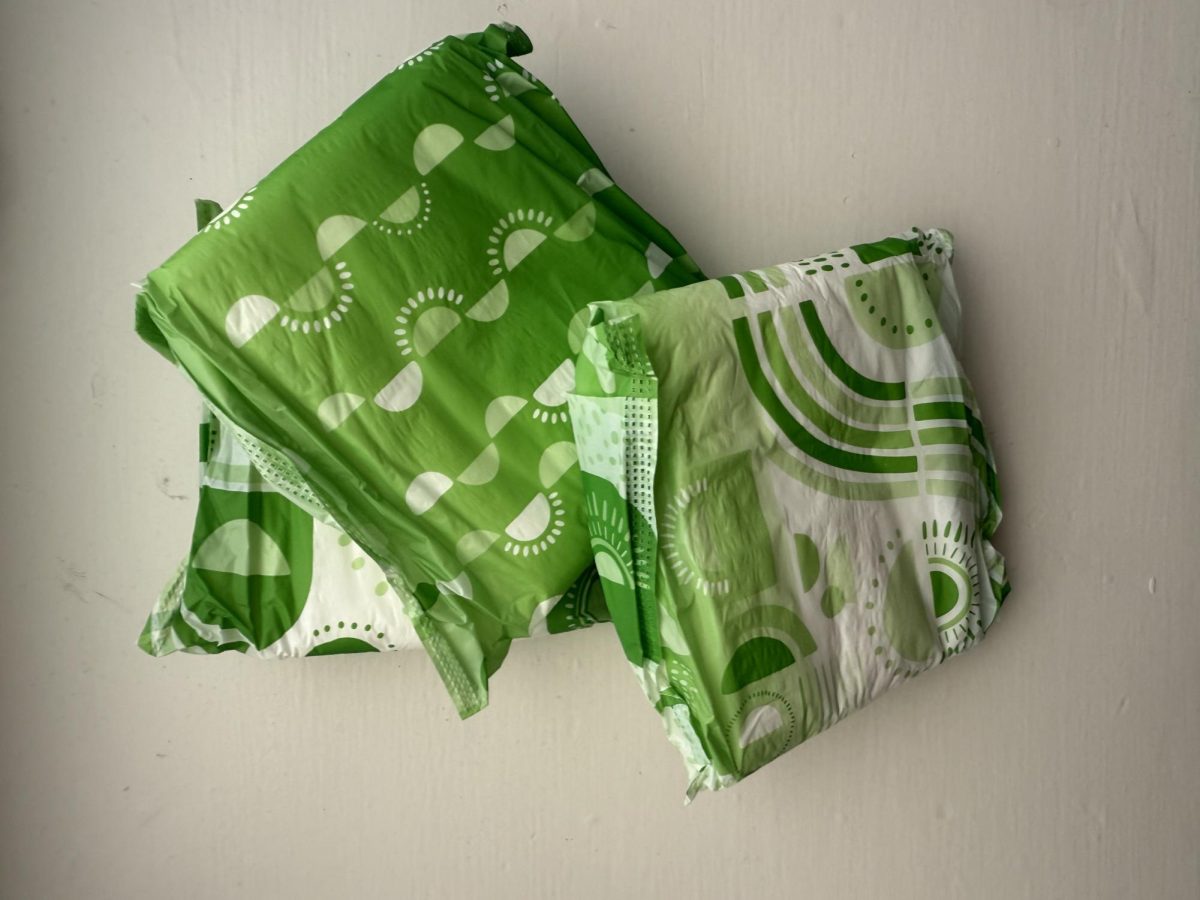
We all know what menstruation is. Every month, the roughly two billion menstruating women and people on earth essentially get sick for a week, experiencing bleeding, pain, and disruptive hormonal shifts.
For those who have access to menstrual care, this reality is often manageable. However, if we had to survive it without heating pads, pain relief medicines, or even a device to absorb our blood, we would be much more daunted.
Lack of access to menstrual care turns periods from an inconvenience to a nightmare. Period., an organization which exists to address lack of access to menstrual care, states that lack of menstrual care consequences can include “diminishment of human dignity…ongoing inability to fully participate in educational, professional, and personal endeavors, risk of infection, emotional anxiety, and logistical challenges that present short term and long term repercussions.” Gaining attention only in recent years, this social dilemma has come to be referred to as “period poverty.”
It is true that economic inequality compounded by patriarchal policy is responsible for many cases of inadequate access to menstrual care. Menstrual healthcare products, as well as a variety of other products marked as “feminine,” are often priced higher and taxed more than “masculine” products, according to the United Nations, who denotes the misogyny of this phenomenon by naming it “the pink tax.”
Additionally, much of the United States classifies Viagra–a treatment for erectile dysfunction–as a tax-exempt health product, while menstrual products are classified as “luxury products” with corresponding higher tax rates. By this double standard, a non-essential product primarily for men is more important than an essential healthcare product primarily for women.
If my menstrual blood is visible because I can’t afford a pad, I will likely be asked to leave work, school, or most public spaces, understandably. The inconvenience of erectile dysfunction prevents nobody from living their daily life, fulfilling obligations, or earning the money they need to live. Not to mention that menstruation inherently affects a far greater number of people, every single month, for almost half of their lives.
For the more-than-half of menstruating American women and people living in period poverty, suffering is the direct consequence of this pointedly imbalanced systemic dismissal and obstruction of vaginal healthcare.
All of this said, there is a dimension to lack of menstrual healthcare that the term “period poverty” fails to encapsulate. In Gaza and in ICE detention centers, menstruating women and people are suffering the same effects as free American victims of period poverty to an even greater extent – not because they are free people who simply can’t afford healthcare, but because that healthcare is being intentionally denied to them.
The Government Accountability Office (GAO) found that Immigration and Customs Enforcement (ICE) consistently failed to provide detainees with menstrual healthcare. Following these findings, the GAO officially requested that ICE provide these items. ICE responded by openly and firmly refusing to do so.
In addition to its inherent effects, the GAO report revealed that a specific effect of denial of menstrual healthcare within ICE facilities was black-market trade of menstrual products between detainees. If detainees must rely on illicit trade to access basic healthcare products, there is no guarantee that those products are clean and safe, creating potential for infection.
Additionally, the report found that some guards displayed favoritism by providing menstrual healthcare only to personally chosen detainees. This creates a power dynamic with a revolting potential for abuse.
In Gaza, where the Israeli Defense Forces (IDF) have blocked the entrance of menstrual products in addition to other necessities by repeatedly attacking and detaining aid trucks and aid workers, the 680,000 menstruating women and people often resort to ripping scraps from their tents or clothing to absorb their blood, according to a study by the National Institute of Health (NIH). The study commented that such desperate attempts put Gazan women at risk of bacterial vaginosis, urinary tract infections, and toxic shock syndrome.
In an interview with Euro-Med Human Rights Monitor, Gazan mother Aya Kamal Ashour Abed stated that healthcare products arrive only in “small quantities” every three months, are sold at unaffordable prices rather than provided for free, and often do not include menstrual products. Abed said, “Even though my children’s diapers are unusable, I have to cut them up into tiny pieces and use them as sanitary pads. During my period, I have to use one pad for the entire day, which has led to numerous infections.” Healthy menstruation management requires changing pads multiple times per day.
Because the IDF has launched targeted attacks at least 890 healthcare facilities and destroyed 31 out of the 36 previously-existing hospitals, as recorded by the European Union, infections like these often escalate due to lack of treatment.
The cases of Gaza and ICE are relevant and necessary extensions of the discussion of period poverty because they reveal a disturbing emergent pattern: in situations where one group of people has total control over a separate group and have demonstrated the intention to harm, the reality of menstruation provides an inherent opportunity for them to increase the suffering and exploitation of female victims. In regards to the importance of access to menstrual healthcare, this pattern is telling.
Depriving humans of things that are necessary for the preservation of their basic health has long been a tactic of violence and control. So let’s tell it like it is.
A clean, safe pad or tampon is not merely “feminine hygiene,” and it is certainly not a “luxury product.” It is required healthcare. Period.