

Just like the many other basic expressions of humanity that the Trump Administration has attempted to defund like environmental justice, foreign aid, public radio and broadcast, the National Parks Service, Diversity, Equity, and Inclusion, and countless others, the arts have been no exception. Funding for the arts has had proposed cuts in the National Endowment for the Arts, the National Endowment for the Humanities, and the Institute of Museum and Library Services.
This is a tell-tale sign of an administration that is purely concerned with private interest and getting away from the “woke agenda,” “woke” meaning a recognition of social issues, equity, and the whole truth of our history and current day. Art is innately expressive and inclusive to people of all kinds, across race, religion, economic status, and across oceans and time, a pretty “woke” concept. Art is a powerful tool for progress: when facts do not appeal, sometimes art can.
Whether it’s a novel that uses a poignant analogy, a movie addressing a systemic problem, a photo or painting depicting a horrific event, or, in our age, a post or “edit” on social media, art draws the audience’s attention to issues they were unaware of. So it’s logical that a governmental body of hate mongers and truth deniers would want to defund and avert attention away from artistic expression and truth-telling.
For the last couple of years, social unrest has reached a boiling point between Trump’s executive orders, the ICE raids, the mistreatment in detention centers, the recent release of most of the Epstein Files, the thousands of killings, destruction, and starvation in Palestine, Sudan, and Congo, among a never-ending list of other heinous crimes against humanity.
Where Americans could allow themselves to be paralyzed with frustration, many have chosen to express their anger instead. One of the most impactful ways information is being spread is through the arts. The performing and literary arts do a lot of good, but visual arts have a distinct way of catching audiences’ attention quickly and simplifying complicated issues for those who do not already possess the context or general knowledge of the subject.
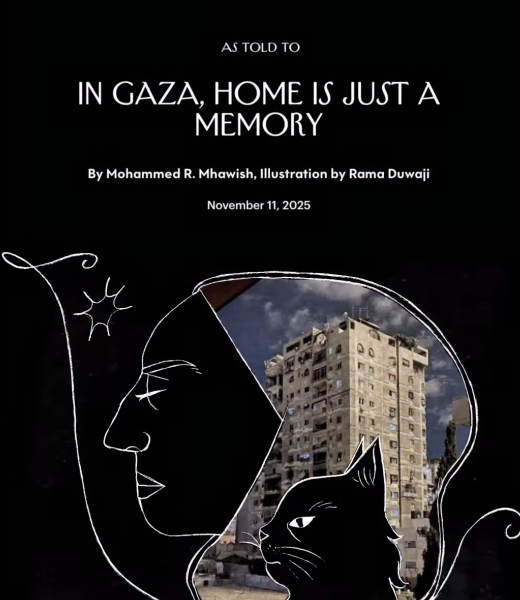
Many independent and journalistic illustrators are depicting these complicated moments in easily absorbable, thoughtful, and often beautifully done visual aids. Rama Duwaji, a Syrian illustrator and the first lady of New York City has drawn powerful imagery of people, often women, impacted by the violence in Gaza for many magazines as well as for her Instagram page. Her ability to depict the raw emotion of the victims of occupation and destruction brings new light and impact to the articles that they are accompanied by.
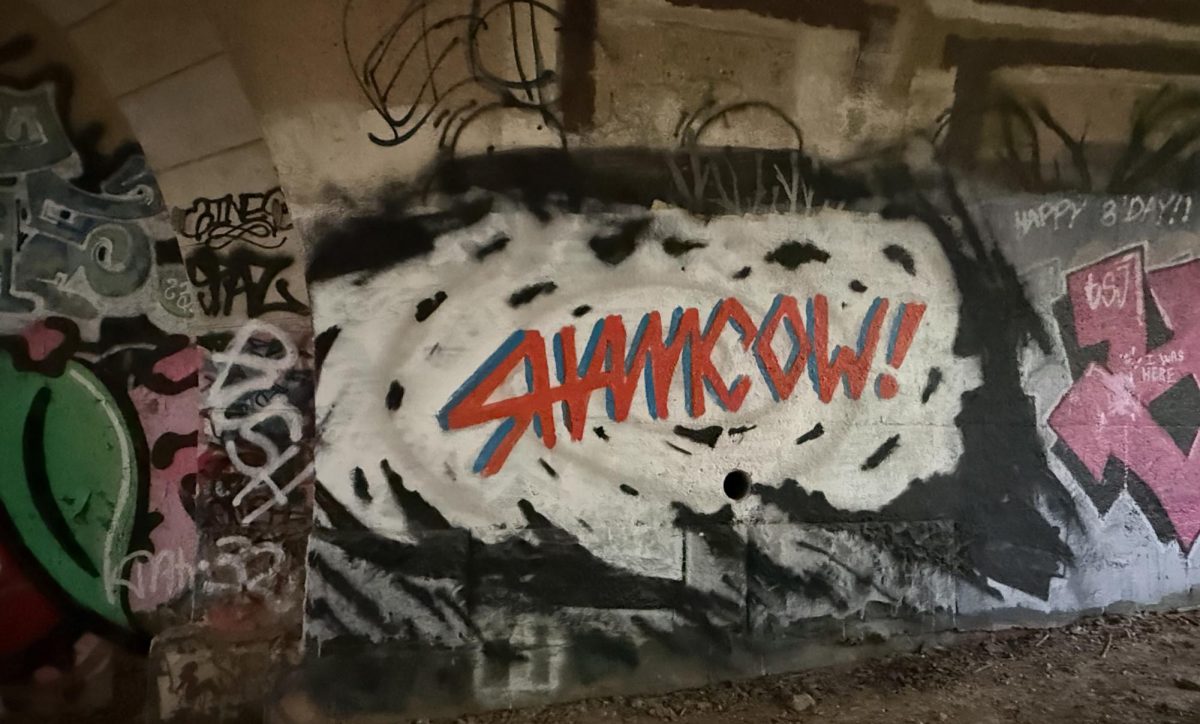
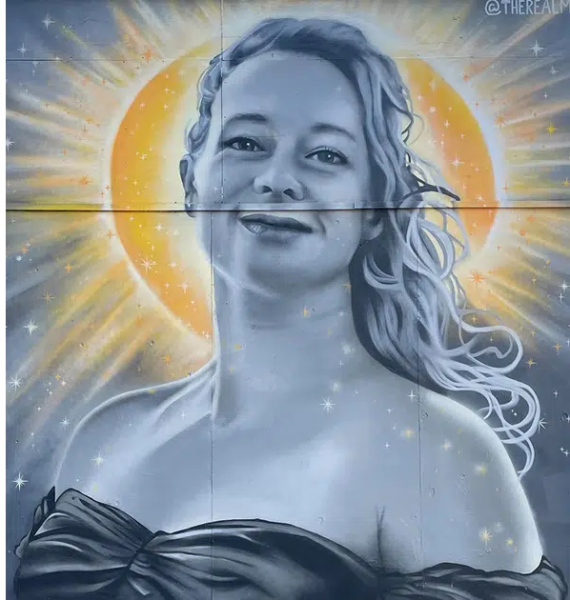
After ICE agents publicly killed two Minneapolis protesters, many artists have produced commemorative works for both Renée Good and Alex Pretti, including a large mural of Renée. These pieces memorialize and humanize victims of violence, not just in their last moments, but in the beauty of their lives. The mural painted for Renée was made by Melanie Posner, a self-identifying queer artist. The piece was inspired by accounts from Renée’s wife and family, who described her as sparkling everywhere she went.
In the social media space, art can truly change minds and open eyes. In the last decade, a new art form called “edits,” though not quite a visual art, has been impactful at mobilizing the masses. When harnessed with good intent and skill, difficult topics become clearer. Many edits of the reality of deportation have gone viral. As well as edits showing the rapid extinction of species and destruction of habitat, and nearly all social issues of today – government corruption, LGBTQ+ rights, impacts of racism, and support of better US infrastructure.
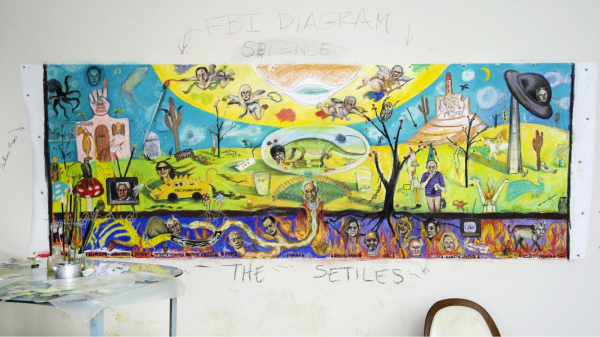
Art as protest can also simply be displaying and platforming the work of those who have experienced harm. Maria Farmer, a victim of Jeffrey Epstein, has created pieces about her experience with assault and witnessing the corruption of the elite firsthand. Her work is now making headway with the release of most of the Epstein Files.
Her 2020 piece “The Setiles” is reminiscent of Hieronymus Bosch’s famous work “Heaven and Hell” and depicts the perpetrators and those complicit in the violence as various Hell-like creatures. The piece has a uniquely 21st-century intentional tackiness about it that almost resembles SpongeBob’s “Bikini Bottom” with cacti, literal bikinis, bubbles, and sea creatures, while still using the symbol of Eden’s apple tree and unicorns throughout as Renaissance symbols of corruption and frivolity.
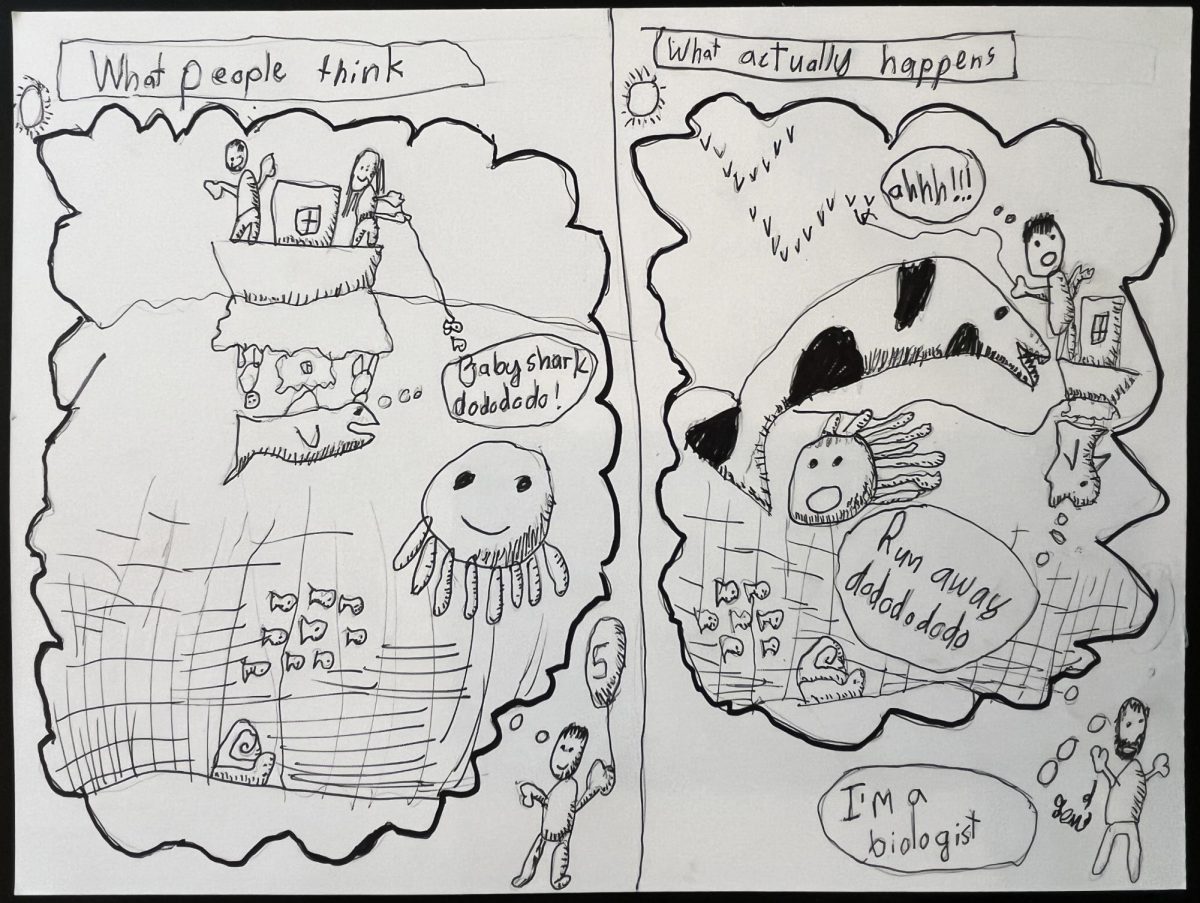
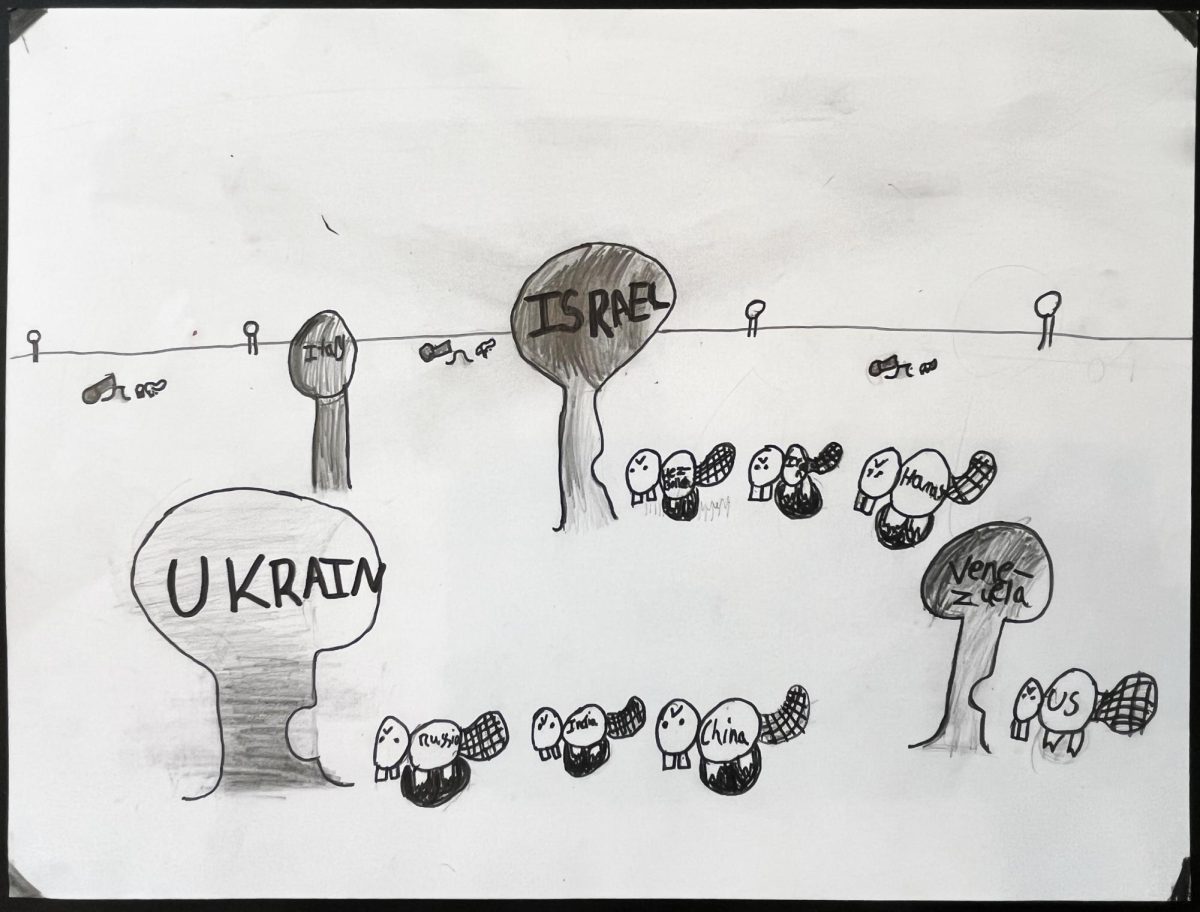
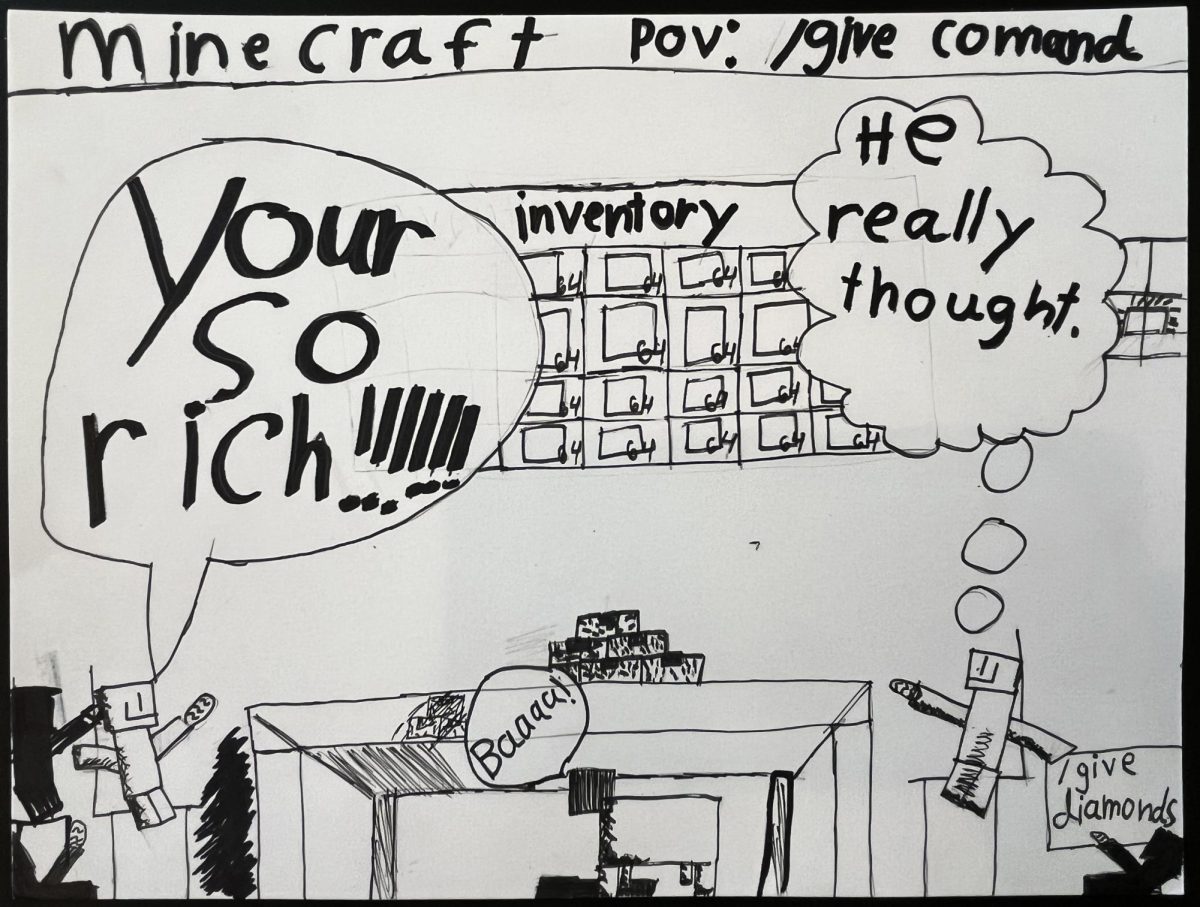
Displaying children’s art has also sent a strong message. Children make some of the purest depictions of the harm our world sees. With no political motive, children create simple pieces of immediate reaction.
After ICE used 5-year-old Liam Conejo as bait to detain him and his family, Liam’s classmates wrote letters and drew pictures to call for his return home. One classmate made a cartoon, depicting ICE agents in the position of the people they detain, telling them that if they were simply born a different race in America, they would be scared for their lives right now.
Though no matter the source, the audience’s reception, or the art itself, the most important piece in desperate times is what is done after. Once you have been captivated, once your attention has been caught, what will you do? Awareness is an important first step, but it cannot be the last.
Nandi Abange • May 4, 2026 at 9:33 am
Art has and always will be political. Whether it be through murals or movies there is always a message in it all. I think my favorite piece of art is Sinners and Parasite. Both of these movies were made by people of color which already assembles their messages as a much bigger picture than everyone may think. When watching Sinners, most people just saw it as a vampire horror. When watching Parasite, most people just saw it as a “you never know who is living in your house” type horror film. But in the grand scheme of things, Sinners challenged real life issues that our ancestors and black people face still now. Our art, music, or entire beings are replicated in a different taste by ‘culture vultures’ who don’t have a lick of identity on their own without black styles and vibes. Parasite challenged more than just the idea of making sure your home is secure, but it questioned the government’s stance on letting lower income households fend for themselves. With faulty drainage systems in Korea, the government just left them to live below ground levels, which leads flood waters to flood their homes and displace them. It questioned the upper class, that lives in a big “this doesn’t affect me” cloud. Art is placed in a box, censorship makes clear messages so hard to dissect that people question if there are even deep messages at all. I think it’s important to dissect it either way no matter if the propaganda makes it seem like an “exaggeration” or being “too woke”; if we aren’t woke and awake, who will be?
Olivia • Apr 27, 2026 at 10:08 pm
One piece of protest art that initially came to mind was the “edits’ that were referenced in this article, and many are powerful, condensing imagery, audio and key quotes/ calls for action all in one, accessible media. In the past, some protest art that I thought of was published in revolutionary zines and magazines as commentary on the government, economic issues, violence, and systemic injustice. I think that anyone can analyse political art, young or old, to different degrees. And especially in the present day, no matter what, it is beneficial to engage with art because it speaks and says something to you, delivering a message! To me, the role of political art is to communicate with the general public in a way that simply learning about politics through news articles, etc., may not attract. It can be funny, be dark, be detailed, or simple, be broad or local, but its role is still the same. Many people I’ve seen engage with political art forms more than other types, which is good to get interest building in issues you’re passionate about. I really like this article, thank you for writing it!! 🙂
Cora Giuliano • Apr 27, 2026 at 1:50 pm
To your point about displaying children’s art, I think there is something to be said about how children are used as pawns in politics. Political leaders of all alignments use children as a rallying cry of sorts, hoping that citizens will empathize with and be drawn to political decisions that are made in the name of protecting children. For example, Trump claims that drag queens will corrupt children, when in reality, he’s just homophobic and transphobic. Saying that drag queens are harmful for kids will garner more attention and support than the real reason he’s against drag shows. Everyone wants to protect children, so a political leader making claims that something would hurt kids or help them, no matter how much truth is in that statement, will attract people. I like what you have to say about how kids are typically unaware of the politics of the world, so they simply speak up for what they believe or have been taught to believe. I think that often, the rules we learn so young about being good, just people, feel like they have been forgotten when you look at the news. Looking at the kids around you can give you so much hope.
Kenzie • Apr 26, 2026 at 8:50 pm
Art, much like music, is such a powerful way to protest modern issues and past issues. It’s a great way to spread word and connect people over issues that affect our world today, and can become great conversation topics. Art can capture such deep and intense emotions with just a color palette alone and I think that’s only the tip of the iceberg of how powerful art can become when you let it. When I think of protest art, I think a lot about the George Floyd protests and diverse drawings that appeared in challenge to police brutality. That’s just one example of how powerful art can be. When it comes to music, I think lyrics can be so poetic and powerful when it comes to protesting things like war and civil unrest in countries. I personally think about the song Dirty Harry by Gorillaz, which was in protest of the Iraq war over 20 years ago, and in my opinion, some lyrics still apply today.
Nalani • Apr 27, 2026 at 9:40 am
I totally agree with you, Kenzie. The arts in all its forms ( drawing, music, drama, and others), make such an impact on its consumers. Whether the audience notices it or not they are being shown heavy topics through beautiful lenses. This ability to express and depict such topics through the arts can not only be impactful for the audience but for the creator as well. Art can be a therapeutic way to release feelings and emotions in a safe and healthy way. It is a strong form of peaceful protest and can truly make a difference in this crazy world.
Anais Melzer-Surkan • Apr 23, 2026 at 3:11 pm
Art can be so powerful and I really admire it. I find it so weird to be living my life normally while so much conflict and war is going on. It feels like everyone is pretending that nothing is wrong when everything is wrong. In these times its so important to advocate and Art is a very powerful way to do this because it expresses messages words could never express. The saying “pictures tell more than 1000 words” is true and especially with unimaginable topics Art is so important to show what words never would. I love art so much and I am also very passionate about politics and it’s so important and necessary to connect them. Art can be so many things as well which only adds to the meaning.
Christian • Apr 22, 2026 at 9:19 am
Art as a form of protest is, in my opinion, the best way to protest because not only is it a powerful way to get a message across, but it is often open to interpretation. Especially in today’s word art is so powerful because no matter where you go, art will be displayed to you, whether you’re out on the street, in school/work, or even when you go on social media. An example I think of is The Bigger Picture by Lil Baby during one of the heights of the BLM movement after the death of George Floyd. Art is everywhere, so any message that an artist wants to portray can be shown to the whole world. However, even though people’s protests through art can be spread fast, it can also be harmful because if someone spreads misinformation with their art or if their art doesn’t have the intention to protest, it can be misconstrued and be harmful to any real protest. Keeping that in mind, though, art can be used to spread positivity and lift up protests that may not have had much light shone on them
Henry Sylva • Apr 21, 2026 at 9:46 pm
When contemplating the concept of protest artwork, I take into consideration both early and more contemporary examples of protest, such as memes and/or street art. For example, anti-war artwork emerging from the anti-Vietnam War protest era and feminist performance art challenged established authorities and social conventions. Today, protest artwork can also be found in the forms of Instagram, facebook posts, posters, and/or clothing. While these may all appear to be vastly different from one another, they all share the same goal. To deliver a message and to motivate individuals to take action.
When we are learning about politically motivated artwork in history class, we are typically invited to explore the context in which that type of artwork was created – who created it, why was it created, and what effect did it have? If we look at modern day use of political protest art, we can see that this type of artwork continues to be used effectively as a way of raising awareness and bringing together individuals around a common purpose.
Nia • Apr 21, 2026 at 11:01 am
Art, in many cultures around the world, has been used as a symbol of protest because art reflects the world we live in. Some examples that come to mind are Billie Holiday’s Strange Fruit, Defacement by Basquiat, and What’s Going On by Marvin Gaye. These songs and visual pieces were used to express their creators’ opinions on social injustice, racism, police brutality, etc. Like your article says, each piece of art is meant to capture the audience’s attention and bring awareness to issues to the general public. Art can inspire others to make a change in society, so I believe that it’s important for artists to continue reflecting on things they care about.