









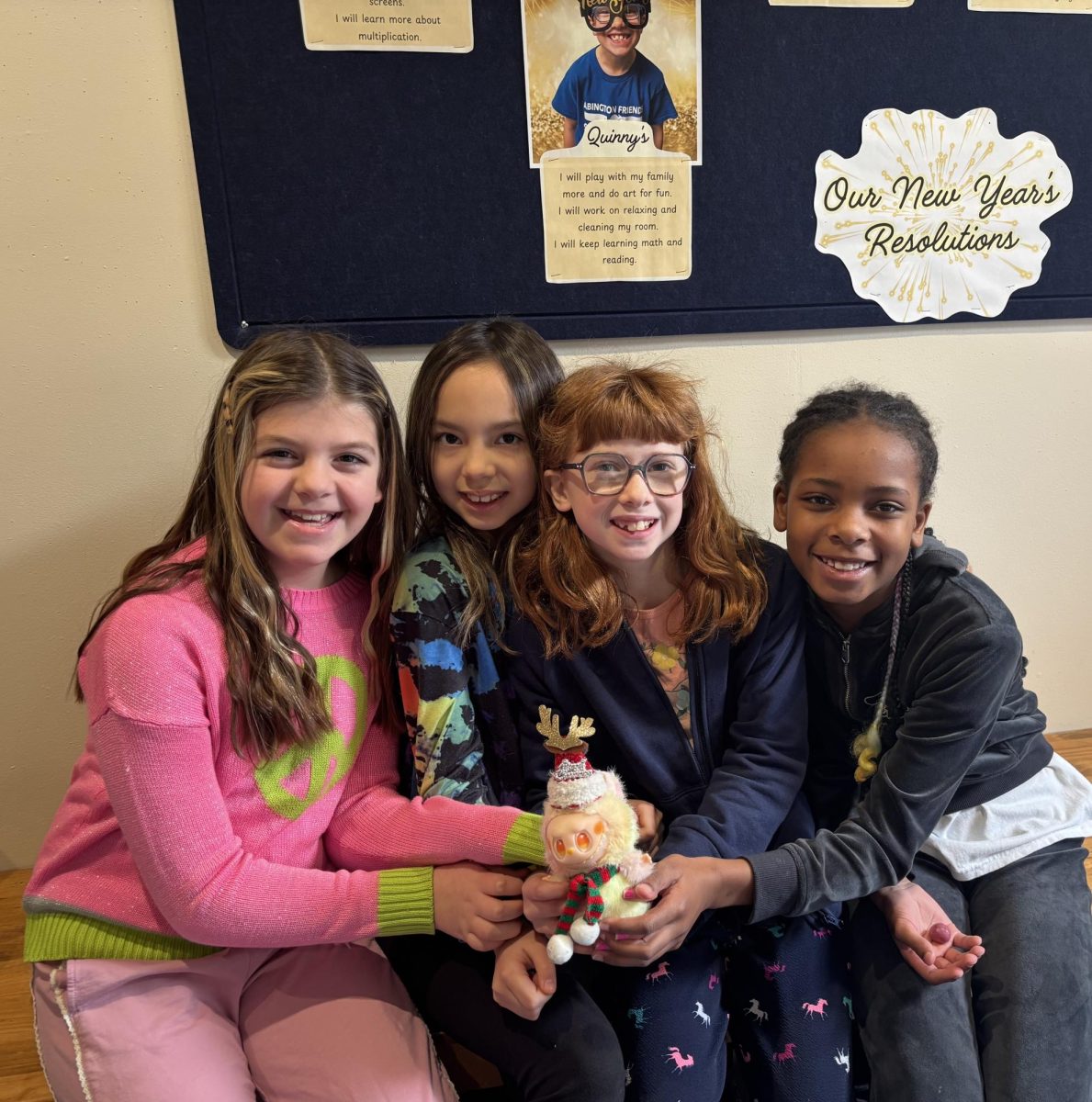
The clock has not hit 3:10 pm yet, but classrooms are already buzzing with excitement. When I ask a group of third and fourth-graders what a Labubu is, they answer at once, overlapping voices with certainty. Some own one, others want one, while others want many.
It seems everyone has an opinion. For these students, they are more than just collectible figurines.
“Labubus are these furry little creatures with big eyes and pointy teeth that make me feel happy and creative when I play with them. Some can be tiny and soft, while others can be humongous and rare. They come wearing lots of different outfits and colors, too,” said Hendrix ‘35.
These creatures can be described as whimsical troublemakers. Their mischievous charm and unique designs have captured the hearts of millions of children around the world, including Abington Friends School’s very own third and fourth graders.
Why are kids so attached to Labubus? Is there scientific evidence behind this obsession? What happens after the trend fades? Where do the Labubus go?
Labubus are inspired by Nordic folklore, which often depicts characters that resemble forest spirits, mythical beings overall. Hong Kong illustrator and toy designer Kaising Lung created this highly sought-after collectible sold on websites such as PopMart, Walmart, AliExpress, Urban Outfitters, and Tokyo Hands & Loft.
According to St. Louis Public Radio, “Lung moved to the Netherlands at age 7, where he quickly fell in love with Nordic fairy tales — especially those about elves. Inspired by the whimsical folklore, Lung launched an illustrated book series called The Monsters in 2015, featuring a playful tribe of female elves known as Labubus.”
“That’s why I wanted to create something that I’ve always known existed in my heart,” Lung said in an interview with CGTN Europe in March. “It’s amazing that so many people love it.”
According to NBC News, “At the main temple in Beijing of China’s greatest sage, the souvenir shops sell a range of ‘blind boxes.’”
A blind box is similar to cereal box prizes and capsule toys from a vending machine, creating a comparable sensation to a slot machine. Part of the appeal to young children is the element of surprise, and the possible chance of unboxing a rare or “secret” toy.
According to Statista, “Consumers have a 1-in-72 chance of getting what they want when they open the blind box. There has been a 900% increase in sales in the first quarter of 2025 compared to the same period last year, indicating widespread interest amongst consumers. They were also subject to the tariffs imposed by President Trump’s administration.”
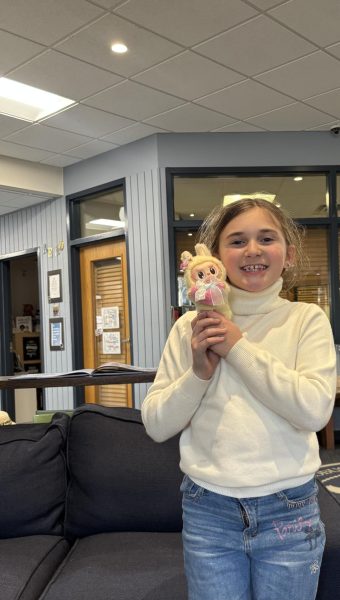
For Kyra ‘34, the Labubu is not just a toy. It is a prize, a secret, a story she can not wait to tell her friends during recess. And in that moment, her joy is so complete it fills the space between us, buzzing like it might spill over at any second now.
She holds the Labubu with both hands as if it might disappear if she loosens her grip. Her sneakers bounce against the floor as she talks, words tumbling out of her mouth faster than she can organize them. Every few seconds, she looks down at the rainbow colored figure and smiles again, as if she’s surprised it’s still there.
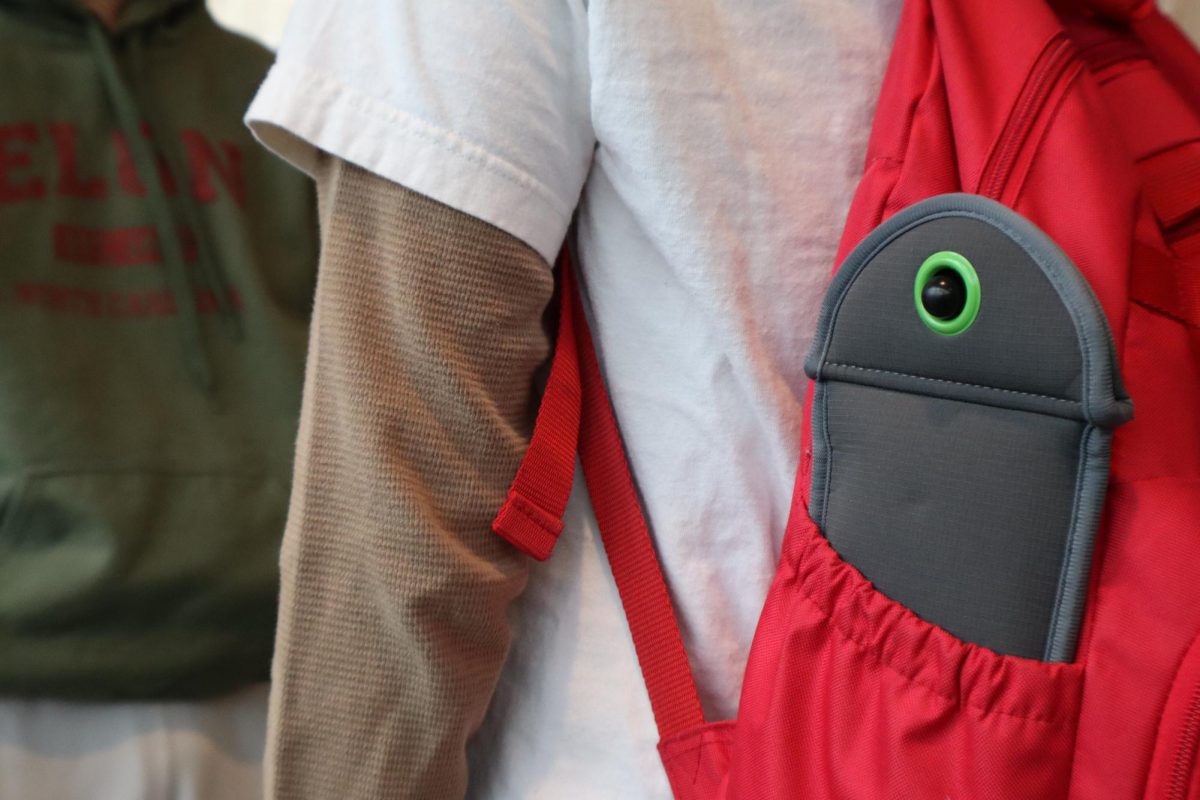
“Labubus are different from other toys because you can put them on your waist if you are wearing jeans, put it on your backpack for school, and bring it wherever you want. It is not only a toy, it is an accessory or fashion piece. They are so unique,” said Kyra.
The trend has gained significant popularity in America amongst kids, teens, and adults.
Going off of this statistic, how does peer pressure influence children’s desire to own or collect Labubus? How does exposure to social media and influencer marketing affect children’s fixations?
Mike Cassano, Director of Student Support and Wellbeing, said, “Usually being around other kids makes the individual desire what others have. However, every generation of kids has to look within themselves and figure out what it means to them to want to be like everyone else. There’s some interesting research that looks at how quickly you can remember something you can see on television or social media, specifically how quickly you can remember what it makes you think about, and any effective advertising appeals to children!”
Cassano went on to say that younger kids, such as third and fourth graders, are not spending their own money on Labubus; their parents are. As a result, it creates the cycle of anticipation of the promise of the reward; sometimes you get it, sometimes you don’t. From here, this sets up a consumerist mentality in a profound neurological way, but unfortunately, it is almost unavoidable.
During Christmas time, when a child opens their gift, how long does it take until they forget about it? How long does plastic waste last in landfills?
According to Plush Toy China, “Labubu plush toys primarily use high-quality polyester fabrics, specialized embroidery threads, and premium stuffing materials. Additionally, they may also include plush, plastic, and vinyl components.”
The estimated production cost for a single Labubu is between $3.50 and $8.00 USD for vinyl. Standard figures typically range from $15-$30, while limited editions and collaborations can be $150-$200.
Upper School Science Teacher, Katie Livingston, said, “Fast-changing toy trends increase environmental harm because people are not appreciative of what they have. Kids are not playing with the same toys for years because they get bored. Once this happens, they could pass said toy down to a relative, for example, their little cousin or another kid that is interested.”
This demonstrates how Labubus are made using unsustainable practices. As a result, kids do not want them anymore, so they end up throwing them away, donating them, holding them in warehouses, and collecting dust overall.
Going back to earlier ideas, Livingston said, “Blind boxes are terrible because kids and people in general cannot buy exactly what they want. They’d have to buy these blind boxes, and they might have to buy 10 of them before they buy the Labubu they actually wanted. Blind boxes really generate, drive up overconsumption, and plus the plastic clogs up the landfills.”
Cassano offered a possible solution to this problem and said, “As a parent, do not be afraid to say no. It is very rare that once you’re down the path of anticipating this cool toy and maybe getting it or not, that you’ll stop. It is hard, especially for kids. It is hard because parents want their kid to be delighted all the time, but that is not the reality.”
From a kid’s perspective, Labubus are seen as a form of self-expression. The current world can be so terrifying and unpredictable that they see Labubus as a form of not only escape, but also security in their lives. As a result, children latch onto toys that remind them of something or someone.
(Lauren Washington ‘26)
Maya ‘34 said, “They make me think about little monsters or voodoo dolls because some of their heads turn all the way around. However, I can not explain why some of them look like they are breathing fire to me.”
When Labubus first debuted, they sparked controversy in the media due to their association with the devil, more specifically, the Mesopotamian demon Pazuzu, and the illegal practices of Chinese Pop Mart factory workers seen in MSN. The king of wind demons has a lion-like face, bird talons, and wings. Although these two characters are not directly related, they have comparable features.
Kate ‘35 said, “If my friend or table buddy thinks Labubus looks evil, that is fine, but it would not change my mind. But I have noticed that boys usually hate them. When I want them to go away during recess, I say, ‘Don’t make me bring out the Labubu.’”
In a piece in HuffPost, Monica Torres disagrees, writing “male Labubu owners say they are not collecting Labubus to pretend to be someone they are not— they genuinely enjoy Labubus as fun fashion accessories and interesting conversation starters. The criticism says a lot more about the haters than it does about them.”
What happens when the excitement fades? What values are being passed on to the next generation of kids?
On the other hand, Livingston also said, “Buying a trendy item is not necessarily bad if you are going to like it in the long term. As a child, I only had one brown Beanie Baby for a long amount of time. Having one was special because I really enjoyed playing with it, and it was not just getting put onto another self. So, a big part is making sure kids are not just making their parents purchase items to show it off to other kids.”
Another major component of the obsession is idolization. Kids, teens, and adults want to imitate their favorite actors, artists, and singers.
Celebrities such as Dua Lipa, Rihanna, Lisa and Rose from the infamous K-POP group called BLACKPINK, Paris Hilton, Kim Kardashian, and David Beckham are seen in Buzzfeed with Labubus. Popularity fully sparked when Lisa decorated her handbag with one.
A psychologist named Tracy King from The Tab said, “In this landscape, collectibles become something you can control. They’re emotionally grounding, they provide joy in manageable doses, and they often connect you to community. In a world full of uncertainty, buying a plushie in a strawberry hat becomes nervous system regulation.”
Most consumers do not know about the fun facts Labubus comes with. For example, the scar under Labubu’s left eye symbolizes resilience and individuality. The creator, Lung, felt that imperfections make characters more memorable, according to Labubu Origin: 15 Fun Facts You Didn’t Know.
Plus, their mischievous smile and teeth are inspired by monkeys. In version 2 of the Labubus, they are meant to look less symmetrical to emphasize the expressive and dynamic emotion, changing depending on which angle the buyer is looking at.
According to Parents, “The plush creatures sell out in seconds and are worn by kids and celebs alike, even decorating ultra-expensive Hèrmes Birkin bags. Though this trend transcends age, younger people in particular are all about the Labubu life.”
“It’s a fascinating moment that says a lot about how Gen Z [and Gen Alpha] engages with style, identity, and online culture,” said fashion stylist Julie Matos on her website.
Labubus are not only a trend but also a conversation starter, a flex, and a collectible. In comparison to earlier toys such as Beanie Babies and Tamagotchis, Labubu has a big advantage with the creation of social media.
They are layered with TikTok virality, niche fandoms, and resale culture. Third and fourth graders around the world enjoy playing with them, wearing them, and having them be a part of their lives overall.
Cassano provides an explanation for third and fourth graders’ fascination, saying, “From a clinical perspective, there are a lot of things that anyone does on a day-to-day basis that’s healthy because it’s interesting and you spend time and money on, but it doesn’t interfere with the rest of your life.”
However, it is hard to decipher within a young child whether their new toy is an obsession or just something they happen to be very passionate about. It is important to look out for signs and monitor their behavior while they interact with their toys and other kids as well.
However, they are often just thinking this is a desirable item, asking their parents to buy it for them, then proceeding to the register. In some cases, the parents buy it for their kid as a gift for Christmas.
In conclusion, the Labubu craze teaches kids valuable various lessons about responsibility, awareness, and change. They are a reflection of the changing cultural, social, and political aspects of the world. Labubus teach kids about the importance of curiosity, the thrill of the hunt, and the value of individuality.
The collectible nature assures that kids will seek out new experiences and hopefully appreciate the uniqueness of each toy they receive. Trends like Labubus that pass by in a short amount of time teach us to have conversations about the impact of online culture on children’s values and behaviors. It offers us a platform for parents to discuss the world around them with their children.
Like Cassano said, “Are you spending too much time researching this or looking for said item? One of the specific things about Labubus is that it does have a gamble vibe to it because of the blind box aspect. In that way, it is like pulling a slot machine.”
This activates the brain’s reward system, leading to the release of dopamine. Sooner or later, this will create feelings of pleasure and contribute to addictive behaviors. Over time, this leads to a cycle to seek out a similar feeling.
Pepper ‘34 said, “Labubus are my favorite toy because they make me feel happy because they are so fluffy and huggable.”

Cora Giuliano • Mar 17, 2026 at 7:57 pm
I think the biggest issue with the Labubu craze isn’t the kids, rather the Tiktok influencers promoting the toy. It makes sense kids would be interested in them, but these adult influencers that buy 10 at a time just to try and find 1 certain Labubu are kind of out of control. They create so much waste and they promote overconsumption. Kids, teens, and even other adults see these videos everywhere and all of a sudden everyone wants a Labubu. Once the trend is over, at least for the teens and adults, they’ll just lose interest and the toys will just become trash. This isn’t exclusive to Labubus. All kinds of influencers are promoting overconsumption with all kinds of products and it’s damaging.
Andrea Emmons • Mar 10, 2026 at 1:32 pm
I appreciated the information in the article, as I knew very little about Labubus. They do remind me of toy fads from my younger days, hotwheels, cabbage patch kids, strawberry shortcake and marbles. As i recall, marbles were the only toy we could bring to school and use at recess . . .
Ruhi Patel • Mar 9, 2026 at 7:28 pm
I believe that the Labubu is a huge mark of consumerism. The popularity of Labubus shows how easily people can buy things and give things their attention just because they’re trendy or popular. It can make people spend money they wouldn’t have otherwise just to “fit in”. The popularity of lububus seems less about their practical use/value but more from the excitement of having one and being aprt of a trend. It’s not like it’s the first one either. Back in the 2000s/2010s, you had tumblers, scrunchies, Pokémon cards, fidget spinners (of which I was personally guilty of), and it happened again in the early/mid 2020s with Stanleys, Owalas, Dubai Chocolate, etc. Not to say those weren’t valid purchases, but many also felt forced to buy it just so that they would be seen as “cool” or part of a trend, spending money on this when they could’ve bought something else that they actually had a passion for. When people feel pressure to buy the latest trend or add to a collection, it shows how consumer culture encourages constant purchasing.
Jess • Mar 9, 2026 at 6:37 pm
I never really got the Labubu craze, but I think the overall insanity over these toys are fascinating. This is coming from someone who has known about Labubus since they first gained popularity, as it became an interest to some of my extended family soon after they blew up. They do reflect consumerism, and it does make me worry about what is going to happen to them once the craze is over. The entire thing with Labubus remind me how people used to be with Funko Pops, collecting every single one and having these massive collections of what just equates to another trend that will pass over. I think the explosion in interest to buy one is an interest dissection of our modern-capitalist society.
Jenny • Mar 6, 2026 at 10:31 am
This article helped me understand why Labubus are so popular, even though I personally have never liked their design or aesthetic. I don’t really appreciate the faces or styles. In fact, seeing people obsess over them sometimes makes me cringe. But at the same time, I don’t think it’s fair to act like I’m above consumerism or trend culture. I own things like Stanley cups and other popular items too. What feels important is intention. There’s a difference between buying something just because everyone else has it and buying something because you genuinely like it or feel it adds value to your life. Trends aren’t automatically, the issue is when the “hype” replaces personal choice. I appreciate how this article explores both the joy Labubus bring to kids and the concerns about overconsumption and marketing.
Hunter Rems • Mar 5, 2026 at 9:21 pm
I agree that the labubu craze is definitely a sign of consumerism and the late-stage capitalism that has taken over the world. Specifically, the fact that keychains and other eclectic trinkets of the sort have existed for so long and come in such variety that were formerly used as niche forms of self-expression, is being completely ignored for one specific design and brand. However, it is not new for kids to want fit in and keep up with trends, and a moment that changed my perspective a little bit about the toy was when I was in Korea, where labubus are really popular, and my family bought my little cousin a labubu and he was so excited and happy and that made me think that for kids it’s mostly harmless.
Tsukki • Mar 5, 2026 at 10:55 am
Labubu, and moreso the Labubu craze, perfectly embody the definition of consumerism. For the longest time, I was confused about why exactly these things were the item of the summer in 2025, but after watching so many people on social media and in person buy one, I realized that there was no reason; people just began to fall for the propaganda as they continued to watch adults and children alike unbox them. It was simply just another quick trend that died as soon as fall rolled around, all that money and plastic gone to waste. Like plenty of toys that go viral on social media, labubus were just another example of the cycle of consumerism.
Nia Hammond • Mar 5, 2026 at 9:26 am
Labubus are definitely a mark of consumerism, as we’ve seen fads come and go every couple of months. Every year, and especially since the rise of social media, people see someone with a specific item or brand and immediately want to buy it even though they don’t necessarily need it. For example, it was a trend to buy Stanley water bottles. Online, people would buy enough water bottles to fill up their own pantry. This is obviously overconsumption and an example of consumerism because people feel like they need to buy something to follow a trend. Another more recent example on TikTok is the 5 Below dumpling squishies. People bought so many of them just to follow a trend and now they are not available in the stores. But when the trend is over, the items either sit on the shelf collecting dust or get thrown in the trash to pollute the earth. Consumerism is a pattern and Labubus are yet another example of consumerism.
Alana Son • Mar 4, 2026 at 10:24 pm
I really enjoyed reading this article because, for a long time, I was confused about the glamorization of Labubu’s. I do think the Labubu is a mark for consumerism because most of the reasons people buy are unserious, like the performative male trend. Labubu’s do not really have a use to them, and you can get the same kind of entertainment from another toy for kids; it’s the media that creates the appeal and the urgency to be timely. Labubus are a symbol of capitalism and materialism because it has the same longevity as every “culturally significant toy”; they are bought because they r trendy, and die off immediately, with no actual worth to them. Think about it, if it were 10 years ago, no one would have bought a Labubu, and it would not be popular.
Natalie Kovalenko • Mar 4, 2026 at 3:01 pm
This article makes me feel like the only way I can feel about the topic is a little confused. The fact that a hundred-dollar furry doll swoops the economy, with some of the widest age ranges and widest income brackets, the whole thing a waste, no matter who is buying it. I don’t believe the toy is popular simply because it’s a “conversation starter, a flex, and a collectible,” because there are many other things out there that are worth your money for all three. I entirely agree with the fact that Labubus is a form of capitalism, which I agree correlates to every other micro-trend that circulates on the internet.