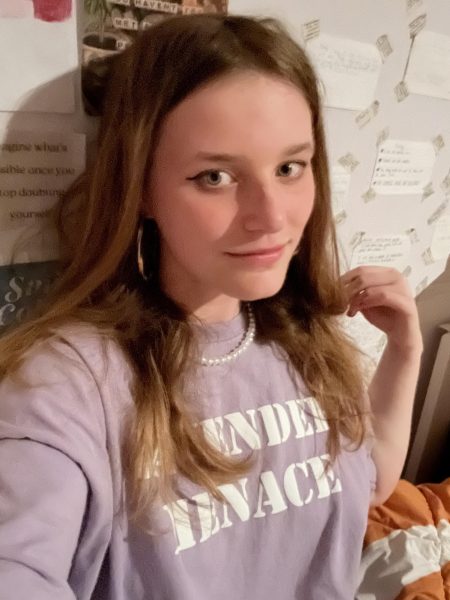


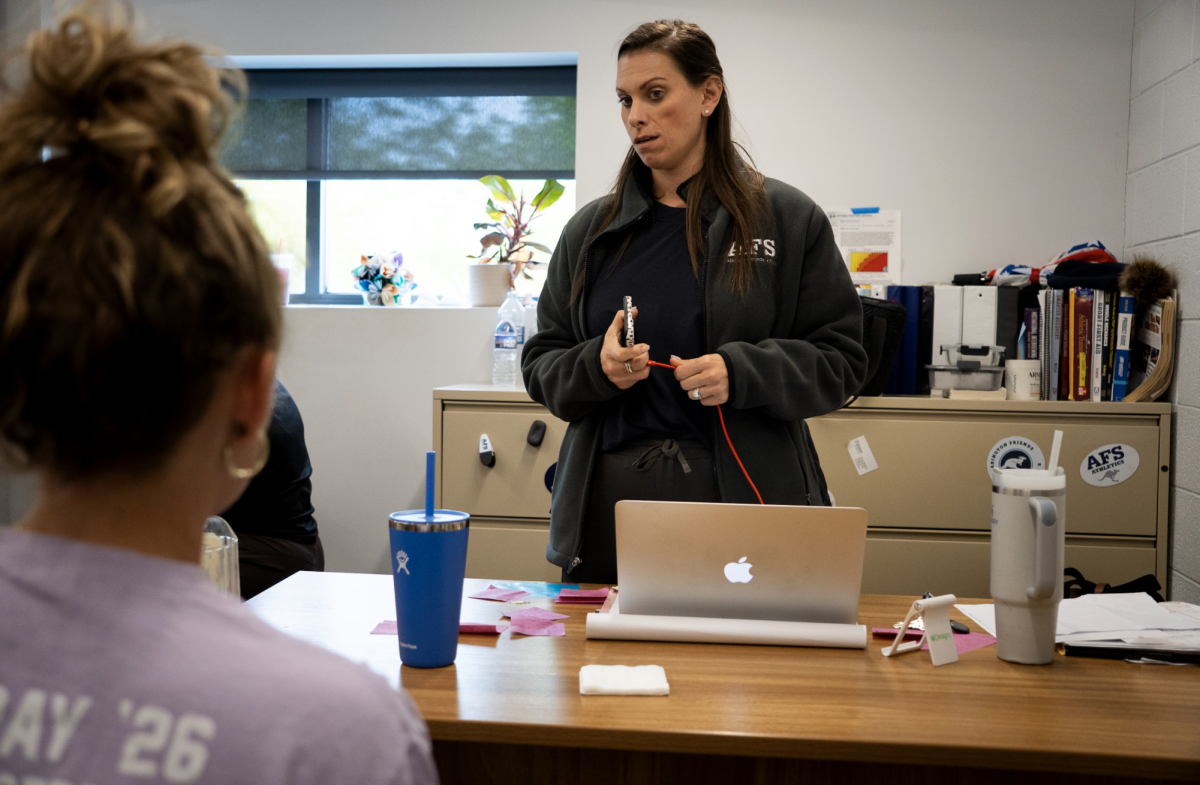






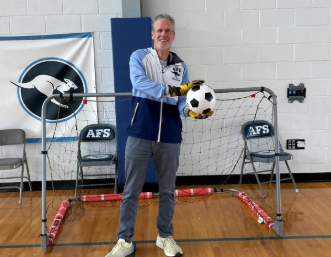


For AFS’s director of extended day, Lars Scott, music has long been a way to express the ‘big feelings’.
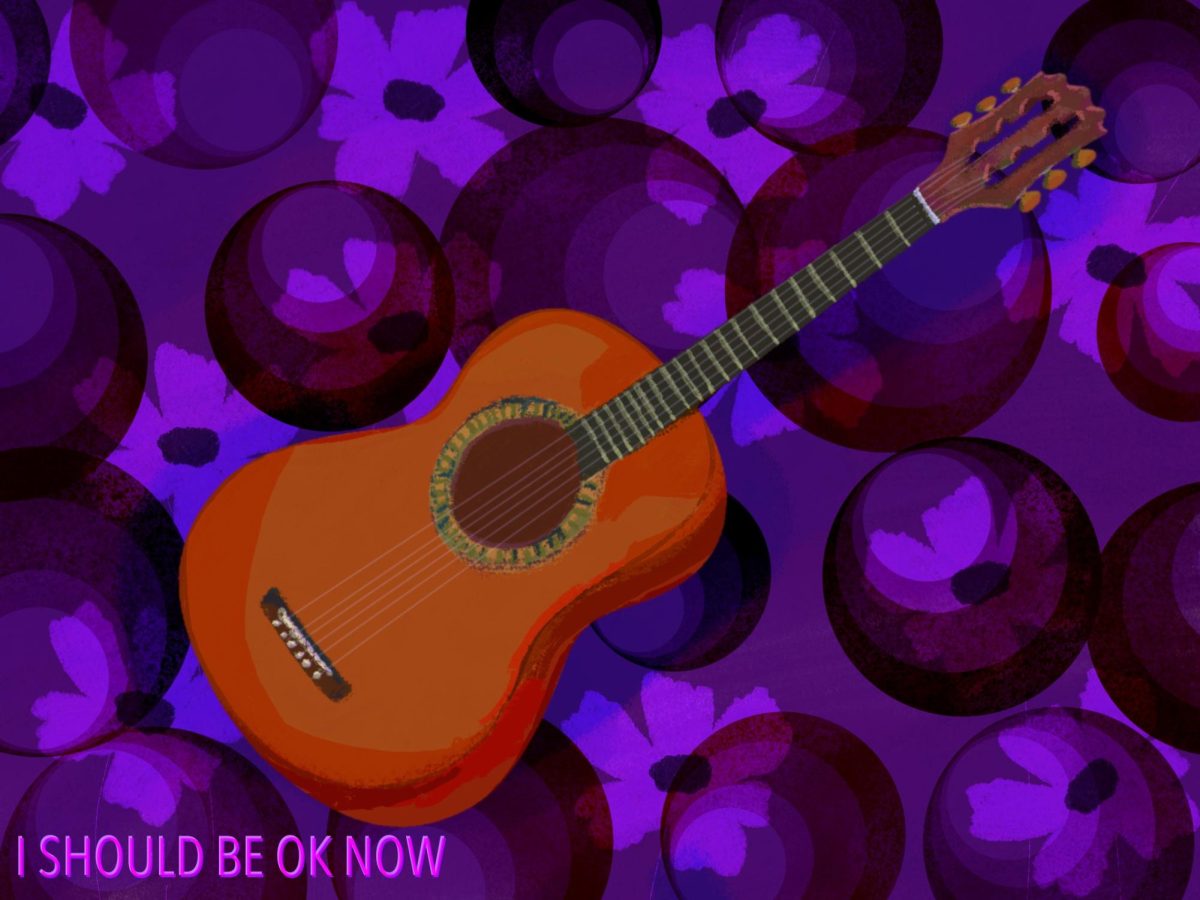
Such emotion is palpable in their new E.P. I Should Be Okay Now, which fuses shoegaze guitar melodies, haunting vocalizations, samples of everyday life, and the occasional touch of shiny 1970s funk into one viscerally touching sonic atmosphere.
After opening on a positive note, the E.P.´s middle two tracks explore a darker emotional space through minor chords and mournful, overlapping vocals, before returning to the joy of the opening in the final song. In this way, the atmospheric progression of the E.P. seems parallel to a narrative arc: introduction, conflict, resolution.
Scott confirmed this interpretation, saying, “Sonically, I was trying to create an arc, as well as thematically too.”
Scott stated that the middle two tracks, “Seaweed” and “Neon Echo,” were intended as the “simmering or boiling points” in the piece’s emotional trajectory – and this intention was executed palpably.
Though the tonal juxtaposition of “Seaweed” with the opening track is immediately detectable, it remains subtle enough to keep the track interesting. The track’s bare percussion intro allows the song’s melody to remain unpredictable to the listener for those first few seconds–creating an engaging sense of anticipation and slight unease.
Almost as soon as the song’s chords arrive to relieve this tension, muffled voices peek through the strums of guitar to keep us guessing once more. These samples evoke a familiarity that becomes nostalgic if not haunting; they resemble the sounds you half-remember from a vague dream you can’t forget. That vulnerable deja vu, which such a sequence brings forth within the listener, sets the stage for the outright eerie song “Neon Echo.”
This second middle track is ominous from the start, opening with a discordant, monotone vocalization which leads into a blistering world of anguished cries sewn into elegant minor melodies. “Simmering point,” it is.
For an artist, executing a finished project that succeeds in creating such a specific desired effect is an achievement – but Rome wasn’t built in a day. Among the countless milestones that created Scott’s musical journey, a particularly memorable and teachable one was a piece of advice they received from one of their favorite artists, Tune-Yards: “You don´t really have to follow a script, you can kind of do what you want and people will still listen.”
Though this reminder of creative freedom holds relevance to students who are interested in making music, Scott also emphasizes community involvement as an additional valuable first step.
“I think I didn’t know that I wanted to pursue music until I was a little bit older, so I think it´s really cool that AFS has such a large art and music program,” Scott said. “There are a lot of things that kids can get involved in, and I think that’s really important as a means to express yourself.”
In those last two words, “express yourself”, lies the core of both Scott’s own reflection on their work and of their advice for young artists.
Scott said that they have used their own work to express “…my identity, my struggles with mental health, and considering how religion affects all of that.” Maybe that specific set of challenges is all too familiar to you, maybe not. Regardless, we all have something that keeps us up at night.
To this point, Scott said, “One thing I would hope for any student that might listen to my work: that they might know that art can be an outlet for expressing big feelings instead of keeping them inside.”
So take it from our school’s local indie artist: whatever stirs your heart, whether into rage or hope, deserves to be listened to – not only in counselor Ebony Holloway’s office, but also through headphones.