

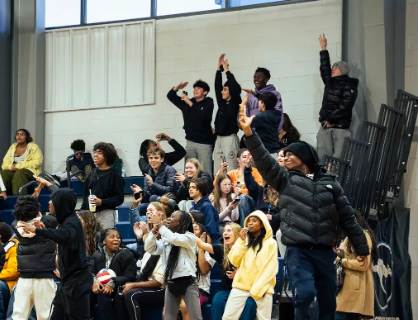






















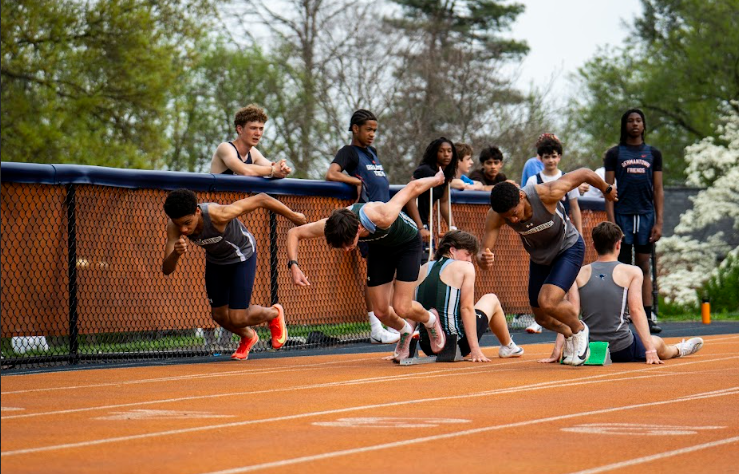
Youth sports have never been more competitive. From exclusive roster spots to expensive year-round travel teams, kids are pushed to an extreme level of intensity before they even reach high school.
Yet, what are the chances these kids play professionally? How many of them will play in Division I, the highest level of collegiate athletics? Is the discipline worth the expense of enjoying childhood?
Today, according to IMG Academy, only 2% of high school athletes go on to play Division I. Based on National Collegiate Athletic Association (NCAA) statistics, there’s a less than a 1% chance that those athletes will play professionally. Still, so many parents believe that their children are bound to play these high levels of sport, often having the mentality of “D1 or bust.”
This is an extremely toxic mentality, leaving kids feeling disappointment and dissatisfaction in the outcome of their sports careers. I have played on varying club sports teams of varying levels; from a youth club soccer team to a basketball league out of a church, to now, playing club ice hockey. I have encountered many teammates who look to the stands for approval from a parent after plays.
It’s discouraging to watch a talented player feel unsatisfied with their performance just because their parents–who often don’t fully understand the sport–don’t think they’ve worked hard enough. Having this constant need of validation leads to burnout, which then stems into a plethora of other issues like injuries and mental health challenges. These players are then unable to perform to the best of their abilities, just because of their parents.
Similarly, coaches can implement this toxic mentality as well. As players become older, there is more pressure to not only perform well, but to win too. There are coaches who believe that the statistics are more important than the performance and development of the team.
While it is true that winning is valuable, especially in high school, kids below the age of 14 should be focused on development.
A coach of an U10 sports team should be focusing on the ability of kids to work together, encouraging them, and developing their skills for if the kid chooses to play the next year. Not creating the idea that a few losses means they are bad at the sport. Facing challenging opponents and experiencing loss is important to children’s development, and understanding how to deal with it is a valuable life skill.
While coaches and parents can harm the player’s mentality, they can also affect others on the field. I have watched as parents and coaches alike shout at referees, call them profanities, as well as degrade them because their child received a penalty.
Oftentimes at youth sporting events, it is another player a few years older officiating the game. These players are only trying to make some extra money or help out because they enjoy the sport. Yet with adults constantly yelling over a missed call, it takes away the excitement and joy of it, and therefore creates a toxic environment.
So, while there are some kids with the discipline and skill required to play at the next level, it’s very rare to see these kids actually advance. It’s worth it to remember that kids are meant to have fun. Youth sports should be about developing life skills and keeping kids happy and healthy through something they enjoy.

Yassmine • Jan 12, 2026 at 6:49 pm
I really agree with the take presented in this article. I personally feel like making youth sports too competitive fosters toxic environments and relationships between teammates and coaches. Not only that but practicing at a young age with too much pressure leads to burnout and harms the development of young athlete’s; the line between support and pressure gets blurry as adults want to see children succeed. Nevertheless, creating a safe environment, by intentionally balancing skill and mental development is paramount to a child’s success in athletics.
Aisling Scanlan • Dec 15, 2025 at 9:49 pm
I could not agree more. While I only play on one sports team (not very well even) I still feel this deeply. I’ve come home from practices that have drained me, only to be told by my parents that I’m not training hard enough, and that I should be better because they were better at my age. Then, by the time I’ve finally gained back a bit of energy, it’s back to a bright and early practice where I’m given near impossible sets from my coach compared to what I can do. Being pushed further and further into these unattainable expectations, while still juggling schoolwork, relationships, and basic health requirements, is basically just a ticking time bomb for my sanity. People forget very quickly that youth sports are youth for a reason, and you’re supposed to be able to have a life outside of them.
Jess • Dec 14, 2025 at 1:19 pm
I think there’s a growing culture of the expectations rising for youth sports. I know a lot of schools that recruit students based on a student’s athletic ability. Which inherently isn’t a bad thing, especially for the students who are willing to put the time and effort into athletics, as either a dedicated hobby or a future career. I think it’s perfectly okay for students to want to do well in sports, but I also think there’s a growing expectation that all students need to perform at their best athletic ability in order to “get anything” out of sports. A lack of support and high expectations can begin to wither the passion that someone may have had for that sport before. That side of youth sports, and mental health in sports in general need to be more discussed, because in the end, sports are supposed to be fun; especially at a young age.
Roger • Dec 12, 2025 at 12:02 am
I fully agree that the mindset and goals behind youth sports have shifted away from what they were meant to be. I think that this really shows how overall everything has become more competitive over the past few years. This trend doesn’t seem to be slowing down, so in an effort to keep their kids ahead of their peers, many parents go to extreme lengths. This can help the kid succeed both athletically and academically, but these kids are still so young, and many aren’t fully capable of thriving under the pressure of such enormous expectations. Overall, it is a sign of a parent’s love for their child and a want for them to be successful, but the kids lose more choices on their own. It works out for many, but for more, it can easily lead to conflicts.
Aila • Dec 10, 2025 at 5:29 pm
As a student athlete, I 100% agree with what is said in this article. Young athletes are pushed far beyond the metric they need to be pushed to, because for most, sports are what drive them. I know for me, I do not want to play my sport professionally, not because I don’t think I’m good enough, but because I have other careers in mind. A lot of students have to look at that statistic of how many high school athletes go on to play professionally, and have to think hard about how far they are willing to go for their sport. I think that everyone wants to have that drop of success, and if sports are the way to go, then that is the way to do it. Youth sports have become solely about making money and getting fame, and less about being well-rounded emotionally and having the skills to go through life. The more youth athletes get pushed, and trained, and worked harder to achieve goals that are near impossible, the more they crack. This is why mental health is such an important topic to be spoken about in sports, and I personally don’t think it’s talked about enough.
Makayla Littles • Dec 10, 2025 at 3:51 pm
I completely agree with Avery’s overall perspectives. Adults can keep youth sports fun by focusing on the players mentality rather than the score board because I think that can improve success rates overall. I can understand that adults want children to succeed, but at that age success does not necessarily have to be equivalent to the score of the games. I think that for younger children success can also come from the life lessons that they learn from a sport, whether that is to work together, and practice makes perfect. Additionally, when I was in middle school, I played basketball. My coaches always uplifted me throughout the games, and consistently asked me if I was okay. Because of the support my coaches gave me, I was able to play at my best and become inspired to become a better player. Through the support my coaches gave me and my teammates, it allowed us to play better, and by the end of the season, we were undefeated. I definitely believe if coaches pay attention to where their players’ heads are at, and make sure that the players are good and still loving the sport, the kids will win as a result.
Harrison • Dec 10, 2025 at 11:47 am
Growing up playing sports, I could not agree more. Youth sports need to focus on the youth at hand, not the future. I have seen both parents and coaches alike putting ample amounts of pressure on kids, leaving the kids upset and discouraged from continuing to do what they love. Sports are supposed to be a social outlet for kids to learn and connect with each other. It is important in their development as humans, but when the focus is shifted, it is counterproductive. Parents and coaches need to lift up their kids in order for the kids to reap the many benefits of playing sports.
[email protected] • Dec 10, 2025 at 11:19 am
I agree with your take, Avery! As someone who has been in and around youth sports all of my life (soccer and softball), I have witnessed a great shift in the way that adults view youth sports, resulting in an added pressure on their children to do well and be competitive. I remember that as a young child, my team would get oranges and snacks brought over to us at halftime and after the games, and we would celebrate regardless of a win or a loss. That went away as we got older and more competitive. But that competitive nature seems to be introduced earlier and earlier more recently. I wonder if parents feel any pressure from others to have their kid be the best at something and therefore push their child past the point of healthy play and growth. Ultimately, youth sports are about having fun and developing lifelong skills like teamwork, dexterity, balance, and strategy, and competitive spirit will come naturally as a result of that.
Sam CJ • Dec 9, 2025 at 1:54 pm
I agree with this article. I think that in most cases, the coaches are the ones pushing the hyper-competitiveness on the kids and the parents. I umpire for my local league, and the coaches think they are playing in the world series. I think that the coaches that are very competitive have a vision of what they want and just see players as things they can use to get to those goals. I think that in most cases with hyper-competitive coaches, they just need a reality check.
Rainy • Dec 9, 2025 at 1:50 pm
Do you agree with the perspective in this article?
I agree with this article that the level of pressure and expectations put on youth sports is disruptively high and without good reason. I haven´t had much experience in sports, but I always felt overwhelmed in gym class because of the conflict caused by kids taking it too seriously. I think keeping youth sports fun should probably involve a decrease in focus on competition and college, and an increase of team building activities.
Oonagh Moore • Dec 9, 2025 at 1:37 pm
I agree with the perspective of this article; while I have not had that particular experience of an overbearing parent pushing me to try for D1, I have witnessed it in my teammates. I think that adults can put less pressure on young kids to be the best right away, and instead give them time and space to decide if the sport is something they want to pursue professionally on their own. Young kids could also do their part in this by not making sports so serious for people that only want to play for fun or recreationally.
Anjali Tremblay • Dec 9, 2025 at 8:56 am
Avery, this is a really needed perspective. I agree that youth sports have become much too intense, taking away the fun of the game and even damaging kids’ experiences of exercise. I have a close friend who has been playing sports all of her life, mainly basketball and soccer. Although she loves both, coaches who were far too serious and intense about the game have hurt her experience. In middle school and the beginning of high school, she had a coach who would constantly tell her all of the things she was doing wrong without a single moment of positive feedback. Although criticism is important, this level of constant negativity eventually led to her dropping out of basketball and needing to do some serious work to regain confidence and begin enjoying sports again. Additionally, I have gone to many of my brother’s basketball games outside of school, and his coach is similarly intense. Although he doesn’t care much, some of his teammates have dropped out because his coach is always yelling at them. These kids are as young as ten; they don’t need to be treated like they are playing professionally.