
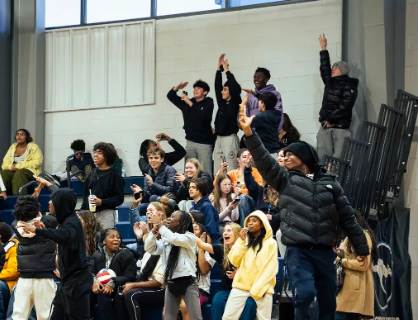






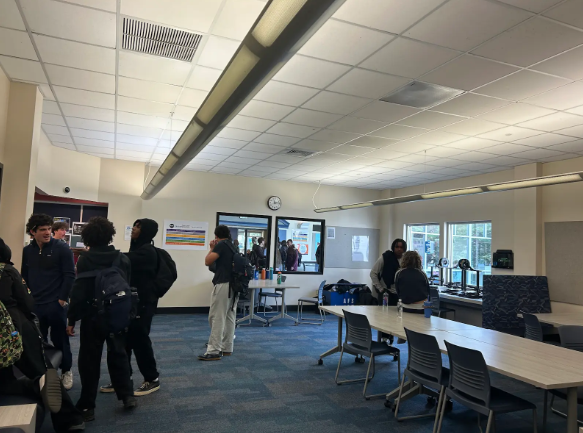
















Over the past few years club life at Abington Friends School has seen many changes. Following the COVID-19 shut down, remote learning, and hybrid instruction, student life had been decimated with very few clubs offered. Through strategic collaboration between students, faculty, and administration, combined with a newfound sense of renewal, club life grew more vibrant.
In fact, clubs grew so much that during the 2023-24 school year Upper School students had proposed 38 diverse clubs. However, club attendance and engagement waned as the year progressed and work loads increased, to the point where only ten clubs fulfilled attendance requirements.
By the 2024-25 school year, student club clerks, faculty advisors, and administration had their work cut out for them to ensure robust student life that offered a range of clubs that consistently met and engaged a hearty number of students. To that end, Yael Smith Posner ‘25, in collaboration with Student Agenda Committee and Assistant Director of Upper School Tina Yen, rolled out a new club system that focused on increasing the consistency of attendance.
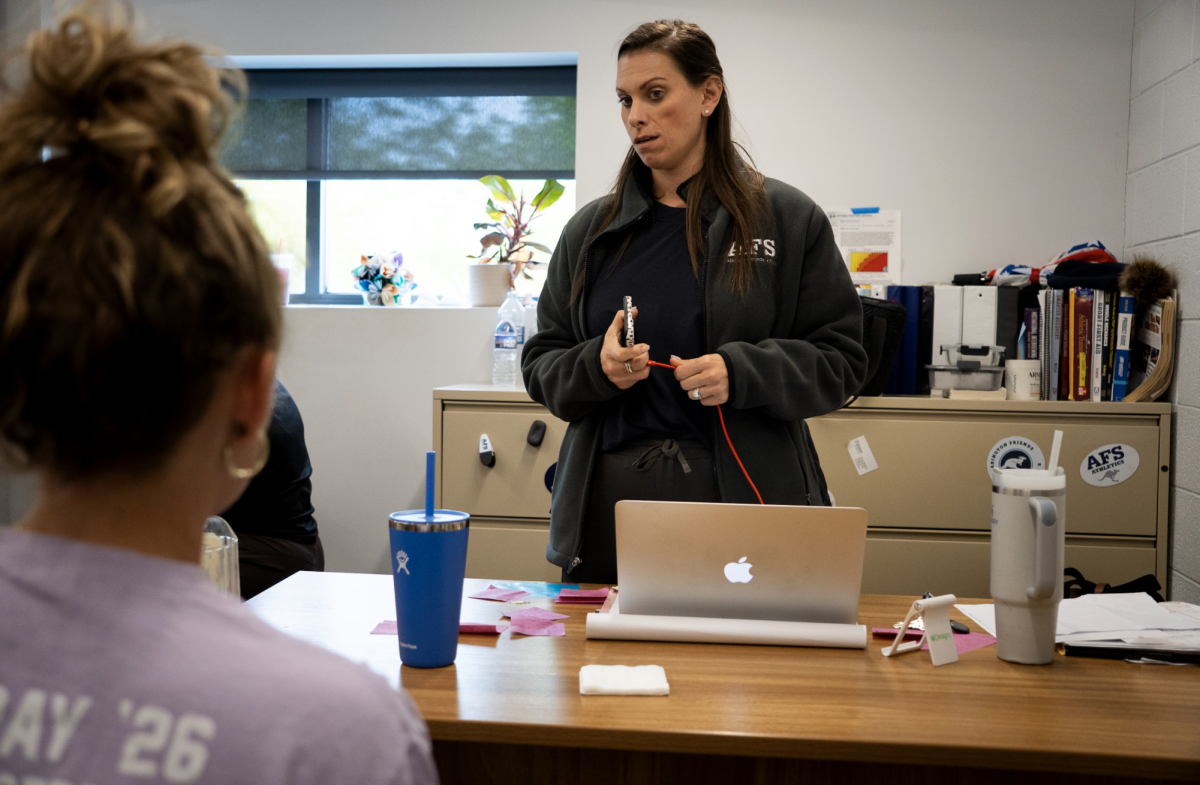
The new system began with a presentation to club clerks on new procedures with club applications and a general overview on clerking. Following this presentation, prospective clerks were required to go through a more thorough application process with new criteria aimed to boost student engagement. Students also received a resource titled “How To: For Club Clerks” which made basic information on clerking accessible and straightforward.
Building on this system, which seems to have been largely successful in promoting vibrant student life, new changes emerged this year in the club structure at AFS. After an initial gathering of prospective clerks, followed by another meeting focused on preparing for the club fair and the Canvas roll out, clerks were prepared to support the latest changes in club life.
Perhaps one of the biggest changes AFS has seen in club life is this year’s new attendance requirement for ninth and tenth grade students. This policy was made with careful consideration and discernment by the Student Agenda Committee and the administration.

At the core of this new policy is the goal to incorporate the meaningful learning and connection that happens during clubs into the Upper School curriculum from the beginning of a student’s time in Upper School. Another important tenet is to increase the number of students who are part of each club. To support the new attendance policy, clubs have been assigned Canvas pages and asked to have a recording clerk.
The required attendance policy for ninth and tenth grade students only applies to the first semester of the school year, aiming to promote agency for students after initially engaging clubs. However, the administration and Student Agenda Committee make it clear that the community will continue to celebrate engagement in clubs past the first semester.
Creating a designated time in the schedule for clubs is a unique aspect of student life, as many high schools only offer clubs outside of school hours. The 2023-24 school year brought the return of music block, but also the removal of two scheduled club times.
This year, students enrolled in any music class are unable to attend Monday clubs because club block is scheduled during music majors.
This scheduling conflict is another frustration for students, particularly musicians who also want to be part of clubs. Finding a time for clubs to meet during the school day is quite challenging, and this scheduling conflict may lead to smaller club rosters or more conflicts during the Wednesday club period.
Ninth and tenth graders enrolled in music block or other “major curricular commitments” will not be required to join a club, but this conflict may prevent music students from exploring interests and forming connections through clubs.
While there was initially some push back to the new club policy, most people have changed their minds. Part of this, at least in the 10th grade, is due to the coming realization that they will soon be the upperclassmen that need to lead their own clubs as the classes of ‘26 and ‘27 move on from AFS.
One of these sophomores is Olivia Giraud ‘28, who’s already preparing to take on the role of clerking Marketing in the ‘26-’27 school year. In preparation for this leadership, she’s already thinking of who to reach out to for a club that’s currently 50% seniors.
Giraud said, “I’ve noticed a lot of the younger kids, like the freshman and the eighth graders. They’re becoming less and less interested in doing club stuff, and doing music, and all of that extra stuff. So I think a mandate would be good for really trying to help with connecting.”
Club clerks are also noticing changes due to the mandate. When surveyed, 65% of current clerks said that there was an increase in the amount of people that had signed up, specifically freshmen. Last year, most clubs surveyed had between 11 and 15 people, while this year approximately 40% had twenty-one or more members.
Ruby Schumm ‘26, one of the clerks of Community Design Club, said, “I think it has encouraged people who may have a medium amount of interest in a topic to go out for it, or they might have been scared to go out to a new club that’s filled with seniors when they’re a freshman. I think that this mandate has encouraged people, motivated people, and given them the confidence to break into these new spaces which has been a really excellent positive.”
Each year at AFS, clubs and student life may change a bit and look slightly different, but clubs still remain a critical component of student life, helping to promote connection, exploration, discovery, and student agency.
Samara • Nov 13, 2025 at 7:31 pm
I think that the club mandate is tricky. On the one hand, it will seemingly help the extracurriculars flourish, but on the other, it could take away from some valuable time some students need. For the most part though, I think that it’s a positive thing. I remember being apart of some clubs in freshman year, however now, I rarely go to any, due to a lot of homework, college applications, and studying. Even though the club mandate is only for the underclassmen, I think that it’s important to acknowledge that they too have work, or that they might just want some free time sometimes. But, if all goes well, I really hope that the club mandate revives extracurricular culture at AFS, as I do think that we are missing that vibrant student life and originality.
Ashya Farahi • Nov 13, 2025 at 12:11 pm
Clubs: After reading this article, I realized how much AFS has evolved since the pandemic, especially in the context of how it affected clubs and rebuilding student life. The new club mandate for ninth and tenth graders will strengthen the community and student connection within our school, ensuring that everyone experiences the collaborative, creative energy clubs bring to school life. I’ve noticed that when more people show up consistently and not patchy like before, clubs feel more alive. As a clerk of two clubs, I have personally appreciated this mandate as I have felt that same energy approached towards clubs from years before that I adored! While the mandate might feel restrictive at first, I truly believe it could help younger students discover new interests, form connections between grades, and assume lots of leadership so early on! I think the best way to measure a club’s success is by how much genuine enthusiasm and participation it really inspired towards the student body, not primarily the attendance number. When students feel like they belong and their voices are heard, clubs transform from just a scheduled block into a true community, which I believe is the real goal!
Avery F • Nov 10, 2025 at 3:44 pm
I think that the new mandate for clubs is beneficial to the AFS community. As a freshman, I was eager to join new clubs, however, in those spaces, the clubs would consist of mostly upperclassmen. It was slightly intimidating to go to those spaces and share my ideas being one of the youngest students there. Having the new attendance policy should prevent this feeling, and will hopefully encourage more underclassmen to participate in clubs, since other students in their grade will be there as well. While I don’t have any experience being a clerk, I can understand how having to work with canvas would create challenges with being a club leader. Since most clerks are juniors and seniors, having the extra work with clubs on top of keeping up with classwork seems strenuous, and maybe not the most efficient. Having more involvement and participation from the underclassmen may be beneficial, and clerks may be able to give them more roles to decrease the stress on upperclassmen.
Maya Peskin • Nov 9, 2025 at 5:32 pm
I think that the new club system is a good way for me to talk to more people in other grades who have similar interests to me. I like the fact that AFS has clubs during the school day instead of after school, because it makes me more inclined to join them. I think clubs are a really important factor in school life, because not everything in school should revolve around the core classes. The mandatory attendance for 9th and 10th graders has also made it possible for people with similar interests to come together, and whether it’s mandatory or not, I still think it is a great opportunity to meet new people.
Dillan Shafer • Nov 7, 2025 at 2:50 pm
The new club attendance mandate for underclassmen has led to a more successful club system, as engagement among students has increased, resulting in more robust clubs that can last for many years to come. As a clerk of the Jewish Affinity Group, I have noticed a cohort of younger upper school students attending meetings and showing engagement, stopping me in the halls to ask about the club’s future events. In my opinion, it is more difficult to recruit students for affinity groups than for clubs because they cannot necessarily join an affinity space with their whole friend group, and students – especially underclassmen – are not always inclined to attend meetings alone. The mandate, however, has forced these students to engage with clubs and affinity spaces, challenging them to step outside of their comfort zones. Seeing a multi-grade group of students regularly attend Jewish Affinity’s meetings has given me hope for our success this year and our future after the current upperclassmen leaders move on from AFS.
Jenny • Nov 7, 2025 at 2:17 pm
The new club mandate increases student sign-ups for clubs, but it is ineffective in practice due to time conflicts and the unbalancely large number of clubs. I have noticed that the mandate of clubs increased the number of students who signed up for my club (although it could be because I made it more interesting than last year), yet as I noticed in our first club meeting today, the number of students who actually came was significantly smaller than that of who signed up for. My interpretation of this phenomenon is that, like me, other students also tend to enjoy their lunch and take their time, rather than rushing to the cafeteria and rushing back up for club meetings. The core problem is still a lack of available time for clubs, not to say club members all have different schedules and different things that need to be done. Moreover, there are way too many clubs out there, and a lot of them could actually be combined, in my opinion. As there are so many available clubs, students reduces their interest in one specific club, compared to if there were limited clubs and students could easily decide which to go to.
Dillan Shafer • Nov 7, 2025 at 2:50 pm
I agree with your opinion that increased time in the school day for clubs would increase enrollment, but I am unsure as to where that time would come from because our school schedule is already packed with community blocks and classes. As you mentioned, there is currently a huge number of student clubs at AFS, especially when you take the small size of the student body into consideration. Upon seeing all of the numerous clubs available to them, it is rational to assume that students may be inclined to join more than one club, and that their multiple commitments may conflict with each other. However, we already have several club/community blocks built into the schedule each week, and I do not know how much class time can be cut to make space for more club meeting time.
Radha Airan-Javia • Nov 7, 2025 at 1:48 pm
I believe that the changes in student life, such as the club mandate for lowerclassmen to increase engagement in clubs, do not work as intended because they fail to address the main reason why club attendance and engagement have been fluctuating. I have been at AFS since lower school and have been a club clerk for two years, and the only difference I have noticed in club attendance is its increasing unpredictability. I think a cause for this could be that, due to the new club systems, more clubs are being formed and are meeting more frequently. As a club clerk, this makes planning meetings even harder, as most students who are engaged in clubs are part of more than one. I think that the school needs to make more time for clubs to meet if they want to increase regular attendance.
Nathaniel • Nov 7, 2025 at 9:53 am
While I am glad the administration is working so hard to revitalize clubs at AFS, I believe the current changes are not enough to create the vibrant club scene they intend. As the clerk of the Chemistry Club, I have experienced the shift to using Canvas for clubs firsthand and am not happy with it. Clerks are expected to design a canvas page for our club, create assignments, and take attendance at meetings. This puts an unnecessary strain on us and is difficult to manage in addition to designing engaging club activities. While the administration has been working to teach us how to use Canvas, I feel the communication has not been the best. No one in the school has ever used Canvas for clubs before, and there are many problems with the system that don’t appear in Canvas use for classes. For instance, students who are listed as leaders of one club cannot be entered as members of another. In addition to the problems with canvas, the club block is just too short. The chemistry club meets on Wednesdays because a lot of our members have music majors. Since the Wednesday club block is combined with lunch, we only have half an hour to meet, which is not enough time. If AFS really wants to strengthen clubs, it should make the club block longer so that student organizations have enough time to lead activities.
Radha Airan-Javia • Nov 7, 2025 at 2:02 pm
I agree with your argument that the administration is not making the right changes needed for their goals of increased and more constant club engagement, but I think that the Canvas page is a step in the right direction. As the clerk of multiple clubs and a student with a busy course load, I definitely agree that it makes more work for us. Still, I think having all the clubs in one place on canvas will be beneficial because it will allow for more engagement since everyone can then see when and where clubs are meeting. That being said, the work is not done. I think that the new canvas system is only laying the framework, and I agree that scheduling changes need to be implemented to allow for more time for clubs to meet.
Serafina • Nov 7, 2025 at 9:43 am
I have noticed that despite the push for an engagement in clubs, the school has made it remarkably difficult to actually participate in clubs. As someone who is in both a music major and music minor, my options are severely limited. Prior to this year, music minors met on Monday, during what was called a ‘club block’. This year, music majors meet at that time, which encourages students to pick and choose what is more important to them: clubs or music. I firmly believe that this is unfair to all students. In addition, the Wednesday club block is during lunch, and right after Meeting for Worship. The lunch line is always very long on Wednesdays, yet that is the day that students need to grab their lunch quickly to get to club meetings. It seems as though there is a strong desire for clubs, but that goal is unattainable for many, and this tension will only weaken club participation in the future.
Jenny • Nov 10, 2025 at 3:32 pm
I agree with your point. There seems to be no sufficient support for club meetings, as there are enormous time conflicts as a result of scheduling. Participation in Art or music classes is required to graduate, yet a student could only take 6 courses each year, which means that if they want more academic challenges, they’d have to take the music courses which happen during music block. (And as you said, the school identifies one of the music clocks as a “club block”) That makes meetings during music blocks very unfavorable even when clubs are also mandatory now, because students would prioritize their graduation requirement rather than clubs. What’s more, the school also suggested that clubs could meet after school, during Roo blocks. I believe that’s also not a useful suggestion because many students have sports, not to say that there are also many students who take the school bus.
Hunter • Nov 7, 2025 at 9:39 am
I think the information on the new club mandate shared through this article is really important because many students may be confused about why this is happening. As a club clerk, I think the mandate for freshmen and sophomores is a great idea because clubs have been struggling with keeping members for many years now. I think student life will be much more robust now because clubs can accomplish more things with more members, including community service projects and events that make the school a better place. I am a clerk of QPOC and a member of Asian Coalition, Multicultural Club, Multiracial Affinity, and Debate Club, and I have definitely noticed more involvement. The success of a club is very subjective, but I’d argue that if it consistently makes the school better in any way, then it is successful. In total, this mandate has definitely boosted club attendance and participation, which makes students feel like they belong because they can meet with more people of a common interest.
Malea • Nov 7, 2025 at 9:36 am
The new mandate of student engagement in clubs is a positive addition to the AFS community and student life, and it will heavily impact the clubs themselves. In May, STAC members got together to decide what the Upper School should do about the lack of engagement in clubs and student life. After a long day of community building and bonding, we decided that clubs would be mandatory for all lowerclassmen in order to see that increase in student engagement we were missing. As one of the clerks of the new Climbing Club this year at AFS, it has been wonderful seething all of the engagement and positivity we have received from students in the Upper School. Many students have had the experience of getting to try climbing for the first time, or getting back into it after not having done it since they were younger. Our first meet-up was a huge success and it felt amazing to know that we have a bunch of students who are willing to support our club. This year, the engagement in clubs has been electric and inspiring. The criteria to evaluate the success of a club should just be how many times you meet and how many people want to show up. The participation in clubs allows students to branch out from their friends and pursue their interest with an engaging community. I hope this continues throughout the year and for many years to come
Makayla Littles • Nov 7, 2025 at 2:15 pm
I completely agree with you that engagement in clubs has been electric and inspiring. I am treasurer in the club Interact. I regularly attend those meetings, and to see the expansion of the club to this year is truly inspiring. Interact has over two times the amount of participants now than it did in the previous year. However, I do not quite agree that the success of clubs should be solely evaluated on attendance and number of people. Truthfully, what makes clubs so amazing is that people want to be there, and they are putting positive energy into the club. Truly, the success of a club is partially dependent on the type of engagement that the club receives from their participants because if people are consistently complaining while being at a club meeting, that is not true successful engagement.
Jonas Couzin-Frankel • Nov 9, 2025 at 4:55 pm
I agree that the club mandate is a good addition to increase student life. I think it will allow underclassmen to discover new passions and interests they otherwise would not have known about. I also agree with your point about participation allowing students to branch out from their friends but I also think the opposite might happen. Because clubs are now required, entire friend groups could join the same club to try to make it more fun if they don’t really want to do it in the first place.
Jonas Couzin-Frankel • Nov 7, 2025 at 9:23 am
I think the club mandate is helpful in increasing attendance as well as increasing excitement for the clubs. In past years, many people didn’t even look at the list of clubs or consider joining one. However, this year, because of the mandate, more people are finding clubs they especially enjoy, which is easier thanks to the huge range of clubs we have. There is also somewhat of a domino effect where if one person joins a club, their friends might follow and join as well, creating an even more active student life scene. I think that it’s a great idea to only have the mandate for the first semester, and I think it might even be better if it were changed to just the first quarter. Once underclassmen join their club, they’ll be able to determine whether they enjoy it or not and I believe that forcing people to attend clubs they don’t enjoy will only lead to a worse club atmosphere.
Malea • Nov 7, 2025 at 9:50 am
I agree with you Jonas, I think the fact that there is a mandate requires students to take a more careful look at the things that are being offered because in past years it was so easy to not pay attention to what clubs might peak your interests because you felt like there was more important things to do than join a club. Underclassmen engagement is crucial especially in the beginning of the year like this because as seniors are finishing up applications and juniors are working hard to create a name for themselves, the underclassmen have more free time to join a club and lift up the spirits of student life. I think because there is a plethora of clubs to choose from, students don’t feel discouraged from joining one because there will be at least one that piques their interest.
Oonagh Moore • Nov 5, 2025 at 8:21 am
My perspective as a club clerk is in line with what Ruby says, I think the mandate is helpful in encouraging younger students especially to join clubs. It can be very easy to just let the club block go by without attending any clubs or organizations and I think this year’s new mandate is going to promote a better overall feeling towards clubs in the upper school. I’m a clerk for psychology club and a member of music society and SDA. I’ve definitely noticed a decrease in engagement in clubs since my freshman year. However, this year definitely looks promising just based on the club fair and turnouts that clubs have been experiencing so far. I think that the success and value of a club is hard to judge because a club can mean different things to different people. However, if a club is retaining returning members and engaging those members in meaningful activities and discussion then I would say it is a successful club. Club participation definitely has an impact on a student’s sense of belonging; it can be a way to meet students in other grades, and especially for underclassmen, having those relationships with seniors and juniors can really help you feel at place in the upper school.
Sam • Nov 5, 2025 at 8:21 am
I like the club requirement, but only because I feel we have such a wide range of clubs at AFS. I think the requirement will help younger students pursue passions they already have, while also providing the opportunity to find something new. The school is clear they want more community engagement, and this is a step in that direction. I also think that the club requirement should only exist if there is a large amount of clubs. If we get to the point where there are 10 clubs again, forcing people to join a club they don’t want to do won’t have a good effect.