



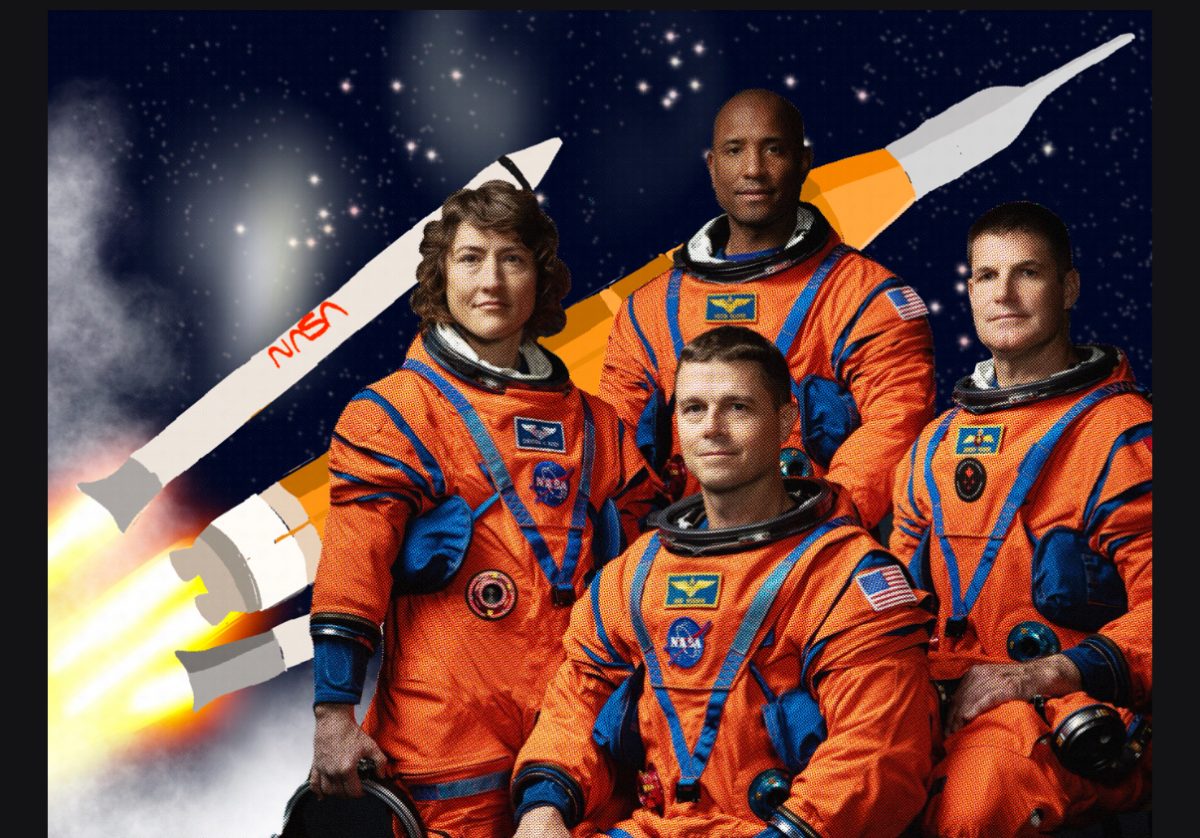












The Artemis II mission shot off Earth on April 1, 2026, at 6:35 pm EDT. The crew, consisting of Commander Reid Wiseman, Pilot Victor Glover, and mission specialists Christina Koch and Jeremy Hansen, completed a nearly 10-day journey that set the record for the farthest from Earth humans have ever been, at 252,756 miles. They also set many records individually, Koch becoming the first woman in deep space, Glover the first Black man, and Hansen the first Canadian.
They named their spacecraft Integrity, because it was the most prominent of their shared values when they were making lists of the values most important to themselves- an activity they found very productive. The four have talked extensively about how close the training and mission have brought them. Koch shared in an interview about how it feels like a new family.
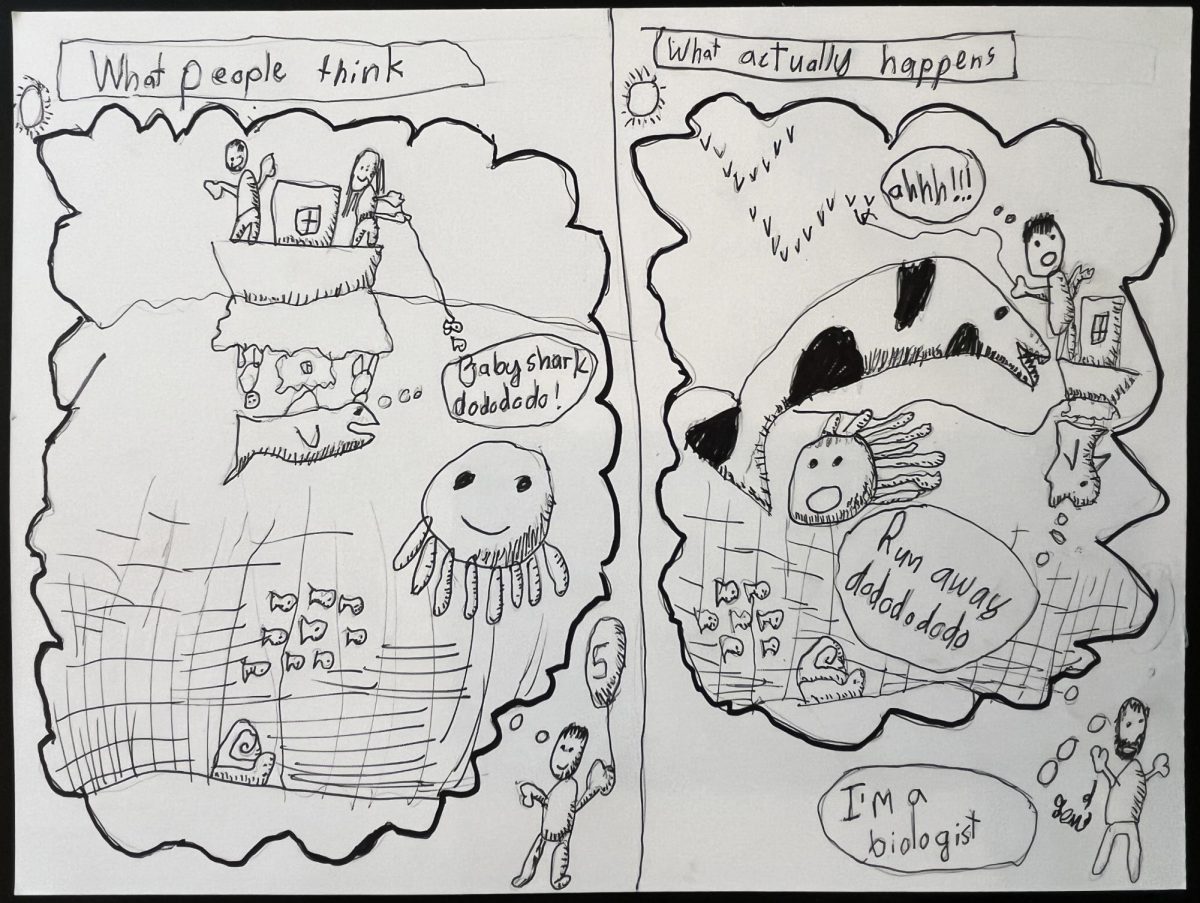
Another member of said family you may have noticed if you’ve watched any videos from the spaceship was a small plushie floating around the astronauts. Named Rise, this plush from Earth was designed by an eight year old named Lucas Ye, who was hand-picked by the Artemis II crew after becoming one of five finalists in a moon mascot design challenge arranged by NASA’s partnership with Freelancer.
Though adorable, this mascot is also the zero-gravity indicator for the mission, which is used to show when the crew is in space as he floats. Rise was meant to be left in the space shuttle, but Wiseman later admitted he took Rise along with him when leaving the shuttle, unable to part with the plushie that had kept the crew company along their journey.
Creator Ye shared some important aspects about Rise, with the white body that represents the moon including a footprint on the back as a nod to Neil Armstrong’s famous first step. The Orion constellation is also pictured, in reference to the Artemis II capsule, and the hat is designed after the photo “Earthrise” from Apollo 8.
Though the crew was certainly alone physically, out in deep space, and even lost communication for 41 minutes while going around the far side of the moon (a planned and inevitable event due to the moon blocking the radio waves), they had many calls and communication with those on Earth, and even others out in space. An hour after beginning their descent back to Earth, the crew had a call with the astronauts aboard the International Space Station.
This call included Jessica Meir, who Koch worked with in 2019 on the ISS when the two performed the first all-women spacewalk. Meir and Koch celebrated their mutual returns to space, reunited even though they were over 230,000 miles apart.
The day before the call, on April 6, the astronauts were able to see a lunar eclipse occur for 53 minutes of totality as the moon appeared big enough to cover the entire sun, a significant amount of time compared to what we normally get on Earth.
Also on this day, as they completed their moon flyby, Hansen made a request to the NASA groundcrew. He noted a bright spot on the moon that would sometimes be able to be seen from Earth, unnamed, and asked that the crater be called “Carroll,” after Commander Wiseman’s late wife. Carroll was a newborn intensive care unit nurse who lost her fight with cancer in 2020 at 46 years old, leaving behind Wiseman and their two daughters.
Despite Wiseman’s wishes to give up on being an astronaut after Carroll’s diagnosis, she and their daughters pushed him to continue. The four astronauts shared a hug after this sweet moment.
NASA has publicized future plans for Artemis missions, beginning with Artemis III to take off and circle the Earth in February (instead of heading to the moon). After that, Artemis IV or V will hope to land on the south pole of the moon in 2028, with plans to establish a base on the moon underway.