

















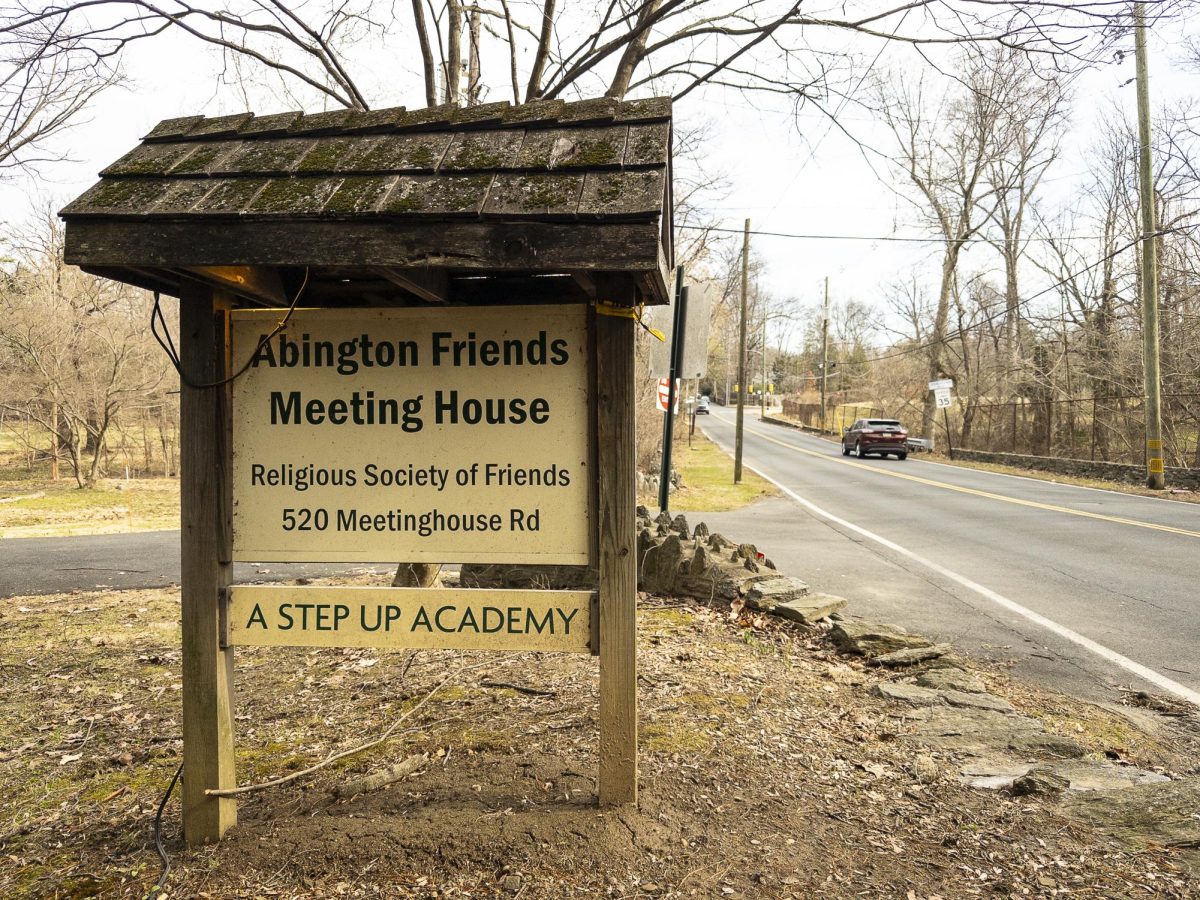
The Abington Monthly Meeting has been around for almost 325 years, and it is no wonder that it holds some remarkable history. From being the original site of Abington Friends School to serving as a site for the underground railroad, the Meeting House and its surrounding grounds have lived through almost all of American history.
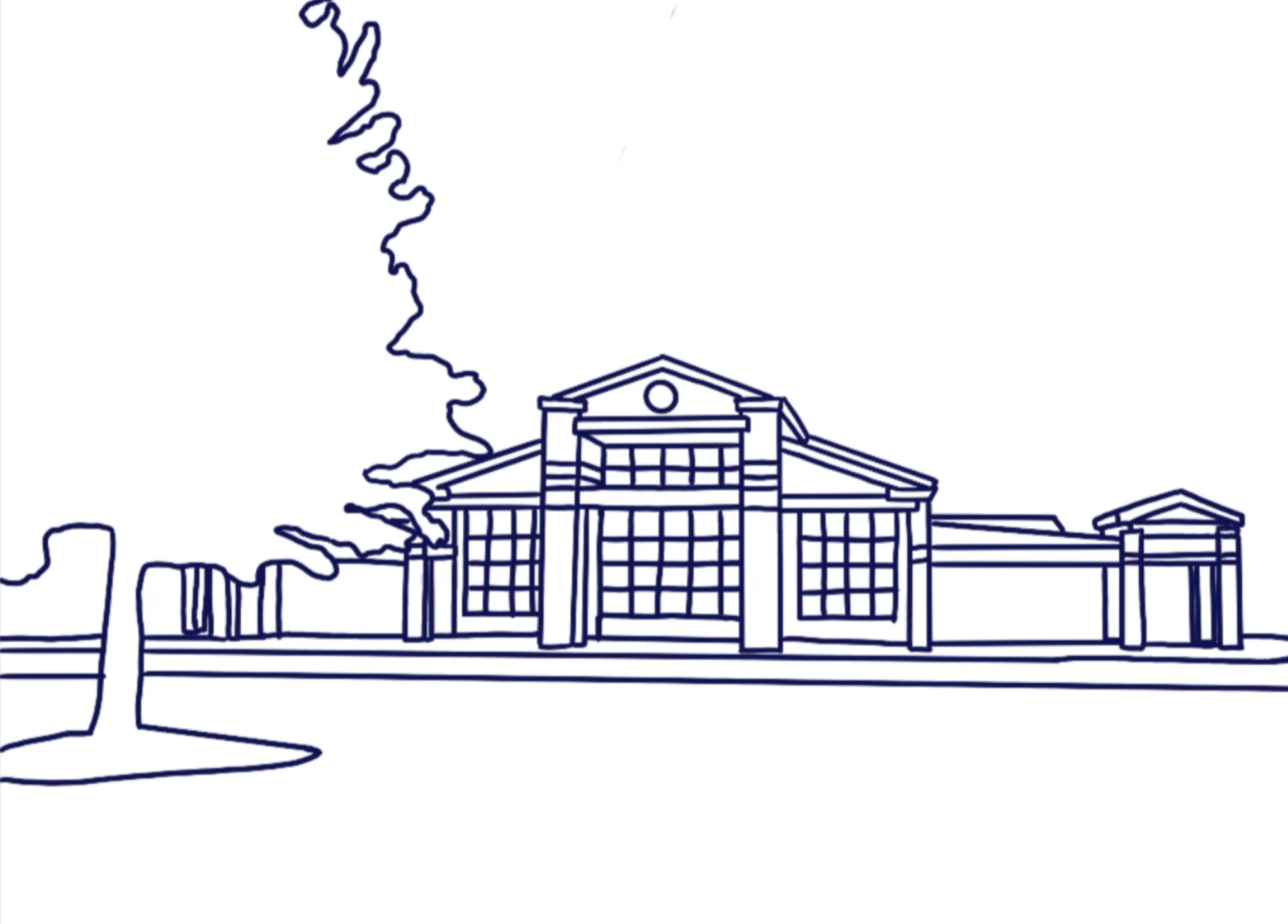
The Meeting House is a large stone building with yellow accents. While the building started out very small, it has now grown with multiple additions, including the John Barnes Room, and the building used by A-Step-Up Academy.
Quakers are now known as one of the most progressive religious groups, always on the forefront of social justice movements. But it was not always this way. In fact, early Quakers were staunch supporters of slavery. There were some who were not, and one of those people was Benjamin Lay.
Lay was born in Essex, England, in 1682. He was a dwarf, and had kyphosis, a disease that curves the spine, making those suffering from it appear hunchback. He became a sailor, a job that allowed him to see the wider world, including things like the slave trade.
He also worked as a shopkeeper in Barbados, where he truly got to experience the horrors of slavery. According to the Smithsonian, one of the moments that defined his anti-slavery beliefs was when he saw an enslaved man take his own life instead of continuing life in bondage. He took these beliefs back to England in a vocal fashion.
After being kicked out of multiple congregations in England, Lay moved to Philadelphia in 1732 with his wife and fellow Quaker, Sarah Lay. It was here that his activism came into full form.
Lay would disrupt meetings, often with displays such as fake blood, or standing barefoot in the snow. He would do this at nearly every meeting he went to, and as a result, was disowned for his protests.
Even after being disowned, Lay did not stop his efforts. He still protested slavery in Quaker meetings, but he also began to grow his own food and make his own clothes. He was vegan, believing that all animals have the presence of God in them, and made a point not to buy anything that was cultivated or associated with slave labor.
In recent years, Lay has become somewhat of a celebrity, with stories about him in local outlets like WHYY, to international ones such as the BBC. Lay has also had many books about him, the most notable being The Fearless Benjamin Lay: The Quaker Dwarf who Became the First Revolutionary Abolitionist, authored by Marcus Rediker, a historian and professor of early American and Atlantic history at the University of Pittsburgh. Up until Rediker’s book in 2017, there had been little to no coverage of Benjamin Lay.
“I discovered Lay more than thirty years ago…” said Rediker in an email interview.
“I found that he was a man far ahead of his time—a truly important revolutionary thinker—who was almost completely unknown!… [This] was partly because he did not fit the abolitionist movement as historians had previously conceived it: he was from the wrong class (a worker, not an elite) and from the wrong time period (two generations before the Enlightenment and the emergence of a formal anti-slavery movement)… I have made it my purpose to bring Benjamin Lay back to public memory as a true American hero.”
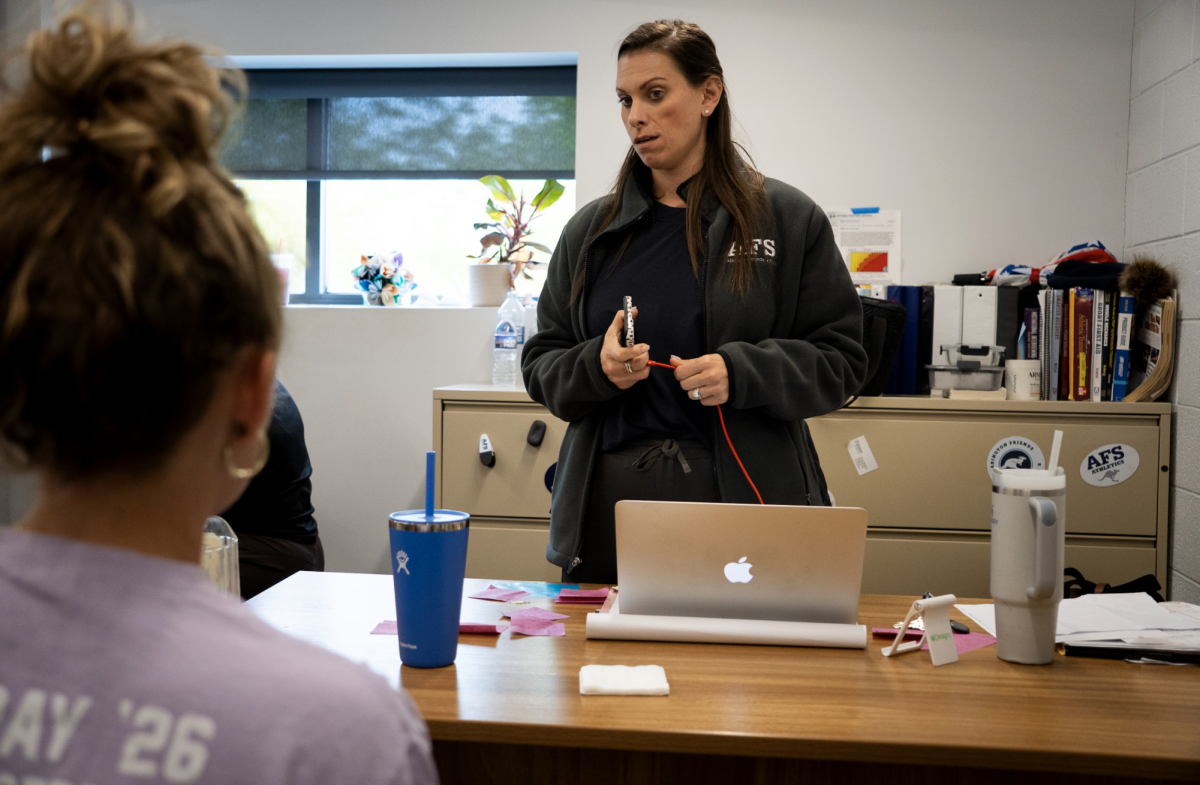
Up until recently, Lay was known of, but did not get the recognition he truly deserved. Loretta Fox, the Abington Monthly Meeting Administrator spoke about the Abington Meeting rediscovering Lay.
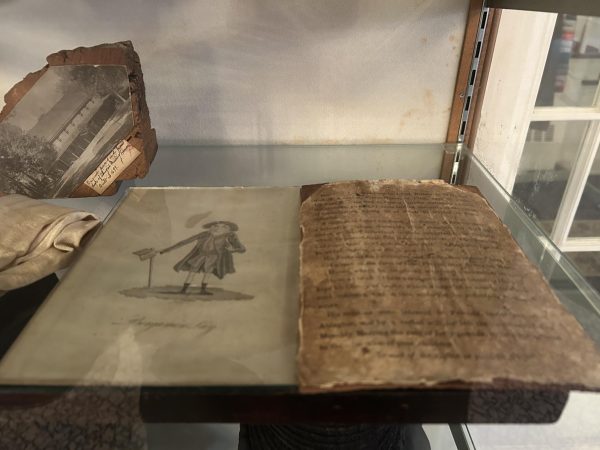
Fox said, “Our caretaker… had found, in a closet…, a little picture of Benjamin Lay. On the back of it was typed up a little description about who Benjamin Lay was…, and we found out he is buried in our graveyard.” This brought the interest in Lay inside the Abington Monthly Meeting to the front of some minds and was the spark to getting Benjamin Lay’s story publicized.
Lay’s activism did not go in vain, even in his time. He still attended Meeting for Worship at the Abington Meeting House, even though he was outlawed from participating in the meeting for business for being too disruptive. In the years before Lay’s death, there was a push among Quaker reformers to outlaw slavery, and the Philadelphia Yearly Meeting began to disown members who owned and/or traded slaves.
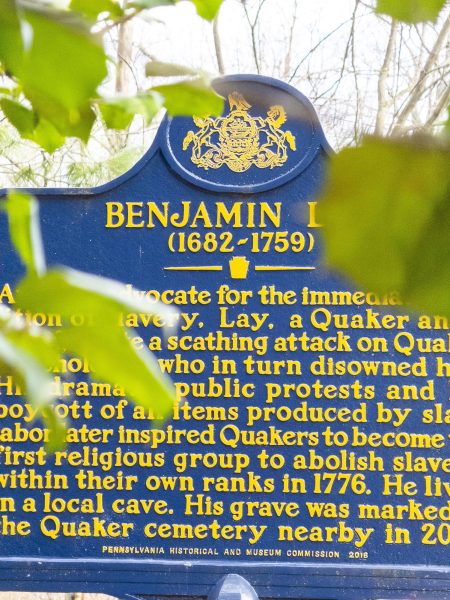
In 1759, Benjamin Lay died of unknown causes at a friend’s house in Abington, Pennsylvania. He was buried in the graveyard behind the Abington Meeting House in an unmarked grave. Today, the exact location of his body is unknown, but there is a symbolic gravestone with his name, birthday, death day, and an acknowledgment that his grave is unknown. There is also a plaque put up by the Abington Township with information about Lay on the meeting house.
Lay may be gone, but his impact has lasted far after his death. He has been recognized by Quaker meetings in the United States and the United Kingdom for his work in the early abolition movement, and inspired people and groups to continue his style of activism, albeit on different issues.
The four meetings who disowned him, the Abington Monthly Meeting, the Philadelphia Yearly Meeting, the North London Area Meeting, and the Southern East Anglian Friends all released statements, with the Philadelphia Yearly Meeting calling him a “Friend of the Truth” and Southern East Anglian Friends saying, “we are in unity with the spirit of Benjamin Lay.” The statement put out by the Abington Monthly Meeting was authored in part by Fox.
“Benjamin Lay really challenged Quakers of the time to be better Quakers, and to be better people,” said Fox.
“Before the abolition movement even started, he already had this awareness that people need to be treated equally and with respect, and that it was a horror to enslave another human being… He felt the Quaker faith itself was going to fall apart if Quakers were able to continue to enslave other human beings.”
Fox said, “He didn’t hesitate in his protests. He wouldn’t tolerate people who were enslaving other people. He wasn’t going to sit around and be polite. He was very aggressive in his behavior, but that is because it was important.”
That aggression is still seen today, though for different issues. One activist group known for aggressive tactics is the European climate group, Just Stop Oil. Just Stop Oil has glued themselves to roadways, thrown soup at the Mona Lisa, ran on the race track during a Formula 1 race, and much more.
According to a 2022 article in The Guardian, one person interviewed said, “I’ll never contest the point they’re making. However, inconveniencing people in both daily and lifesaving tasks from errands to hospital treatments, during [England’s] largest pay freeze since the 1800s, shows where their delusional priorities lie.”
Just Stop Oil’s aggressive tactics are inconvenient for many. But most of all, they inconvenience the oil companies by having such a strong showing against them. Much of this is similar to Lay. Fox said, “Even still, there are people who say ‘[Lay] was so difficult, he was unpleasant.’ Sure he was difficult and unpleasant – if you were an enslaver.”
“Any time someone is going to go against what is the accepted norm in society, and even more importantly what is really profitable… the response to [his tactics] is very telling of where people’s warped priorities were.”
Fox mentioned a story about Lay breaking China tea cups in the market in Philadelphia, where he was pointing out the slave labor that went into making the sugar for tea. “[Lay] said if you’re using this sugar without questioning the origin of it, you are to blame just as much [for slavery],” said Fox. Instead of listening to his message, people tried to save the cups from being broken.
Fox said, “His aggressive tactics, for sure, turned off a lot of people, but I think it also had the effect he was hoping for, which is to really make people turn… their behavior and their thoughts around.”
One of the first things most saw about Lay was his appearance. “I believe that his physical deformities were what led him to have an understanding of the human condition that a lot of his peers did not have. He was ridiculed. Historians at the time used horrible, derogatory phrases to describe him.”
This continued even somewhat recently, with well known historian David Brion Davis calling Lay an insane “little hunchback,” according to the Smithsonian.
Fox said, “I think it is really important [to see] someone like him, who overcame so much in his own lifetime, and still was an advocate for people who were not given a voice.”
The Abington Monthly Meeting has a section on their website titled Minutes About Benjamin Lay. This section contains the reconciliation messages written by the Quaker meetings who expelled him, and contains a quote from the Abington Meeting saying, “…we may not reinstate membership for someone who is deceased…”
Fox said, “When someone is not a member of a Quaker meeting… The process of becoming a member involves your own choice and your own commitment. There is not really a way to say ‘We are going to make [Lay] a member again,’ without him being there to voice ‘Yes, I would like that.’”
Becoming a member of a Quaker meeting is more complex than just showing up and attending meetings. You start out as an attender, which Ealing Quakers describes as “A person who worships regularly with Friends but who is not formally a member of the Religious Society of Friends.”
After spending time as an attender, if you are interested in joining the meeting as a member, you speak to the clerk of the meeting. You will then meet with a committee that will make sure you are serious about becoming a member. “Once that’s done, the only thing left is to make it official at the next monthly meeting for business,” according to Quaker.org.
Fox goes back to the Minutes With Benjamin Lay page, and said “[Lay’s] thoughts are in unity [with the meeting], and we are in unity with his thoughts. It reinstates him into… Quakerism, without saying ‘He is a member again.’”
Fox credits Professor Rediker with putting Lay’s story about him and his activism into the public view, saying “The Fearless Benjamin Lay raised a lot of awareness and made [members of the Abington Monthly Meeting] here realize [reinstating him] was the right thing to do, to bring back Benjamin Lay and come down on the right side of history.”
Lay undoubtedly had a massive impact on the Abington Monthly Meeting and Quakerism as a whole, and that impact is still going strong today. Professor Rediker also noted that his ideals can be put into practice by non-Quakers as well. Referencing his activism on slavery, but also animal rights and environmentalism, Rediker said “We still have a lot to learn from him.”
“I hope his legacy continues to be shared,” said Fox.
“There are so many resources now… and I think it is very important for us to have heroes who are deserving of the praise they receive. Whenever we talk about Benjamin Lay, I think it is important to remember the people he spoke for, because he probably would not have wanted all this recognition for himself… I think he would have wanted to bring attention to [enslaved people] rather than himself. But if bringing attention to Benjamin Lay helps us continue on that path forward, I think it is still worthwhile.”
Benjamin Lay had a fascinating life, and that is part of what made me interested in him. Too often we forget that we are lucky enough to live in one of the most historically significant places in the United States, and that the things that seem normal to our lives are the things some only read about, or see pictures of.
Researching and reporting this article has made me appreciate more and more the spaces that have such rich history that are, quite literally, in our school’s back yard.

Makai O'Neill • May 5, 2026 at 7:10 am
I think this article was really interesting because it shows how someone important can be connected to a place we see every day. Before reading this, I didn’t know much about Benjamin Lay, but his story stands out because he was willing to speak up even when people disagreed with him. It’s surprising that someone who had such strong beliefs and made such an impact was mostly forgotten for so long. I also think it’s interesting how his actions were seen as too aggressive at the time, but now people recognize that he was right. It makes me think about how people today react to activism and how opinions can change over time. Overall, this article helped me understand how history isn’t always as well known as it should be, even when it’s right near us.
Una Davis • Apr 21, 2026 at 10:09 pm
I had never even heard of Benjamin Lay prior to reading this article. Lay’s story is just one of many incredible people that slip through cracks. Consider Rosalind Franklin. Her photo of crystalized DNA fibers was the gateweay into discovering the double helix structure. Despite this, scientists Francis Crick and James Watson recieve 100% of the credit for this discovery. Like Lay, Franklin is widley unkown. Both made incredible contributions to thier fields, but because of their divergance from the dominant culture, they have not been considered as remarkable as their peers.
Ash Cohen • Mar 18, 2026 at 6:37 pm
This is an amazing article. I’m really happy and excited to see someone covering the history of Benjamin Lay. I drive past his plaque on the way home from school and it always reminds me of him and his history with the meeting. He definitely was far ahead of his time.