










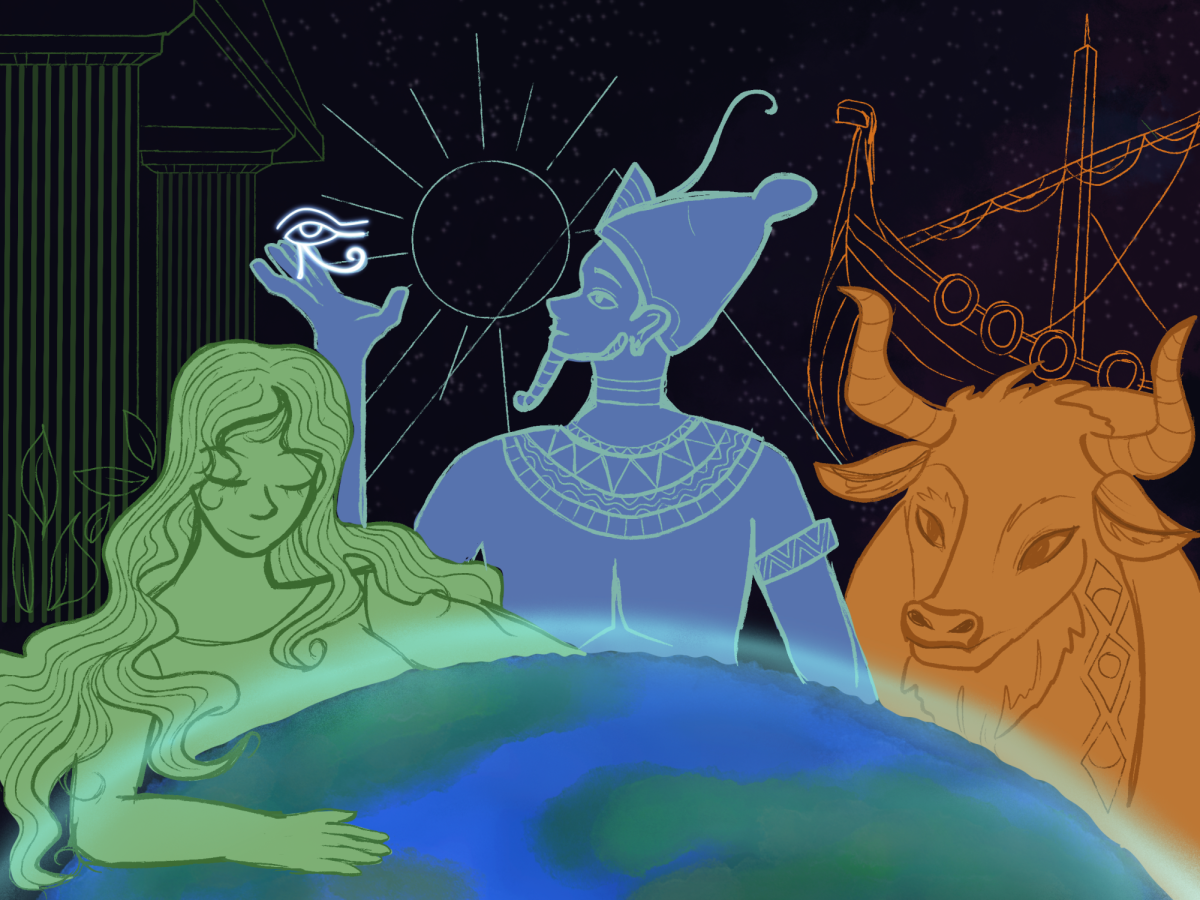






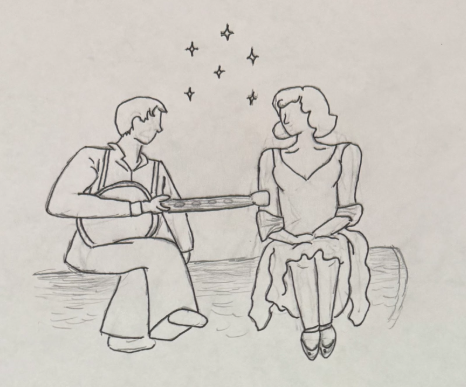
“There are tales of people…making music so true, it can pierce the veil between life and death, conjuring spirits from the past and future,” a soft-spoken, yet knowing voice narrates. “In ancient Ireland, they were called Filí. In Choctaw land, they were called Firekeepers. And in West Africa, they’re called Griots.”
So begins Sinners, a modern musical triumph in multicultural folk horror. “This gift can bring healing to their communities,” the voice concludes, “but it also attracts evil.” The voice belongs to a practitioner of folk medicine named Annie (Wunmi Mosaku), and as her pensive narration fades out, the scene fades in; amid dazzling sunshine in 1930s-era Jackson, Mississippi, dapper businessman duo Smoke and Stack roll back into their hometown equipped with a fortune and a dream.
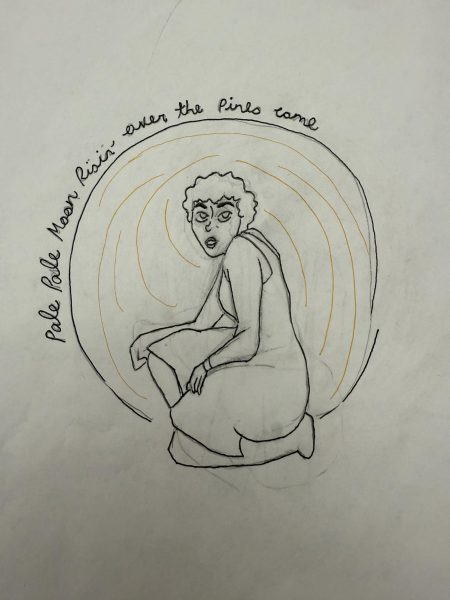
These twin brothers put their money towards the rapid construction of a juke joint (a type of community center for singing and dancing pioneered by African Americans in the early 20th century), and it’s a hit. Invigorated by moonshine and a romantic rendezvous, the shy Pearline takes the juke stage and belts out an ode to celebration itself (“Pale, Pale Moon”).
What starts out as a simple party song evolves into a raw catharsis so powerful, it casts a spell over the whole room. Pearline’s vocals drop to a simmering hiss, then swell into a roar. She sings: “I wanna sing / like I hear the crickets do / … / I wanna scream / scream like the wildcats do / I wanna be /…/ naturally free,” asserting the sanctity of unrestrained self-expression by comparing it to that found in nature, and asserting her right to be loud in a world seeking to silence her.
Her stunning, hypnotic vocals paint the message beautifully clear; the juke joint exists as a contradiction to the stifling Klan-enforced racism of their environment, providing the local Black community with an opportunity to be themselves and rejoice. It fulfills the positive part of Annie’s introductory prophecy, “bringing healing” to their community. Unfortunately, the ominous part of her prophecy also comes true–that it “also attracts evil.”
That evil comes in the form of a seemingly friendly white couple. Irish American buskers Remmick (Jack O’Connell) and Joan (Lola Kirke) appear at the juke’s door, auditioning for entry with a folk song (“Pick Poor Robin Clean”). Remmick preys on the Black Juke patrons’ empathy with the painfully manipulative line, “We believe in equality… We just came here to play… Can’t we – just for one night – just all be a family?”
Long story short, Remmick and Joan turn out to be immortal vampires, traumatized by their own experiences with forced assimilation via cultural genocide at the hands of the British in Ireland. They symbolically force assimilation onto the Black community in turn through infection. As each Juke Joint patron is bitten, they become compelled to abandon their culture, embody that of Remmick, and use violence and manipulation to infect survivors.
After abandoning the African American cultural stronghold of the juke, the possessed Black patrons find themselves dazedly dancing with Remmick to an Irish traditional song (“Rocky Road to Dublin”). Out of countless traditional Irish songs, “Rocky Road To Dublin” was pointedly chosen for its lyrical references to being ripped from one’s home: “Left the girls of Tuam nearly brokenhearted /…/ Drank a pint of beer, my grief and tears to smother /…/ leave where I was born.”
Those references represent both Remmick’s own experience of persecution, cultural genocide, and escape, and the way in which Remmick is inflicting that same pain on the Black community. Additionally, this scene represents assimilation through its portrayal of the possessed Black patrons unwillingly and robotically following the dance to a song that comes from a white culture directly after being forced to abandon their own music.
In reference to the Lord’s Prayer and the violent Christianization of Ireland, Remmick says, “The men who stole my father’s land forced these words upon us. I hated those men, but the words still bring me comfort,” during a later fight scene between him and the surviving Juke patrons. This scene reveals Remmick’s motivation: he has fallen for the colonialist lie used to justify his own suffering.
In the Black American community, he sees a rich culture that reminds him of the one that was stolen from him. Now that he is in the position of privilege and has internalized the narrative that the British used to colonize him– that colonization was for his own good, even if it was painful– he attempts to erase this other culture in a similar way, believing he is doing the right thing.
But what makes the juke joints’ cultural expression empowering, while Remmick’s is evil? A bitter, misguided white viewer may assume it’s bias, but they would be wrong. The film’s inclusion of Remmick’s traumatic experience with British colonialism shows empathy and respect for Remmick’s Irish culture and its history.
The message of Sinners is not that Irish culture is demonic, but that cultural erasure is. After all, accepting and perpetuating the colonialist lie that was used to hurt him is what makes Remmick a monster: a vampire who must attack others the way he was attacked.
Sinners recognizes two truths at once. Yes, some white Americans have histories with persecution, poverty, or forced assimilation. However, that experience of hardship does not negate their white privilege or potential to harm Black communities within the racist structure of America.

Nia Hammond • Mar 5, 2026 at 10:06 am
I saw Sinners twice in theaters and I thought it was an absolutely wonderful film with many impactful messages. I think there are so many patterns in history but specifically in Sinners of cultural erasure, and the movie did a great job of fleshing it out for each minority group in the movie. While this doesn’t justify anything Remmick did to the Black people who were minding their business and having a good time, I believe that hurt people hurt people, and Remmick was definitely a victim of cultural erasure, making him jealous of our protagonists. Black people in America also faced significant cultural erasure when we were forced to come here as slaves, so much so that most Black people can only trace back their ancestry to Reconstruction. However, we did not let that stop us from creating our own culture as Black Americans. I agree that Remmick was jealous because he couldn’t overcome cultural erasure like the protagonists of the movie.